Cucurbita moschata Duchesne
Summary
Pumpkin (Cucurbita moschata) is an annual climbing plant up to 25 meters long of the Cucurbitaceae family, native to Peru and Mexico in the Americas, now widely cultivated across tropical Asia including Indonesia, Japan, and Thailand. Its carbohydrate-rich flesh makes it an important food source in many countries. Traditionally, pumpkin is also believed to support eye health and help lower the risk of hypertension and diabetes.
Agroecology
Grows well in tropical regions from lowlands up to an elevation of 1,500 m above sea level, at temperatures of 18-27 °C, rainfall of 700-1,000 mm/year, and humid air. Favors a position in full sun, on fertile loamy soil with good drainage.
Morphology
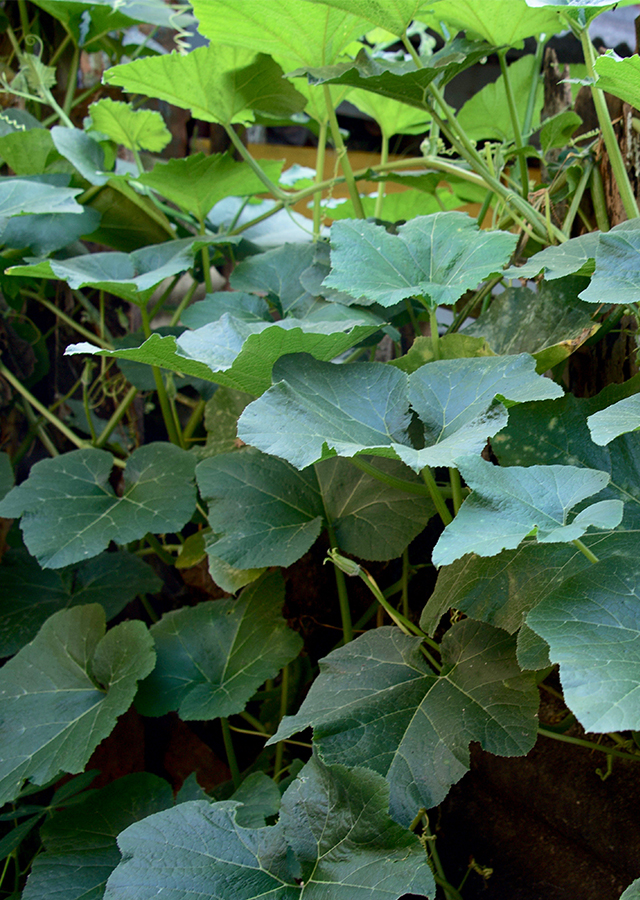
- Stem square-shaped, hairy, climbing, light green.
- Leaves simple, spreading along the stem, heart-shaped, rough surface, palmate compound venation.
- Flowers bell-shaped, yellow, with both male and female flowers.
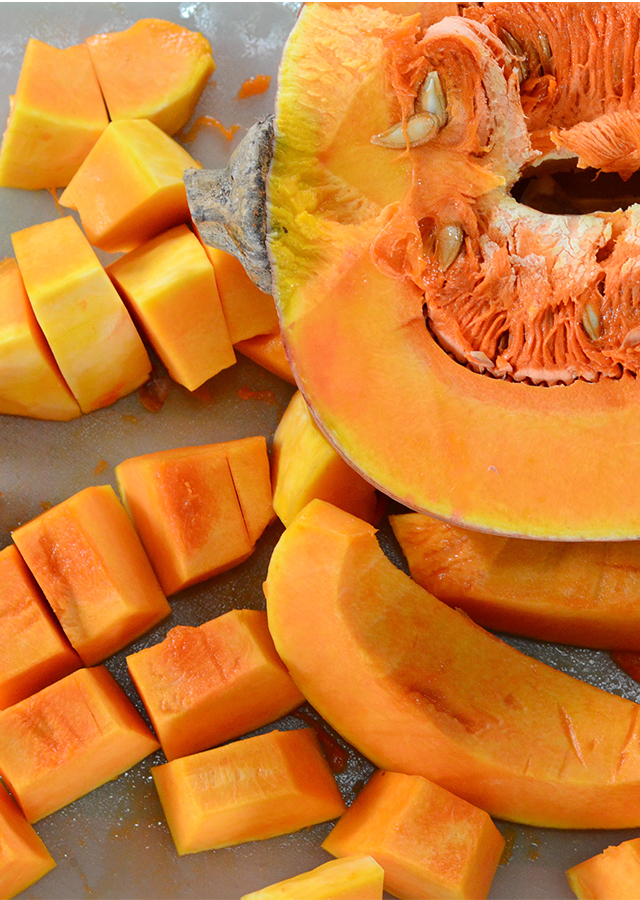
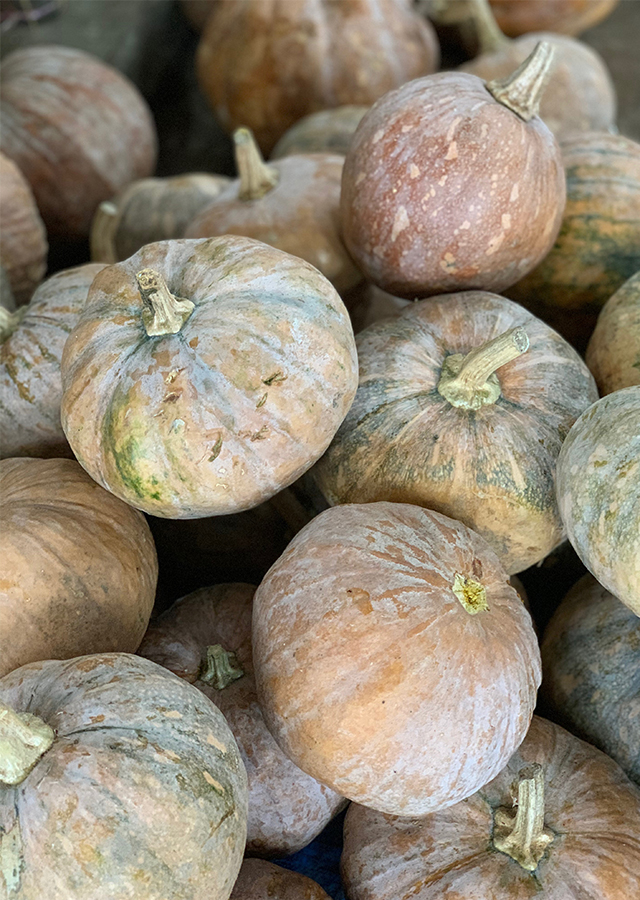
- Fruit has a hard skin, round, oval, or flattened round shape, yellowish-brown. Its flesh is soft with a taste ranging from bland to sweet.
- Seeds yellowish-white, ovate-elliptical, with a thickened edge.
Cultivation
- Propagated generatively (by seed).
- Planting spacing of 100 x 60 cm. The plant can be harvested at 50-60 days after planting, at intervals of 2-3 times a week.
Chemical Content
Carotenoids (zeaxanthin, lutein), phenolic compounds (gallic acid, coumaric acid, ferulic acid), flavonoids (rutin, kaempferol, isoquercetin, myricetin, quercetin), lutein, xanthin, palmitic acid, linoleic acid.
Benefits
Cares for and supports eye health; fights free radicals; reduces the risk of cancer and stroke; minimizes hypertension; helps prevent diabetes; treats stomach ulcers or acid reflux; addresses liver disorders; and helps prevent blood clotting. Has anti-inflammatory activity.
Simplisia
- Collect seeds from mature pumpkin fruit. Clean the seeds of any adhering flesh. Wash under running water and drain.
- Sun-dry covered with a dark cloth, or dry in an oven (50 °C) until evenly dry.
- Store in a clean, tightly closed container.
Local Names
Labu parang (Malay) and Waluh (Sunda and Central Java).
Traditional Recipes
The following recipes reflect traditional knowledge passed down through generations, not a substitute for professional medical diagnosis or advice. Consult a healthcare provider before use.
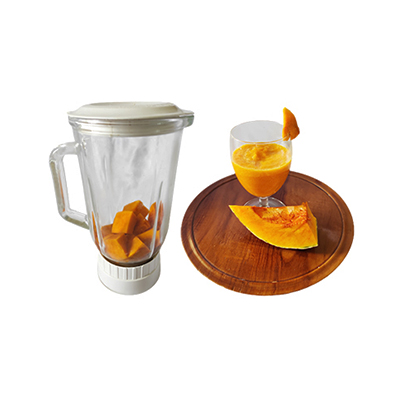
1. Liver Disorders and Preventing Blood Clotting
- Blend a sufficient amount of pumpkin and add water to make 150 ml of juice.
- Drink the mixture.
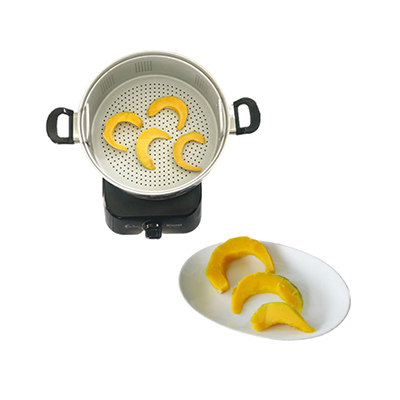
2. Stomach Ulcer or Acid Reflux
- Prepare 250 g of pumpkin.
- Peel the pumpkin skin, cut into large cubes or as desired, and steam in a pot until the pumpkin is cooked. Serve while warm.
- Eat every morning as a breakfast substitute.
Reference Sources
- Carvalho LM, Smiderle LD, Carvalho JL, Cardoso FD, Koblitz MG. 2014. Assessment of carotenoids in pumkins after different home cooking conditions. Food Sci. Technol. Campinas. 34(2): 365-370.
- Enneba S, Drinea S, Baguesa M, Trikia T, Boussoraa F, Guasmia F, Nagaza K, Ferchichi A. 2020. Phytochemical profiles and nutritional composition of squash (Cucurbita moschata D.) from Tunisia. South African Journal of Botany 130: 165-171
- Hepiniasanti H, Daryono BS. 2018. Kesetabilan fenotip tanaman labu susu (Cucurbita moshata (Duchsne) poir “butternut”) hasil budidaya di Sleman D.I Yogyakarta. Biogenesis 6(2): 115-123.
- Kirana R. 2019. Budidaya dan Produksi Benih Labu Kuning. https://kultura.litbang.pertanian.go.id. 10-12-2019.
- Puspita N. 2012. Pengaruh ekstrak etanol biji labu kuning (Cucurbita mochata) terhadap kualits spermatozoa mencit setelah pemberian 2-metoksietanol. Skripsi. Fakultas Sains dan Teknologi. Universitas Airlangga. Surabaya.
- Suresh S, Sisodia SS. 2018. Phytochemical and pharmacological aspects of Cucurbita moschata and Moringa oleifera. U.K. J. Pharm. & Biosci. 6(6): 45-53.
- Ivan Maulana. 2020. Obat Maag atau Asam Lambung. Kebun SSPL, Bangun Bandar.
- W Hembing. 2008. Mencegah Pengendapan dalam Darah. Tumpas Hepatitis dengan Ramuan Herbal. Pustaka Bunda, Jakarta.
- MDPI. The Profile of Secondary Metabolites and Other Bioactive Compounds in Cucurbita pepo L. and Cucurbita moschata Pumpkin Cultivars. https://www.mdpi.com/1420-3049/24/16/2945 02-03-2021