Cuphea hyssopifolia Kunth
Summary
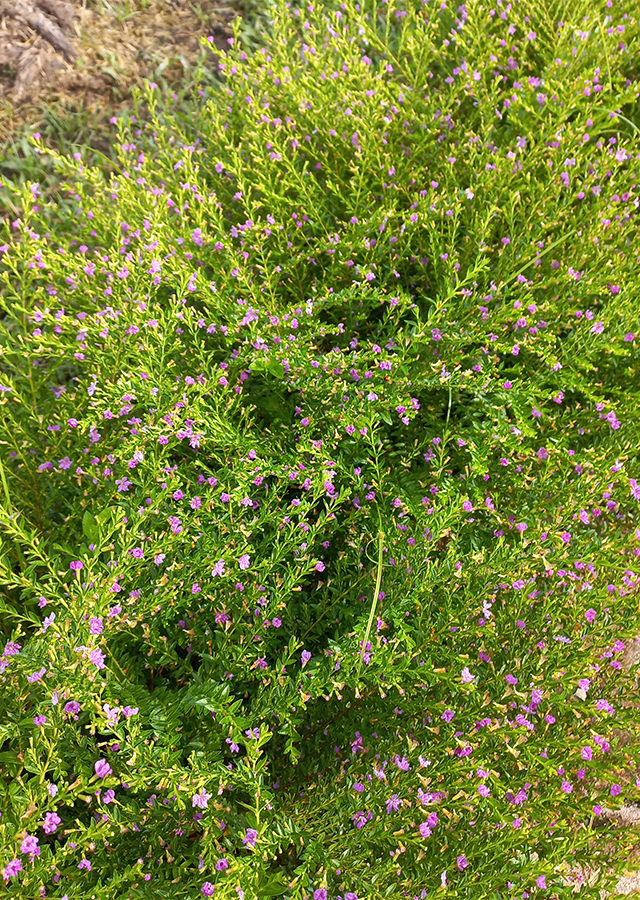
Taiwan beauty (Cuphea hyssopifolia) is a shrub 20-70 cm tall of the Lythraceae family, native to tropical America, widely distributed as a hedge and ground cover plant. In Mexico and Bangladesh, this plant is traditionally used to reduce fever, supported by its strong antioxidant phenolic compounds. Its leaves and flowers are also used as a natural insecticide.
Agroecology
This plant can be found growing along rivers and streams, moist forests, open places, moist thickets, at elevations up to 1,500 m above sea level. The average annual rainfall desired by this plant ranges between 1,400-1,900 mm/year. This plant prefers an open position with full sunlight, but is still tolerant of partial shade. Its growth is suitable in various soil types, but requires adequate moisture.
Morphology
- Root a taproot.
- Stem green in color, many-branched, covered with fine, soft hair.
- Leaves compound, pinnate veins, leaf position arranged opposite. Leaflets small, ovate to narrowly lance-shaped, flat leaf edges, glossy green in color.
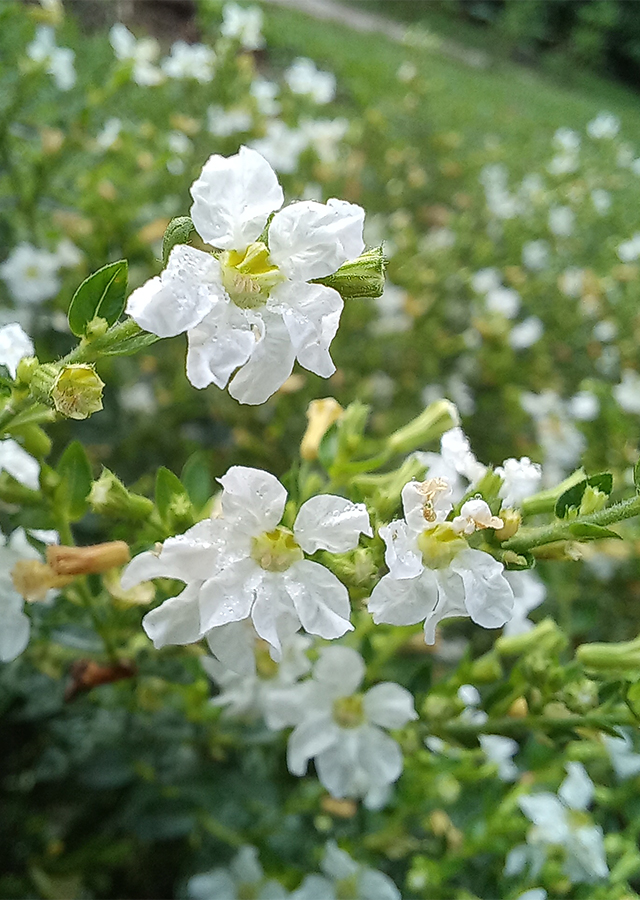
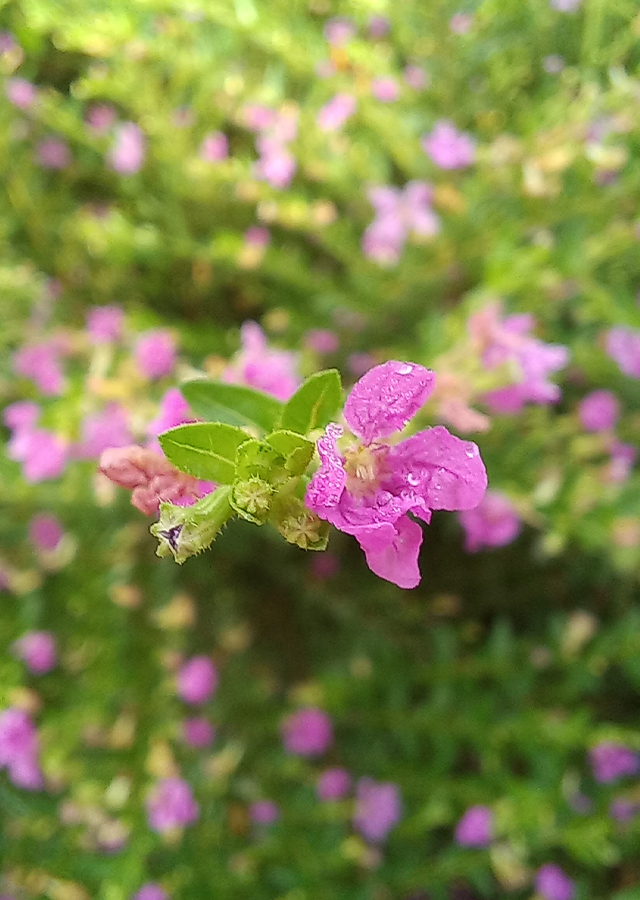
- Flowers solitary, tube-shaped, flower tube pale green in color, sometimes turning pink toward the top, has 6 petals colored pink, purple or white. Sepals wrinkled, hairless or with a few (some) stiff hairs, green in color. Appears in leaf axils and stem tips, small in size.
- Fruit capsule-shaped, splitting open and berry-like, has 3 lobes containing 5-8 seeds.
- Seeds reddish-brown in color, suborbicular.
Cultivation
Propagated generatively (seed) and vegetatively (cuttings and offset separation).
Chemical Content
Phenolic compounds (valoneic acid dilactone; 1,3−O−digalloyl-4-,6-hexahydroxydiphenoyl-β-D−4C1-glucopyranose; gallic acid; genistein-7-O-β-D-4C1-glucopyranoside; myricetin−3 O−β-D−4C1-glucopyranoside; 3,4,5-trimethoxybenzoic acid; vanillic acid), cuphiin D1, cuphiin D2, oenothein B, woodfordin C, diterpene and flavonoid (friedelan-3β-ol; ursolic acid; methyl gallate; quercetin; quercetin-3-O-α-rhamnopyranoside; 1,2,3,4,6-penta-O-galloyl-β-D-glucose; and mannitol).
Benefits
Reduces fever, high cholesterol and triglycerides, addresses cough, dermatitis, sprains, colds and chills. Has antioxidant activity.
Local Names
Seribu nyamuk, Kupea.
Traditional Recipes
The following recipes reflect traditional knowledge passed down through generations, not a substitute for professional medical diagnosis or advice. Consult a healthcare provider before use.
1. Fever with chills
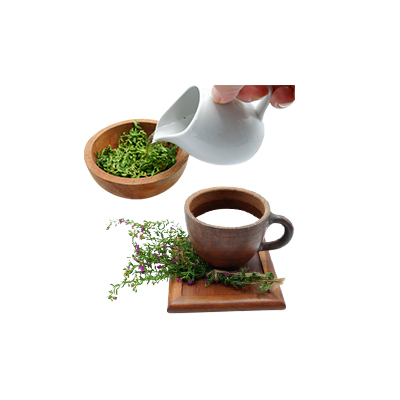
- Prepare leaves as needed then wash thoroughly.
- Soak the leaves and wait for a while.
- Strain the soaking liquid then drink to relieve fever with chills.
2. Lowering cholesterol
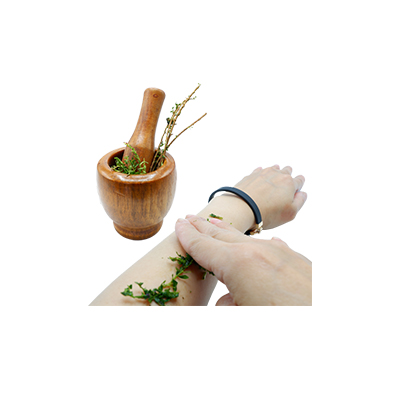
- Take Taiwan beauty leaves and stems then wash thoroughly.
- Grind the leaves and stems into a paste.
- Apply the paste all over the body.
Reference Sources
- Useful Tropical Plants Database. 2014. Cuphea hyssopifolia. https://tropical.theferns.info/viewtropical.php?id=Cuphea+hyssopifolia. 12-09-2021.
- Stuartxchabge. 2019. Philippine Medicinal Plants: Kupea. http://www.stuartxchange.org/Kupea. 12-09-2021.
- CAB International. 2021. Invasive Species Compendium: Cuphea hyssopifolia (false heather). https://www.cabi.org/isc/datasheet/118210#torainfall. 12-09-2021.
- Elhindi M et al. 2012. Antioxidant and Cytotoxic Activities of Cuphea hyssopifolia Kunth (Lythraceae) Cultivated in Egypt. Journal of Pharmacognosy and Phytochemistry 1(4): 68-78.
- Munawaroh E, Yuzammi, Solihah SM, Suhendar. 2017. Koleksi Kebun Raya Liwa, Lampung: Tumbuhan Berpotensi sebagai Tanaman Hias. Jakarta: LIPI Press.
- Royal Botanic Garden. 2017. Plants of the World Online: Cuphea hyssopifolia Kunth. http://www.plantsoftheworldonline.org/taxon/urn:lsid:ipni.org:names:553043-1. 12-09-2021.