Curculigo latifolia Dryand. ex W.T. Aiton
Summary
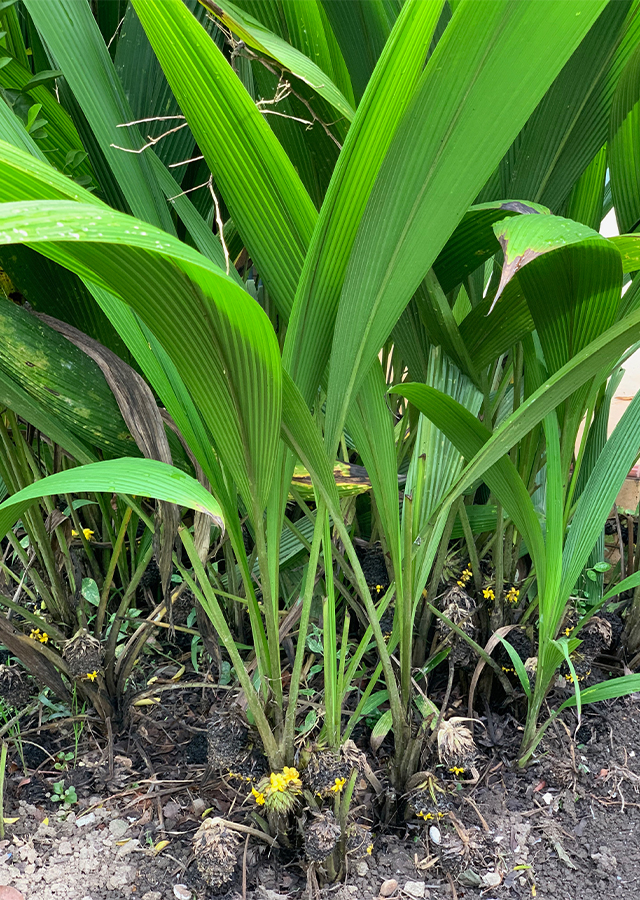
Marasi (Curculigo latifolia) is an upright herb up to 1 meter tall of the Hypoxidaceae family, originating from Indonesia through to Indo-China. In Karo, its leaves are used to wrap the traditional food cimpa, while in Kalimantan its fiber is woven into rope and traditional woven cloth. Its fruit flesh, containing curculin, gives a natural sweet taste and is traditionally believed to be a sugar substitute for diabetics.
Agroecology
Grows well in moist places with a little sunlight, under tree canopy. Its distribution is most commonly found on young secondary forest land with light intensity of 50–70%. Marasi is commonly found in mountain slope areas at elevations of 1,500 m above sea level.
Morphology
- Roots fibrous, tuberous rhizome.
- Stem round.
- Leaves grow directly from the underground stem, elongated shape with a texture like small folds.
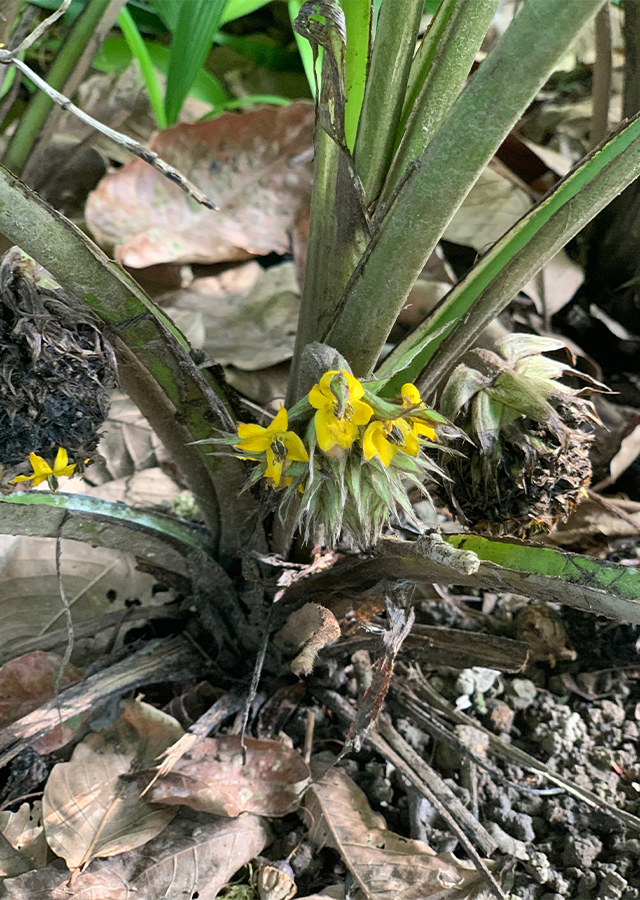
- Flowers bright yellow, small, densely arranged, 6 sepals, hairy bract. Emerges from between the leaves.
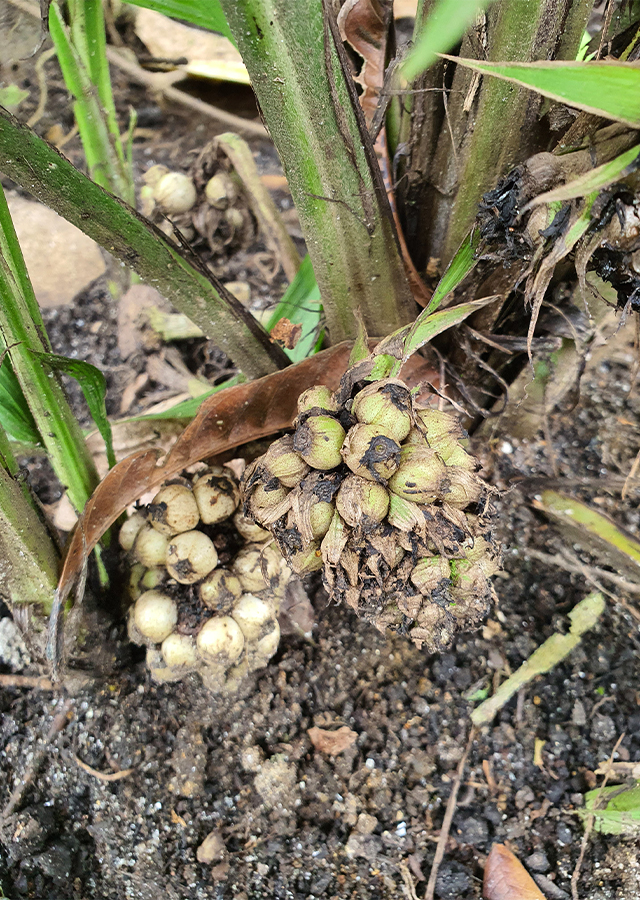
- Fruit a berry, round, 5 mm diameter, whitish translucent color.
- Seeds numerous, small black like dragon fruit seeds.
Cultivation
Cultivated intensively in two ways, namely by stolon/root tuber (vegetative) and by seed (generative).
Chemical Content
Curculin, gallic acid, protocatechuic acid, p-hydroxybenzoic acid, gentisic acid, chlorogenic acid, vanillic acid.
Benefits
Treats kidney pain, cough, headache, stomach ache, eye pain, strengthens sexual function, sugar substitute for diabetics, reduces fever, promotes urination.
Simplisia
- Take marasi root (rhizome), separate from attached dirt.
- Wash thoroughly with running water.
- Slice the root into smaller pieces.
- Dry in the sun or dry using an oven at 40 °C until the moisture content is below 10%.
- Grind with a blender then sift.
- Store in an airtight container.
Local Names
Sukkit (Toba), Singkut (Karo), Pisi (Lampung), Lentahi (Palembang), Cua mok (Papua).
Traditional Recipes
The following recipes reflect traditional knowledge passed down through generations, not a substitute for professional medical diagnosis or advice. Consult a healthcare provider before use.
1. Addressing Cough
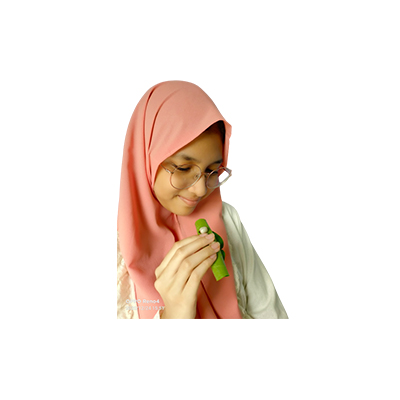
- Prepare an adequate amount of marasi fruit and betel leaf.
- Clean the ingredients with running water.
- Chew both ingredients together. Suck the extract and discard the residue.
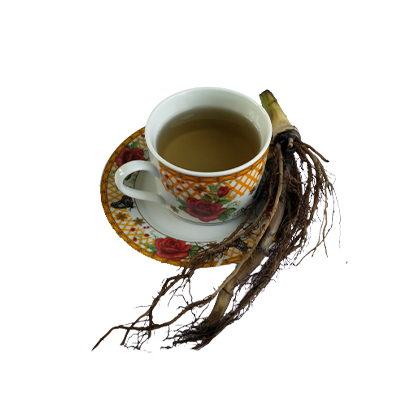
2. Reducing Fever
- Take an adequate amount of marasi root.
- Boil with 1 glass of water until it boils.
- Drink the concoction while warm.
Reference Sources
- Tropical Plants Database, Ken Fern. tropical.theferns.info. Molineria latifolia http://tropical.theferns.info/viewtropical.php?id=Molineria+latifolia. 30-01- 2021.
- University Sains Malaysia, 2020. Lemba. (Mengatasi batuk). https://www.amdi.usm.my/index.php/lemba-plantdatabase. 30-10-2020.