Curcuma longa L.
Summary
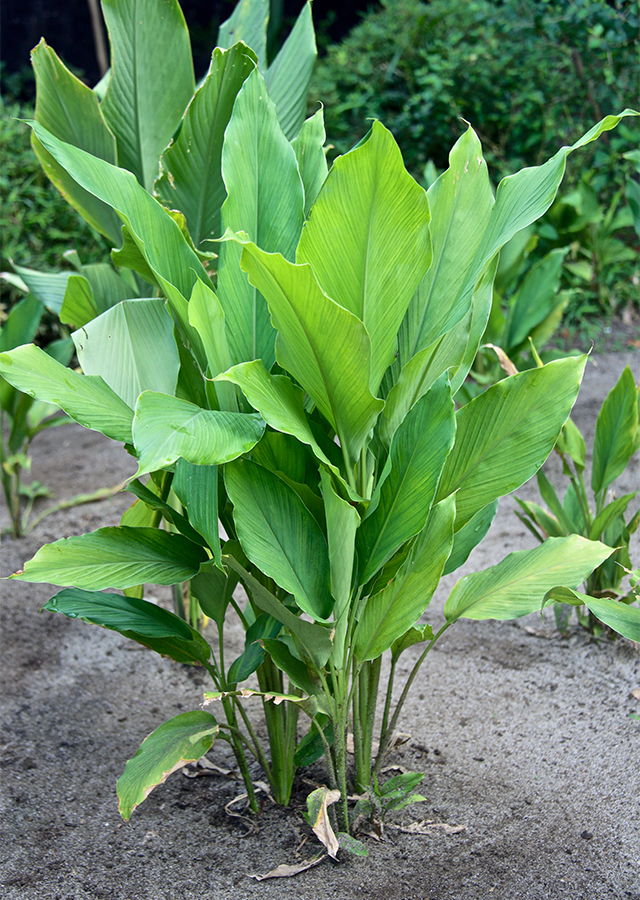
Turmeric (Curcuma longa) is a herb 40-100 cm tall of the Zingiberaceae family, native to Southeast Asia and spreading as far as Australia and Africa. Its orange rhizome is a natural dye, cooking spice, and traditional remedy; the Chinese people have long used it to address stomach ailments and jaundice. Turmeric is also believed to stop minor bleeding and relieve menstrual pain.
Agroecology
Grows well in lowlands up to 2,000 m above sea level, favoring loose sandy soil conditions, rainfall of 1,000-4,000 mm/year, good drainage, temperature of 19-30 °C, pH 6-7, and full sun.
Morphology
- Roots fibrous, light brown.
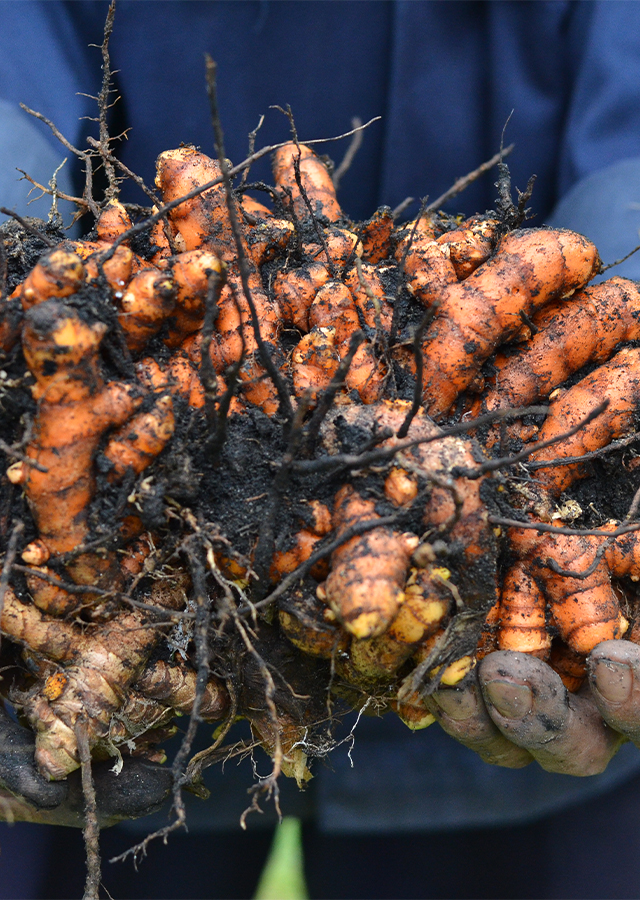
- Rhizome cylindrical, thick, with skin colored dark yellow, orange-yellow, or reddish orange-yellow.
- Stem pseudostem, erect, round, rhizome-shaped, yellowish-green.
- Leaves simple, elongated lanceolate, 3-8 leaves, pinnate venation, smooth margins, green.
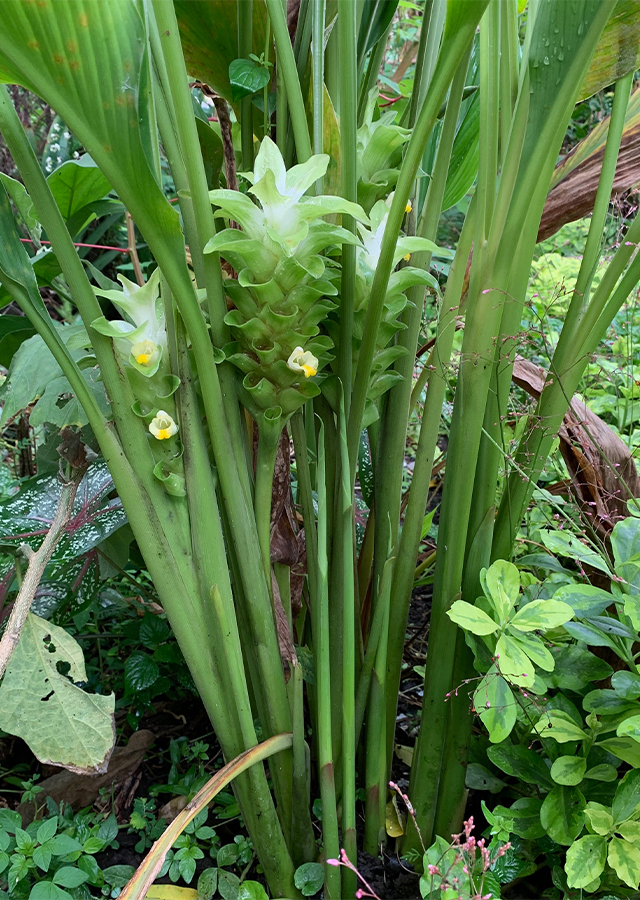
- Flowers compound, tube-shaped, emerging between the leaf sheaths, pale green bract, ovate, 3-4 cm long, small spiral bracts densely hairy, forming a pouch, each containing a flower, yellowish-white.
Cultivation
Propagated using the mother rhizome and daughter rhizomes. Seed stock is first sprouted (until the shoot eye emerges); once it reaches 0.5-1 cm tall, plant in a polybag or directly in the ground.
Chemical Content
Curcuminoids (curcumin), demethoxycurcumin, bisdemethoxycurcumin, saponins, essential oil (sesquiterpenes, turmerone, phellandrene, sabinene, borneol, and zingiberene), alkaloids, tannins, sterols.
Benefits
Stops bleeding; treats stomach acid; helps prevent blood clotting; relieves nasal congestion; reduces menstrual pain, swelling of the oral mucosa; acts as an antipruritic, antiseptic, anticonvulsant, analgesic, antioxidant, antimicrobial, anti-HIV, and cholesterol-lowering agent.
Simplisia
- Select large, fresh, non-rotten turmeric rhizomes, 9-12 months old.
- Wash the turmeric thoroughly under running water. Slice thinly (3 mm) to facilitate and speed up even drying.
- Sun-dry for 5 days.
- Once dry, grind into a powder, then store in an airtight container.
Local Names
Janar (Banjar), Konyet (Madura), Koneng (Sunda), Kunir (Java).
Traditional Recipes
The following recipes reflect traditional knowledge passed down through generations, not a substitute for professional medical diagnosis or advice. Consult a healthcare provider before use.
1. Stomach Acid
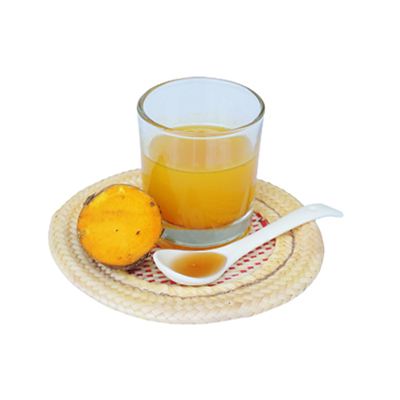
- Prepare 100 g mature turmeric, 15 ml pure honey, 60 ml warm water.
- Grate the turmeric, then squeeze and strain. Steep in warm water and add honey.
- Drink twice a day before meals.
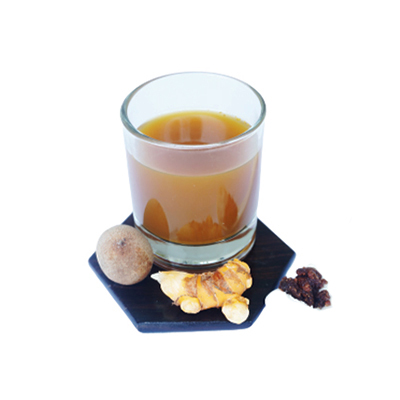
2. Reducing Menstrual Pain
- Peel 250 g of turmeric thoroughly, then blend, adding 300 ml water, strain, then boil in 700 ml water. Add 150 g palm sugar. Add 100 g tamarind and ½ tsp salt, mix well, turn off the heat. Wait until the steam subsides, then strain. Pour into a prepared bottle. Store in the refrigerator.
- Drink once a day, either warm or cold.
Reference Sources
- Tropical Plants Database, Ken Fern. tropical.theferns.info. Curcuma longa. http://tropical.theferns.info/viewtropical.php?id=Curcuma+longa 25-01-2021
- Sirait Midian, dkk. 1985. Cara Pembuatan Simplisia. Departemen Kesehatan Republik Indonesia. Jakarta. 52.
- Afianti. 2020. Mengurangi Nyeri Haid. Kebun Aek Pamingke.
- Nora Sinaga. 2020. Obat Asam Lambung. Kebun Tanah Besi.