Cyanthillium cinereum (L.) H.Rob.
Summary
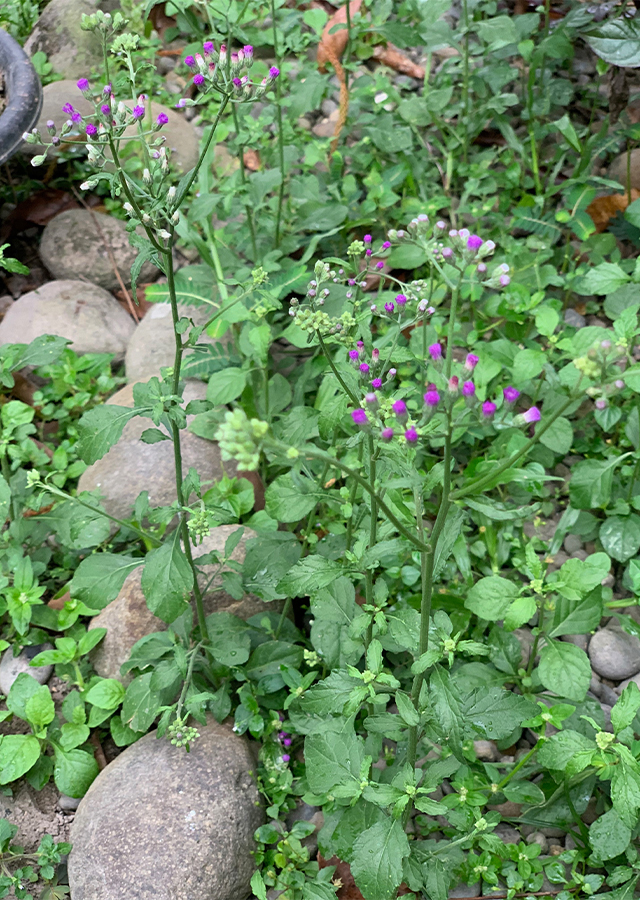
Sirangak (Cyanthillium cinereum) is an erect annual herb 15-80 cm tall of the Asteraceae family, widely distributed across Africa, Arabia, Asia, and Australia. The Minangkabau people have traditionally used its leaves to heal wounds, while in Java its young shoots are eaten as a cooked vegetable. Sirangak is also believed to relieve asthma, cough, and scorpion stings.
Agroecology
Grows in lowlands up to an elevation of 800 m above sea level. This plant favors direct sunlight and can grow in various soil types. Generally found along roadsides and fields as a weed.
Morphology
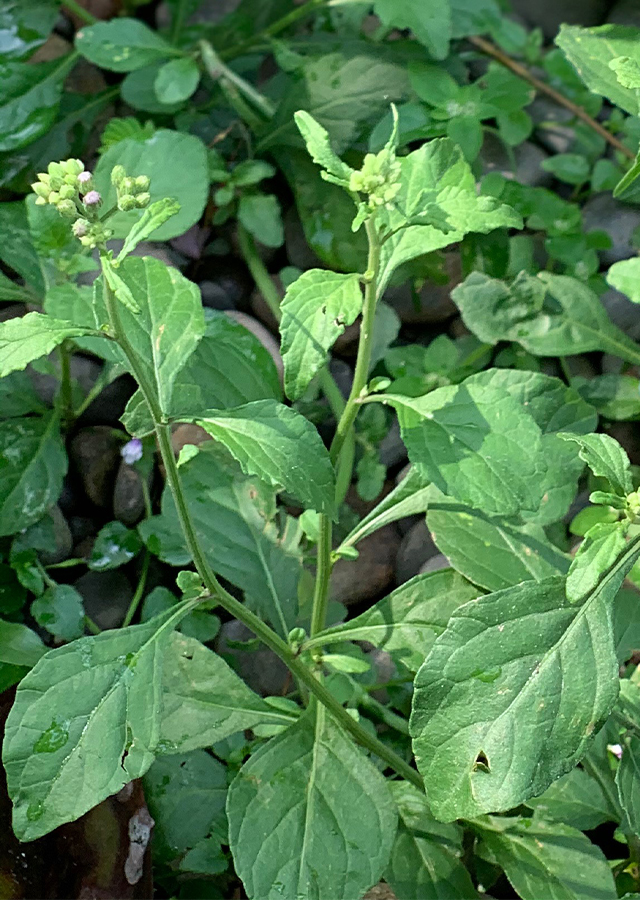
- Stem round, green, heavily branched, finely hairy.
- Leaves green, oval-shaped, toothed margins, short-stalked, petiole length 1.5 cm.
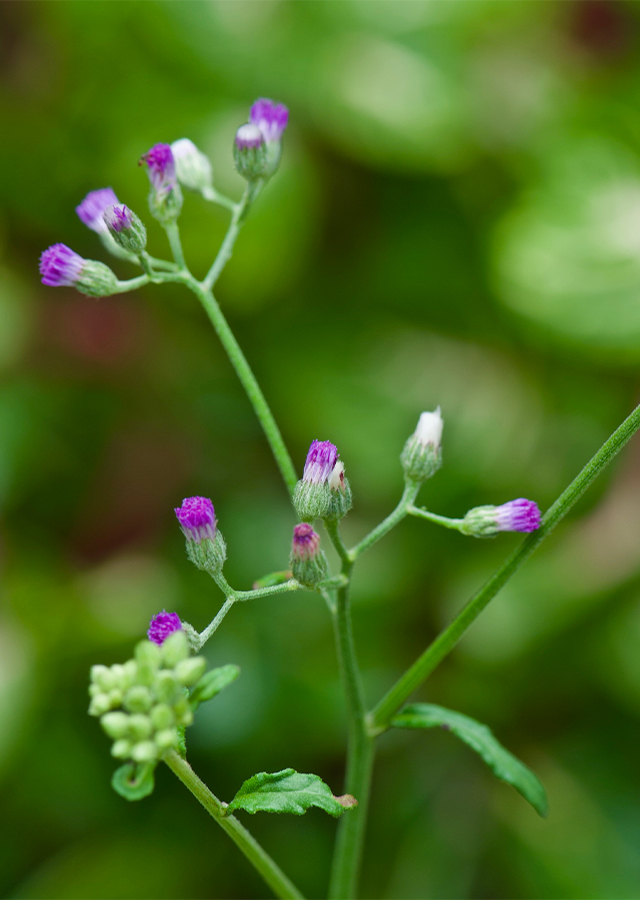
- Flowers head-shaped and purplish.
- Fruit hard, 4-5-angled, brown, some fruit hairs short and clinging, others long and shedding.
Cultivation
- Propagated generatively (by seed).
- Seeds are carried by wind and grow wild as a weed.
Chemical Content
Sesquiterpenes (vernocinolide A, β-amyrin, lupeol), sterols (β-sitosterol, stigmasterol, alpha spinasterol), phenols, terpenoids, quinones, steroids, tannins, alkaloids, saponins, glycosides, flavonoids, phlobatannins.
Benefits
Treats wounds, asthma, insomnia, hepatitis, cancer, cholera, cough, diarrhea, dysentery, impotence, skin diseases, leprosy, arthritis, rheumatism; acts as an antidote for scorpion stings and venomous snakebites; analgesic, antipyretic, anti-inflammatory.
Simplisia
Information not yet available.
Local Names
Nyawon, Pidak bangkong (Java), Sasawi langit (Sunda), Gofu mutiara (Ternate), Buyung-buyung, Rumput ekor kuda (Malay), Maryuna.
Traditional Recipes
The following recipes reflect traditional knowledge passed down through generations, not a substitute for professional medical diagnosis or advice. Consult a healthcare provider before use.
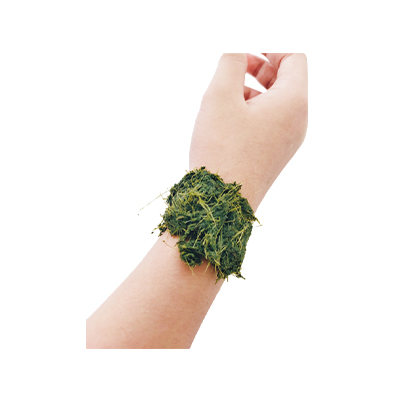
1. Boils, Snakebites, Bruises, Sprains
- Prepare a sufficient amount of the whole plant.
- Wash thoroughly, pound until fine, add a little water.
- Apply to the affected part of the body.
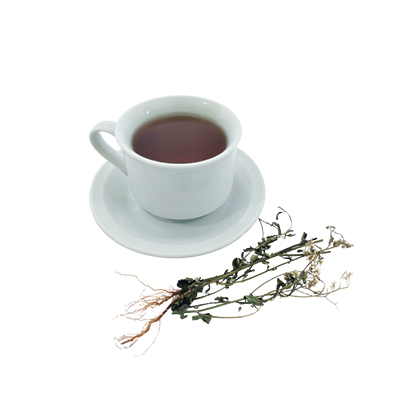
2. Dysentery, Hepatitis, Stomach Cramps, Abdominal Cramps, Insomnia
- Wash 10-15 g of the dried plant thoroughly.
- Boil in 4 cups of water until boiling and reduced to 2 cups, then strain.
- Drink twice a day, 1 cup each time.
Reference Sources
- Tropical Plants Database, Ken Fern. tropical.theferns.info. Cyanthillium cinereum. http://tropical.theferns.info/viewtropical.php?id=Cyanthillium+cinereum22-05-2020.
- Guha G, Rajkumar V, Kumar RA, Mathew L. 2009. Therapeutic Potential of Polar and Non-Polar Extracts of Cyanthillium cinereum In Vitro. Evidence-Based Complementary and Alternative Medicine
- Fadillah M, Santoso P. 2019. The sirangak (Cyanthillium cinereum; Asteraceae) oil accel erates sliced-wound healing by enhanching the hematological endurance in male albino mice. Journal of Physics: Conference Series, Volume 1317, The 3rd International Conference on Mathematics, Sciences, Education, and Technology 4–5 October 2018, Padang, Indonesia.
- M.JituNews. Sawi Langit, Khasiatnya Selangit!!. https://m.jitunews.com/read/14112/budidaya 30-10-2020
- National Parks. Flora & Fauna Web. Cyanthillium cinereum (L.) H.Rob. https://www.nparks.gov.sg/florafaunaweb/flora/5/8/5811 11-01-2021
- Asia-medicinalplants.info. Cyanthilium cinereum (L.) H. Rob. Nature-Medicinal Plants in Sri Lanka. http http://www.asia-medicinalplants.info/cyanthillium-cinereum-l-h-rob/ 11-01-2021
- Stuartxchange. Agas-moro. Cyanthillium cinereum (L.) H.Rob. http://www.stuartxchange.com/AgasMoro.html 11-01=2021
- Tropical Plants Database, Ken Fern. tropical.theferns.info. Cyanthillium cinereum. http://tropical.theferns.info/viewtropical.php?id=Cyanthillium+cinereum 11-01-2021
- CABI. Invasive Species Compendium. Cyanthillium cinereum (little ironweed). https://www.cabi.org/isc/datasheet/113702#tosummaryOfInvasiveness 11-01-2021