Cycas revoluta Thunb.
Summary
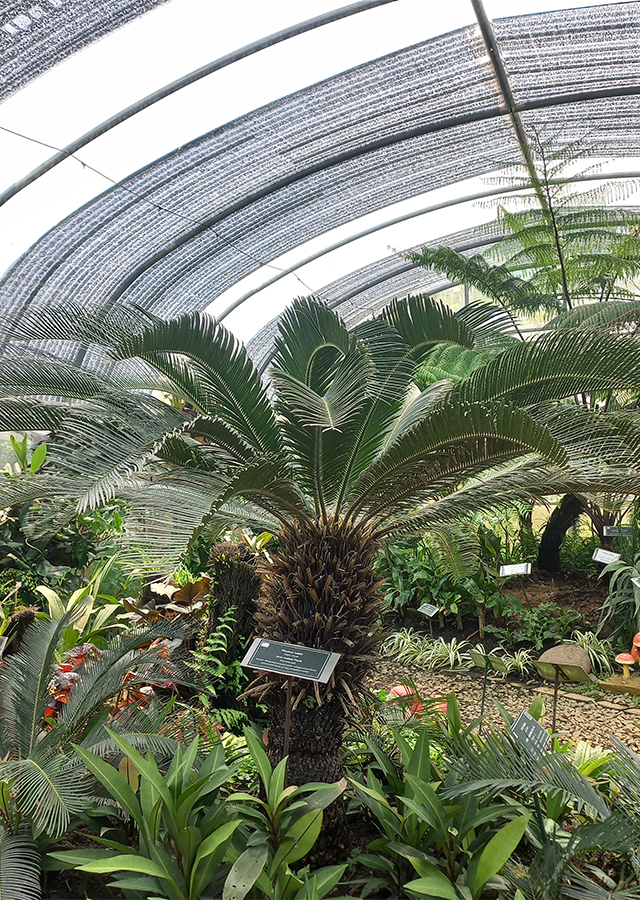
Penawar jambe (Cycas revoluta) is a cycad up to 2 meters tall from the Cycadaceae family, a plant native to Japan and Southern China nicknamed a 'living fossil' because its origins can be traced back to the ancient Mesozoic era. Its leaves are a decorative material exported from Japan, while this plant is popular as a bonsai subject. Penawar jambe is traditionally used as a topical remedy for malignant boils and an antidote for snake bites.
Agroecology
Penawar jambe is a plant with very slow growth, able to tolerate light frost, with reports of plants withstanding temperatures as low as -6 °C. This plant can grow from warm temperate zones to tropical regions. Requires a sunny to partially shaded position. Sometimes found in shade in the wild. Penawar jambe also requires fertile loamy soil with sharp sand and good drainage, and succeeds growing in dry soil and is tolerant of saline conditions.
Morphology
- Roots fibrous and black.
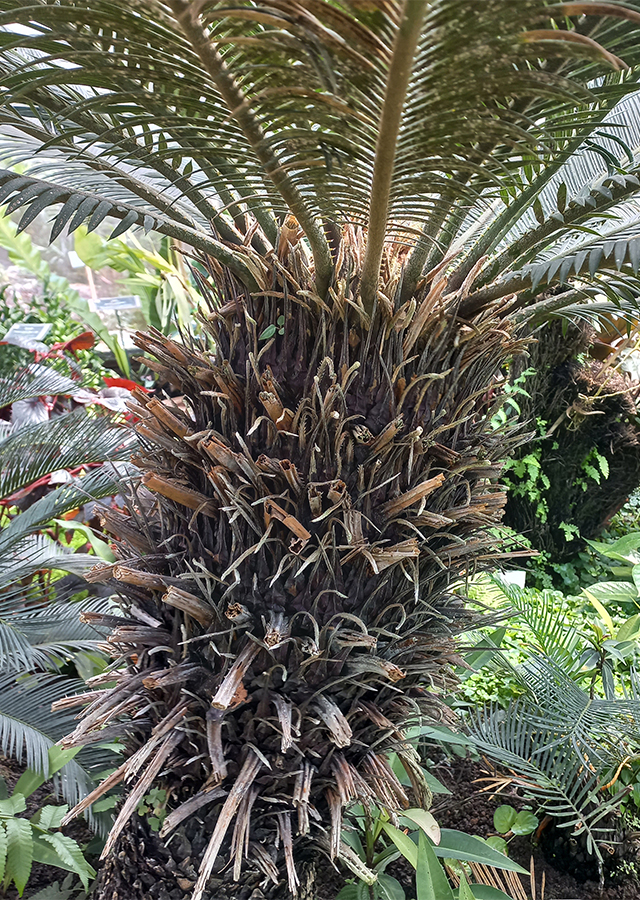
- Stem sturdy and cylindrical marked with prominent blackish-brown scars from fallen petioles, sometimes branched.
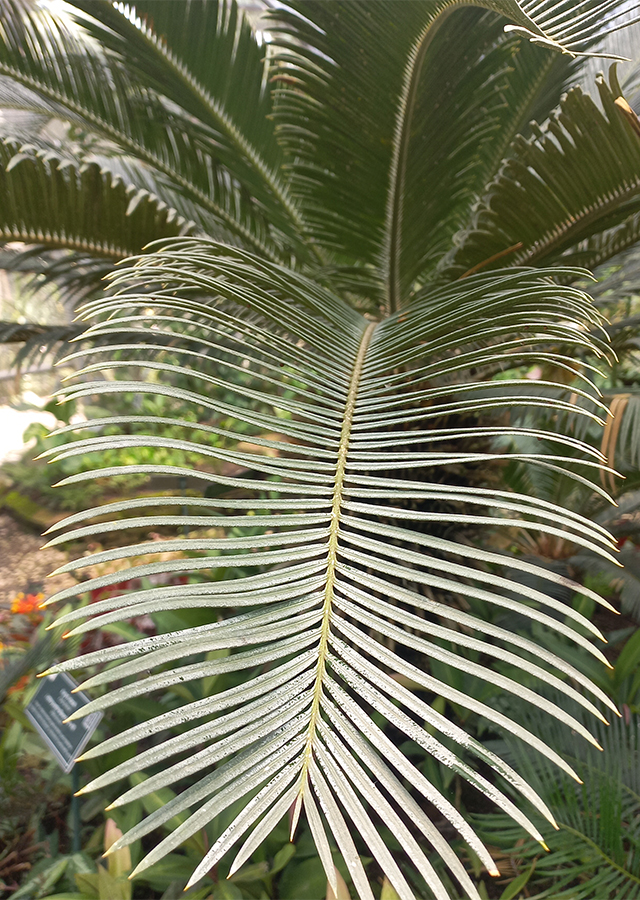
- Leaves numerous, lush, spreading, 0.5-1.5 m long. Leaflets very numerous, close together, and linear. Middle part 18 cm long, 4 to 6 mm wide, upper surface smooth, underside hairy.
- Flowers various raceme-shaped. Male flowers short-stalked, cone-shaped 10-20 cm long and yellow. Female flowers surrounded by yellowish-brown male flowers.
- Fruit an egg-shaped box 1 cm in diameter and green.
- Seeds located on leaves loosely arranged around the stem. The seeds are large, like plums, and pale yellow to brown in color.
Cultivation
- Cultivation of this penawar jambe flora propagates by seed and separation of its shoots.
- Seeds are best sown as soon as ripe.
Chemical Content
Cycasin and methylazoxymethanol (neurotoxic and carcinogenic), methylamino-L-alanine (toxin), leptin, cycasindene, fatty acids (linolenic acid, oleic acid, linoleic acid, palmitic acid, and octadecanoic acid), dihydroamentoflavone, (2S)-I-(2,3)-dihydro-I-7-O-β-d-glucopyranosylamentoflavone and (2S)-I-(2,3)-dihydro-I-7,II-7-di-O-β-d-glucopyranosylamentoflavone, prunin, vitexin-2″-rhamnoside, protocatechuic acid, neocycasin (A, B, C, D, E, F, and G), cryptoxanthin, and zeaxanthin.
Benefits
Treats cancer, hepatoma, rheumatism, malignant boils (applied topically), headaches, nasal congestion, bone pain, paralysis, digestive disorders, painful urination, inhibits the growth of malignant tumors, antidote for snake and insect bites, lowers high blood pressure. Has astringent, diuretic, emmenagogue, expectorant properties.
Simplisia
- Prepare fresh penawar jambe seeds as needed, wash clean with running water then drain.
- Dry under sunlight or with an oven at 40 °C until moisture content reaches 10%.
- Blend into powder.
- Store in a clean, airtight container.
Local Names
Sikas.
Traditional Recipes
The following recipes reflect traditional knowledge passed down through generations, not a substitute for professional medical diagnosis or advice. Consult a healthcare provider before use.
1. Malignant boils
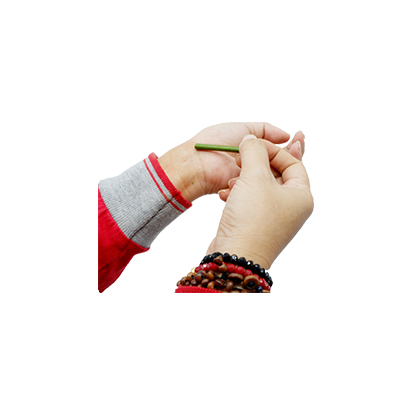
- Take penawar jambe plant sap.
- Apply to the boil.
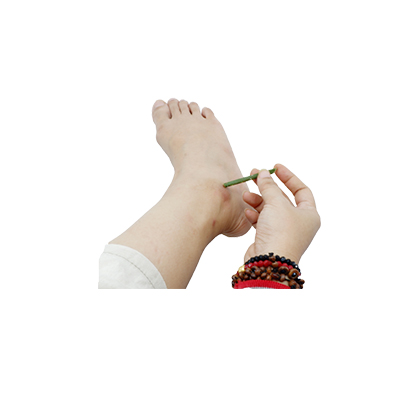
2. Snake or insect bites
- Take penawar jambe plant sap.
- Apply to the snake bite or insect bite.
Reference Sources
- Royal Botanic Gardens. 2017. Plant of the World Online: Cycas revoluta Thunb. http://powo.science.kew.org/taxon/urn:lsid:ipni.org:names:328823-2. 21-10-2021.
- Flora Fauna Web. 2019. Cycas revoluta. https://www.nparks.gov.sg/florafaunaweb/flora/5/1/5108. 21-10-2021.
- Useful Tropical Plants. 2021. Cycas revoluta. http://tropical.theferns.info/viewtropical.php?id=Cycas+revoluta. 21-10-2021.
- Stuartxchange. 2018. Philippine Medicinal Plants: Oliba. http://www.stuartxchange.org/Oliba. 21-10-2021.
- Sometimes as Mine in Gardens. 2014. Manfaat Dan Khasiat Penawar Jambe (Cycas revoluta Thunb). https://sometimesasmine.blogspot.com/2018/09/manfaat-dan-khasiat-penawar-jambe-cycas.html. 21-10-2021.