Cylanthus bipartitus Poit. ex A.Rich.
Summary
Cyclanthus bipartitus or capit udang is a coastal tropical forest plant of Central and South America, found in various northern Brazilian states through to Mato Grosso. In tropical countries, this plant is generally taken from the wild for medicinal and body ornamentation purposes, while in Ecuador it is cultivated for its fragrant flowers used as a perfume ingredient. Traditionally, capit udang is also believed to be effective in treating snake bites and cataracts.
Agroecology
C. bipartitus is generally found growing in forests, especially along riversides, and requires a warm and relatively humid environment. In Costa Rica, this species is found in wet forests, at elevations up to 1,400 m asl. C. bipartitus prefers to inhabit moist lowland forests, growing in dense populations on the outskirts of small riverside towns, in flood-prone areas, and can also occur in open areas or altered forests. Its optimal growth prefers environments with temperatures above 16°C, but can tolerate temperatures above 1°C. Naturally, this species grows under moist tropical forest, so shade or partial shade is sufficient. Grows best in organic humus kept consistently moist.
Morphology
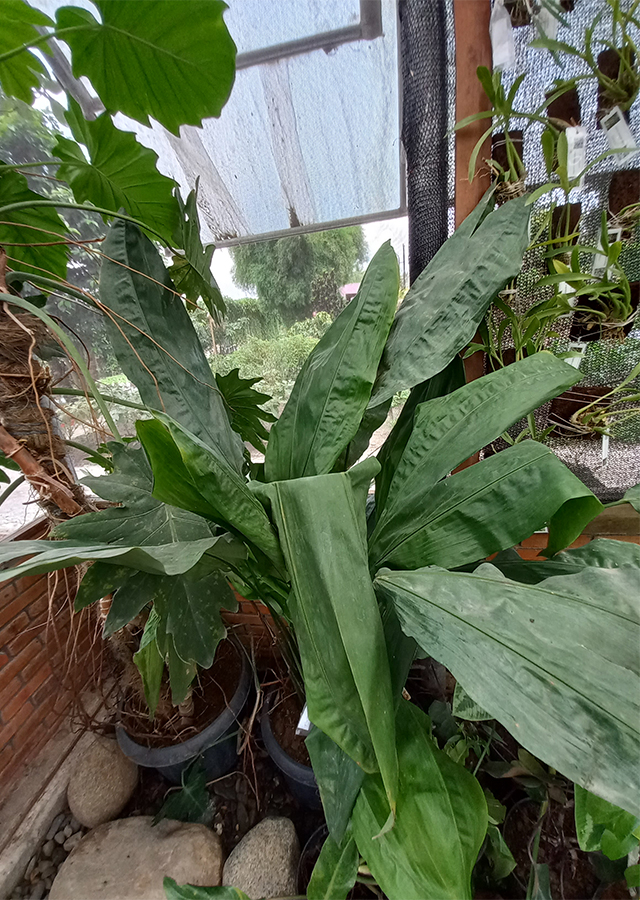
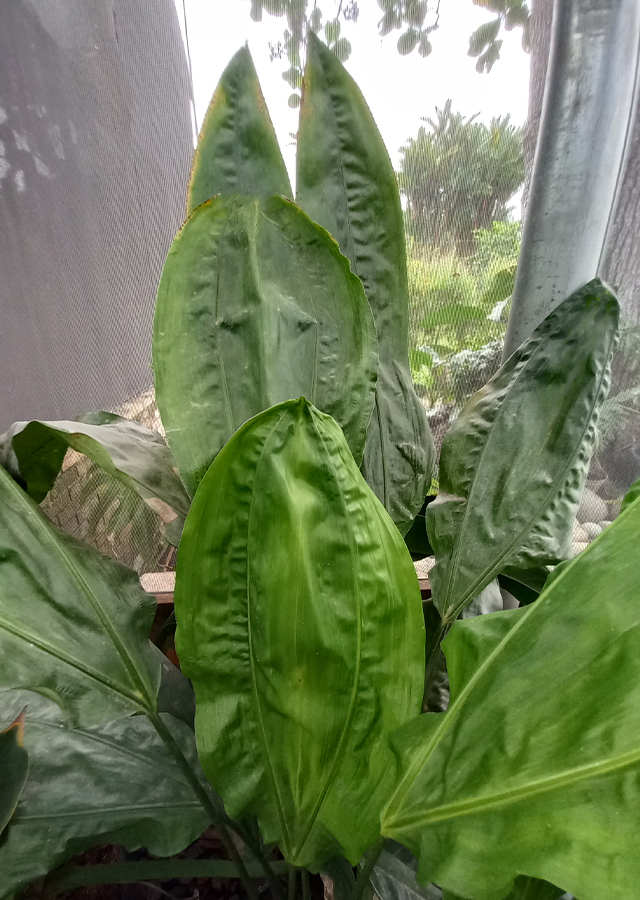
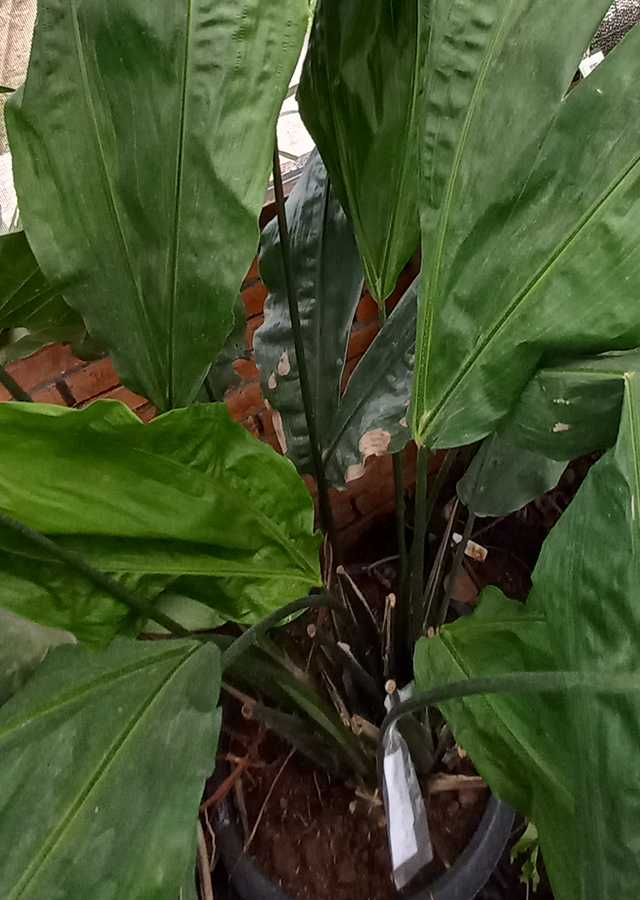
- Leaves arranged spirally, leaves branched or split or sometimes entire, emerging from the base of the plant, can grow up to about one meter long, green in color. Leaves linear-lanceolate to falcate shaped, with wavy but unfolded margins, petiolate, tip acute, base attenuate (leaf tissue tapering down the petiole to a narrow base, always with a few fleshy leaflets on both sides of the petiole), with parallel venation and a distinct central vein. When mature, the leaf splits from the tip into two lobes. Petiole cylindrical, light green, forking in two making the leaf look like rabbit ears.
- Flowers form a ringed pyramid-like structure and produce an aroma comparable to cinnamon and vanilla. Staminate flowers with stamens arranged in a ring, usually 4, fused with the filament; pistillate flowers with a ring sharing a common ovarian cavity. Staminodes consist of gill-like structures channeled with sterile anthers. The inflorescence emerges from the ground, covered with a faint yellow bract, made up of disc-like segments.
- Fruit a berry.
- Seeds small, about 1.0 mm long and 0.7 mm in diameter. The seeds are urceolate, tapering to become more elongated.
Cultivation
Plant propagation is done through seed and root division.
Chemical Content
Information not found. Further research is needed.
Benefits
Treats snake bites and cataracts.
Local Names
Information not found. Further research is needed.
Traditional Recipes
The following recipes reflect traditional knowledge passed down through generations, not a substitute for professional medical diagnosis or advice. Consult a healthcare provider before use.

1. Treats snake bites
- Take an adequate amount of fresh capit udang leaves and wash until clean.
- Grind until it becomes a paste.
- Apply the leaf paste as a poultice on the snake bite.
Reference Sources
- Royal Botanic Gardens. Palnt of the World Online: Cyclanthus bipartitus Poit. ex A.Rich. https://powo.science.kew.org/taxon/30336798-2. 10-09-2022.
- Tropical Plants Database, Ken Fern. 2022. Cyclanthus bipartitus. https://tropical.theferns.info/viewtropical.php?id=Cyclanthus+bipartitus. 10-09-2022.
- Flora Fauna Web. 2022. Cyclanthus bipartitus. https://www.nparks.gov.sg/florafaunaweb/flora/1/9/1916. 10-09-2022.
- Hortipedia.com. Cyclanthus bipartitus. https://en.hortipedia.com/Cyclanthus_bipartitus#/Flowers_and_Fruit. 10-09-2022.
- Leal E. S., Forzza R. C. 2012. Cyclanthaceae no estado do Pará, Brasil. Acta Botanica Brasilica 26(4): 822-835. 2012.