Cynometra cauliflora L.
Summary
Cynometra cauliflora or nam-nam has an origin that is not entirely clear, with some records citing India, Southeast Asia, and the Indonesian archipelago as its region of origin. Its fresh sweet-sour fruit is often eaten directly or processed into rujak and candied fruit, while in Malaysia its leaves and fruit, which contain bioactive compounds, have long been used as a traditional remedy to relieve diarrhea and promote urination.
Agroecology
Nam-nam grows well in wet tropical lowlands, but experience in India shows that it fruits better in a monsoon climate with a distinct dry season. This plant succeeds at elevations up to 400 m asl. Grows best in areas where the mean annual daytime temperature is in the range of 22-35°C, but can tolerate 17-40°C. Nam-nam prefers mean annual rainfall in the range of 1,500-2,000 mm, but tolerates 1,200-2,500 mm. Prefers a position in full sun but tolerates some shade. Prefers a pH in the range of 5-6, tolerating 4.5-6.5. This plant is also wind-resistant.
Morphology
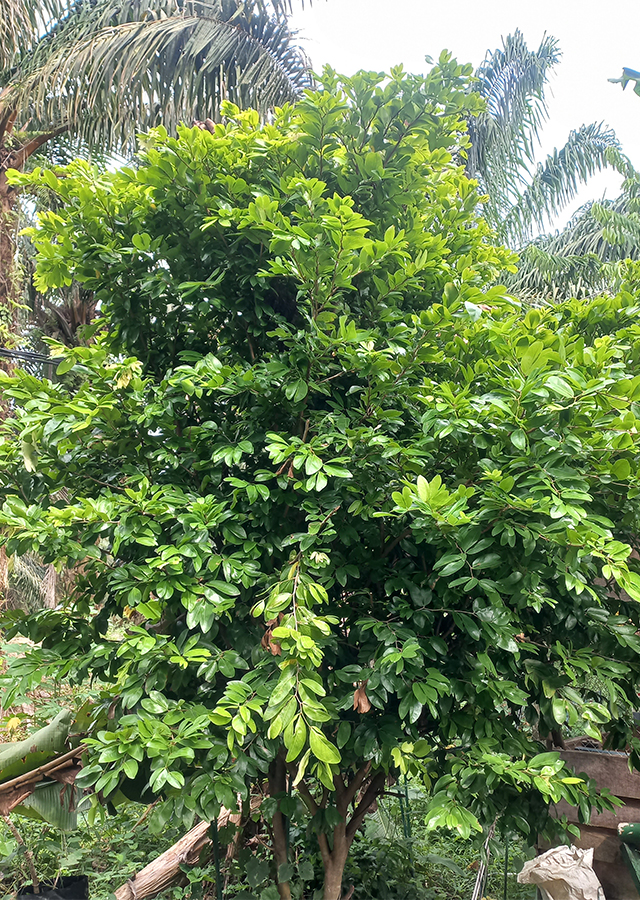
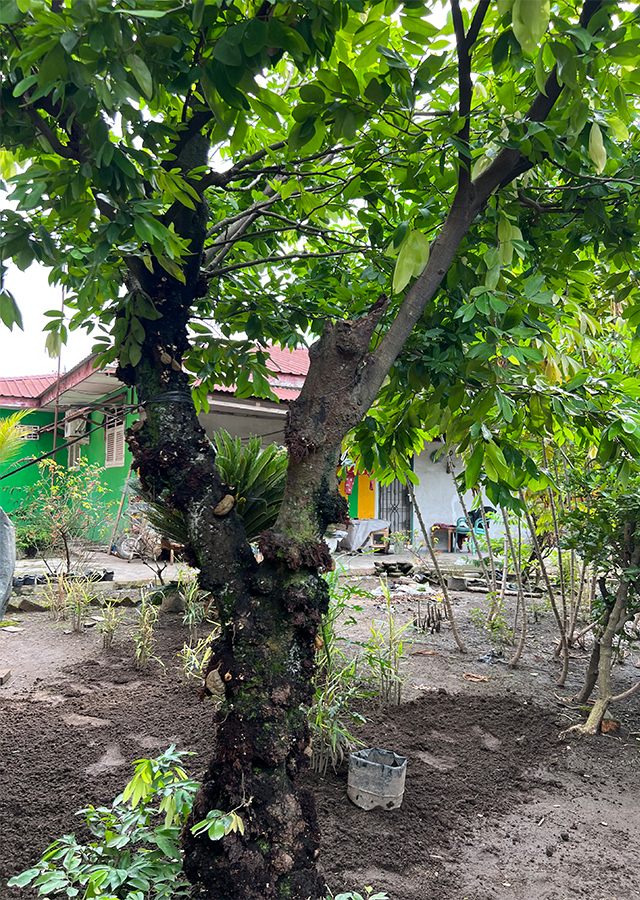
- Stem knobby/bumpy, with smooth, pimply bark, brownish or gray with a somewhat dense crown.
- Leaves compound with a pair of leaflets, petiole 2-8 mm long. Leaflets oblong to obliquely ovate, asymmetric. Leaflet size 5.5-16.5 x 1.5-5.5 cm, almost stalkless, hanging, glossy dark green. Young leaves white or bright pink, hanging limply.
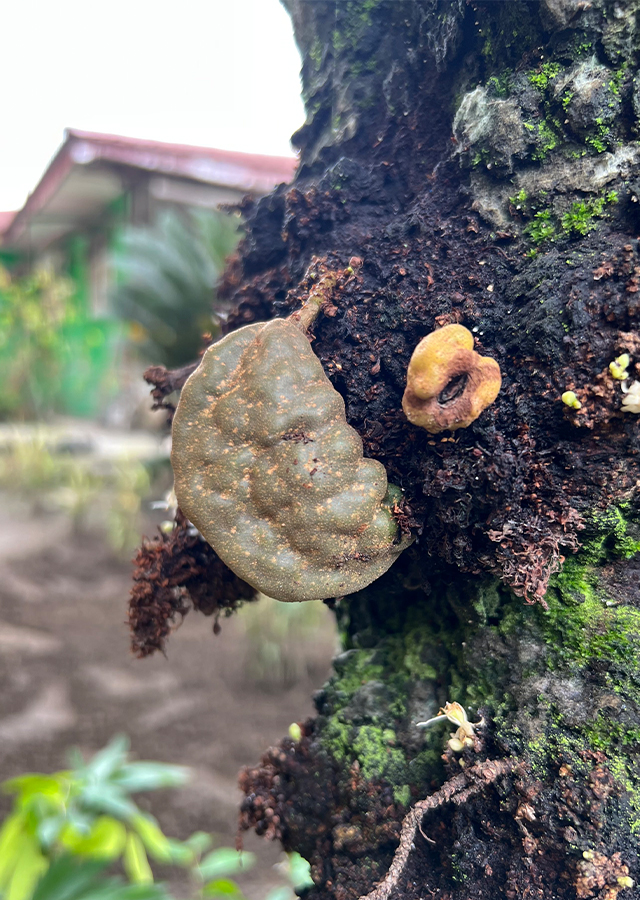
- Flowers small clusters with rows of bracts, 4-5 clusters crowded on protrusions emerging on the stem, down close to the ground. Flowers small, sepals pale pink or white, corolla lanceolate shaped and white. Stamens free, 8-10 in number.
- Fruit a thick-fleshed pod, wrinkled kidney-shaped with a tapering tip, 3-9 x 2-6 x 1-4 cm, hanging on the stem, scaly brown when young and greenish or yellowish when ripe.
- Seeds one per fruit, flattened kidney-shaped, 3-6 x 2-4 cm in size, brown.
Cultivation
- Plant propagation through seed, although it can also be propagated by budding, approach grafting, and other methods.
- The trees receive no special attention in home yards, other than wrapping burlap sacking around the trunk to protect the fruit from rats and fruit borers. This wrapping does not appear to hinder flowering and fruit formation. Pests and diseases are not serious. Pods are attacked by borers, and young leaves can be attacked by black aphids.
Chemical Content
Saponins, steroids or triterpenoids, phenolics, flavonoids, tannins, quinones, and cardiac glycosides.
Benefits
Relieves symptoms of loose stools or diarrhea, increases appetite, promotes urination and treats kidney stones, leprosy, and skin diseases.
Simplisia
- Prepare an adequate amount of nam-nam twigs, wash clean with running water.
- Cut the twigs into pieces to make them easier to dry.
- Dry under the sun or with an oven at 40°C until the moisture content reaches 10%.
- Grind using a blender until it becomes powder.
- Store in a clean, airtight container.
Local Names
Namu-namu (Manado), Namo-namo (Ternate), Namet (Halmahera), Namute, Lamute, Lamuta, Klamute (beberapa bahasa di Maluku tengah), Aloma (Seram) dan Kfamute (Buru), Kopi anjing (Jawa), Puki (Sunda).
Traditional Recipes
The following recipes reflect traditional knowledge passed down through generations, not a substitute for professional medical diagnosis or advice. Consult a healthcare provider before use.
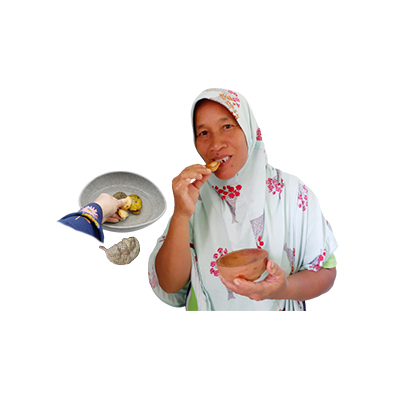
1. Increases appetite
- Take fresh nam-nam fruit and wash until clean.
- Eat the fruit to treat loss of appetite.
Reference Sources
- Royal Botanic Gardens. Plants of the World Online: Cynometra cauliflora L.. 02-06-2022. https://powo.science.kew.org/taxon/urn:lsid:ipni.org:names:489381-1#image-gallery.
- Useful Tropical Plants. 2022. Cynometra cauliflora. 02-06-2022. https://tropical.theferns.info/viewtropical.php?id=Cynometra+cauliflora.
- PROSEA. Cynometra cauliflora. 02-06-2022. https://uses.plantnet-project.org/e/index.php?title=Cynometra_cauliflora_(PROSEA)&mobileaction=toggle_view_desktop.
- Flora FAuna Web 2022. Cynometra cauliflora. 02-06-2022. https://www.nparks.gov.sg/florafaunaweb/flora/2/8/2833.
- Balai Pengkajian Teknologi Pertanian Kepulauan Riau, 2016. Rahasia di Balik Buah Namnam. https://kepri.litbang.pertanian.go.id/new/index.php/berita/hot-news/762-rahasia-di-balik-buah-namnam#:~:text=Namnam%20termasuk%20ke%20dalam%20famili,India%2C%20Asia%20Tenggara%20dan%20Indonesia.
- La Ode Sumarlina , Agik Suprayogi, Min Rahminiwati, Aryani Satyaningtijas, Dede Sukandar, Achmad Tjachja, Harni Pangestika. 2016. The Ability of Namnam (Cynometra cauliflora) Leafs Extract as Antidiabetic Agent Through α–Glucosidase Inhibition on Several Extraction Stages. International Journal of Sciences: Basic and Applied Research (IJSBAR) (2016) Volume 30, No 2, pp 112-123.