Cyperus rotundus L.
Summary
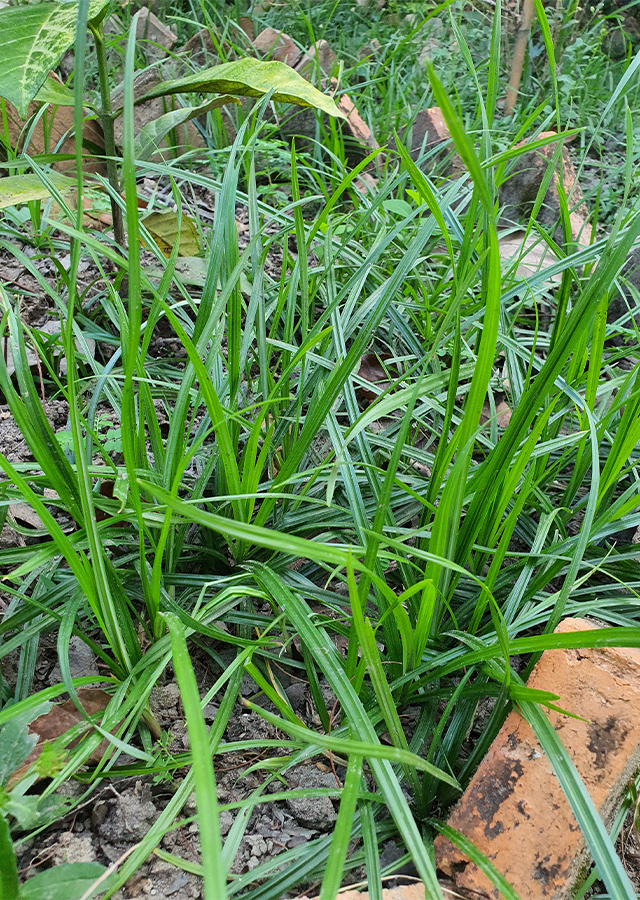
Nutgrass (Cyperus rotundus) is a herb up to 10-30 cm tall of the Cyperaceae family, native to Africa, South Asia, and Europe, now distributed on nearly every continent thanks to its high adaptability. Although considered a nuisance weed, nutgrass is an important plant in Indian and Chinese medicine. Nutgrass is traditionally believed to address hypertension, tumors, and digestive disorders.
Agroecology
This plant grows well at temperatures of 24-32°C, with rainfall of 500-3,000 mm/year, at elevations up to 800 m above sea level, pH 5.5-7, and prefers moist sandy loam soil types.
Morphology
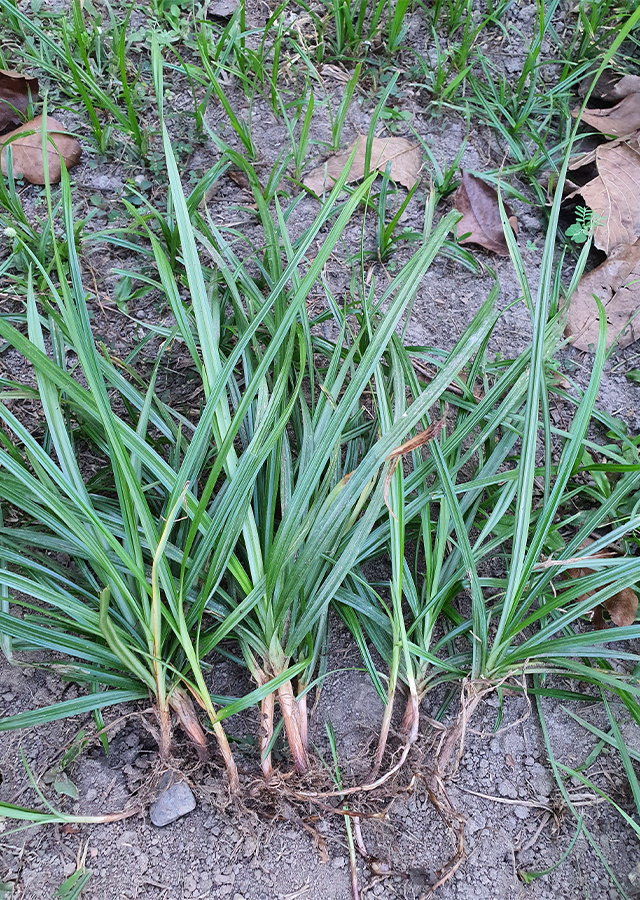
- Root fibrous, many-branched, has sub-branches, finely hairy. Grows elongated and spreads in the soil.
- Tuber blackish in color, inner part reddish-white.
- Stem triangular-shaped, green in color.
- Leaves ribbon-shaped, glossy green in color, located at the stem base.
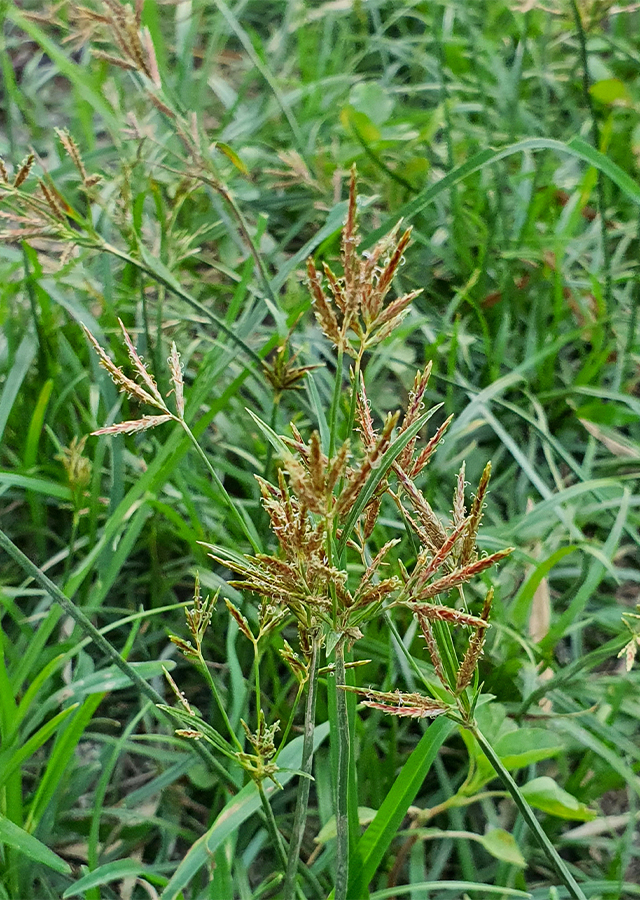
- Flowers greenish-brown in color, compound forming an umbrella, spike-shaped and located at the base tip.
- Seeds consist of 10-40 spikelets, alternating slightly overlapping and pressed close to the axis, seed ovate and flat shaped, 3 mm long, reddish-brown in color.
Cultivation
Propagated by stolons or runners, namely extensions of the main stem.
Chemical Content
Alkaloid, tannin, flavonoid, sterol, phenolic acid, ascorbic acid, and essential oil (cyperene, humulene, β-selinene, zierone).
Benefits
Addresses hypertension, allergies, tumors, wounds, boils, stomach ache, diarrhea, ulcers, sore throat, cough, bleeding, malaria, viral and fungal infections, diabetes, analgesic, hepatoprotective, cardioprotective, antibacterial, anti-inflammatory.
Simplisia
Information not yet available.
Local Names
Mota (Madura), Karelawai (Sumba), Rukut teki wuta (Maluku), Bulili manggasa buai (Sulawesi).
Traditional Recipes
The following recipes reflect traditional knowledge passed down through generations, not a substitute for professional medical diagnosis or advice. Consult a healthcare provider before use.
1. Allergies
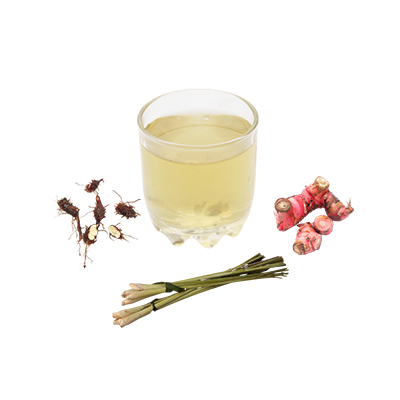
- Prepare 5 g nutgrass tuber, 5 g sambiloto herb, 1 g lemongrass leaf, 3 g galangal rhizome, 600 ml water.
- Make an infusion: Boil all ingredients for 15 minutes.
- Drink twice a day after eating.
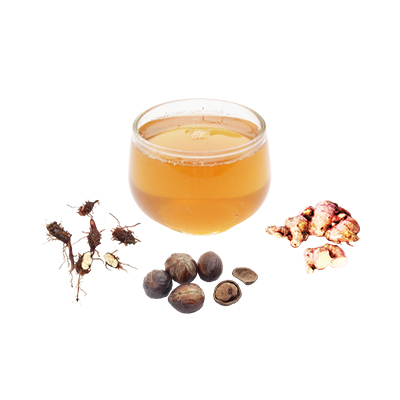
2. Analgesic
- Take 7 g nutgrass tuber, 5 g temulawak rhizome, 1 g nutmeg seed, 300 ml water.
- Make an infusion: Boil all ingredients for 15 minutes.
- Drink 1-2 times a day after eating.
Reference Sources
- Banez SAS. 2011. Phytochemical and Pesticidal Propertiesof Barsanga (Cyperus rotundus Linn.). National Peer Reviewed Journal 6: 197-214.
- Peerzada AM, Ali HH, Naeem M, Latif M, Bukhari AH, Tanveer A. 2015. Cyperus rotundus L.: Traditional uses, phytochemistry, and pharmacological activities. Journal of Ethnopharmacology 174: 540–560.
- Tropical Plants Database, Ken Fern. tropical.theferns.info. Cyperus rotundus. http://tropical.theferns.info/viewtropical.php?id=Cyperus+rotundus 03-02-2021
- Kementerian Kesehatan RI. 2011. Vademekum tanaman obat : Untuk saintifikasi jamu, jilid 2. Kementerian Kesehatan RI. Jakarta.
- Researchgate. Chemical constituents of the essential oil of Cyperus rotundus Linn. https://www.researchgate.net/publication/283591673_Chemical_Constituents_of_the_Essential_oil_of_Cyperus_rotundus_Linn 20-01-2021