Dahlia pinnata Cav.
Summary
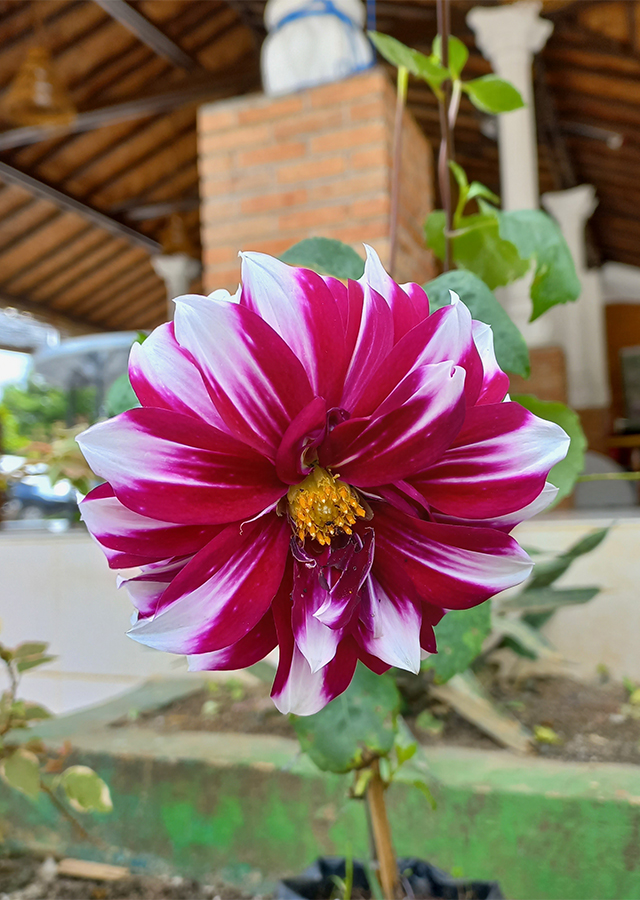
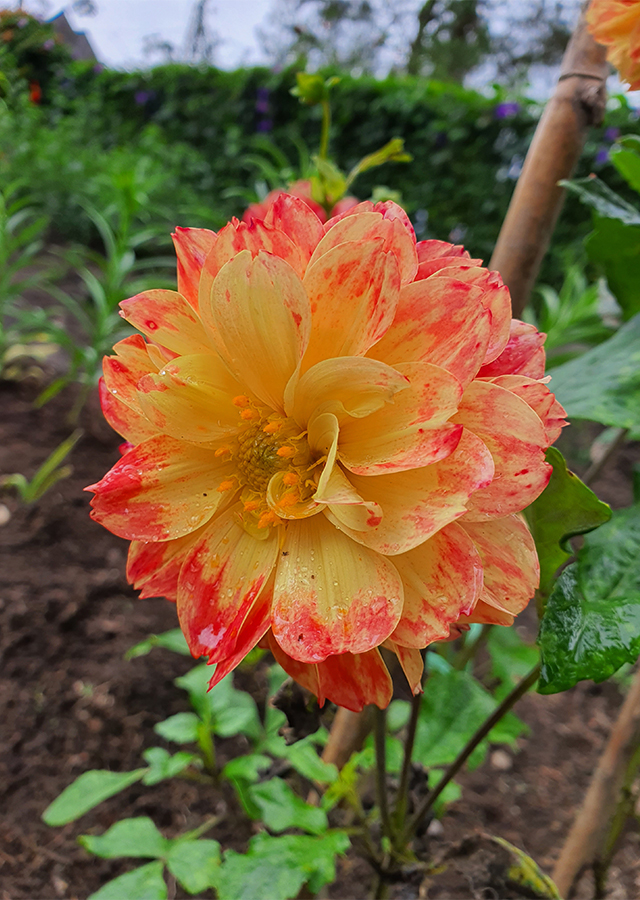
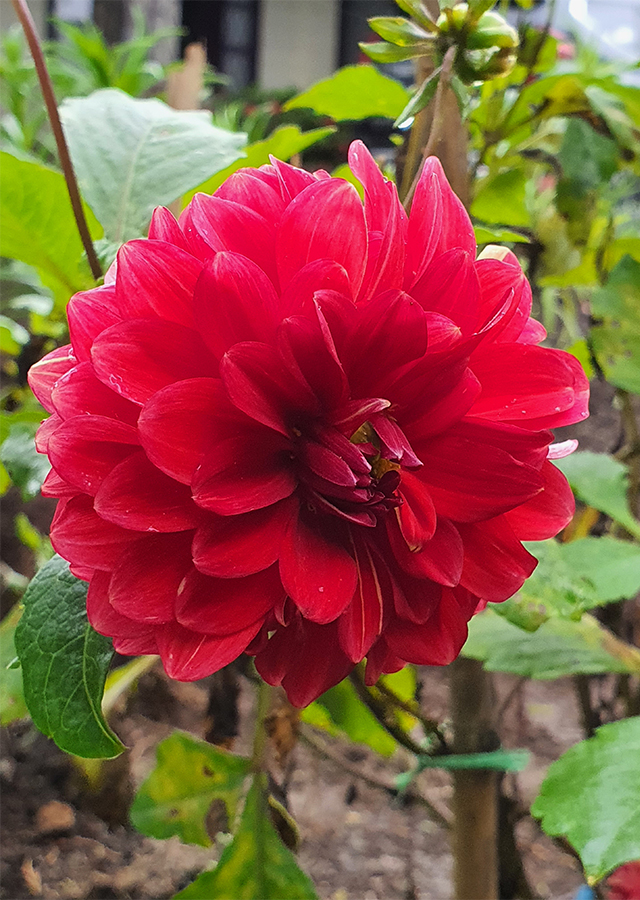
Bunga dahlia (Dahlia pinnata) is a shrub up to 1.5 meters tall from the Asteraceae family that originates from Mexico, entering Indonesia around the 19th century during the Dutch colonial era. Its carbohydrate and inulin-rich tuber is edible, while its petals are used as perfume and natural dye ingredients. Dahlia's inulin content is believed to function as a prebiotic that helps control lipid metabolism in diabetes patients.
Agroecology
Dahlia cultivation is done in areas with an elevation of 700-1,000 m above sea level, with direct sunlight and no shade. Dahlia grows well in sandy loam soil containing plenty of humus and loose, with a soil acidity level ranging from 6-8.
Morphology
- Roots have tuberous roots, brown or usually a dirty white color.
- Stem hard woody, but still low. The color of its stem appears brown with a round shape, main stem diameter ranges between 1-1.5 cm. Generally the dahlia stem is branched and each branch is covered with lush leaves.
- Leaves oblong-round or elongated round shape and somewhat wide. The tip is somewhat pointed. Meanwhile, the leaf margin is serrated, green in color and accompanied by somewhat visible leaf veins. Leaf petioles are 2-5 cm in size.
- Flowers single, with colors varying from white, yellow, orange, violet, red, purple or combinations, with flower diameter ranging between 5-20 cm. The petals are arranged in neat layers.
Cultivation
- Propagation is done with seeds, young shoot cuttings, and tuber division.
- Propagation by seed usually germinates within 1-3 weeks at a soil temperature of 20 °C. When they are big enough to plant, move the seedlings into individual pots and grow until big enough to be planted outdoors. Young shoot cuttings are done when new growth begins. Meanwhile tuber division is done when dormant. In tuber division each part must have a growing point.
Chemical Content
Flavonoids including anthocyanins, butein, flavones, inulin.
Benefits
Maintains bifidobacterium growth in the large intestine, stimulates the immune system, reduces the risk of osteoporosis, as a prebiotic that can control lipid metabolism in diabetes patients, reduces inflammation from insect stings, relieves foot fatigue.
Local Names
No information found. Further research needed.
Traditional Recipes
The following recipes reflect traditional knowledge passed down through generations, not a substitute for professional medical diagnosis or advice. Consult a healthcare provider before use.
1. Reducing inflammation from insect stings
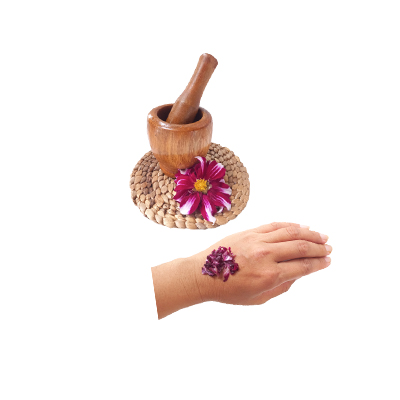
- Take dahlia flower petals and wash until clean.
- Mash into a paste.
- Apply the flower paste to the skin to reduce inflammation from insect stings.
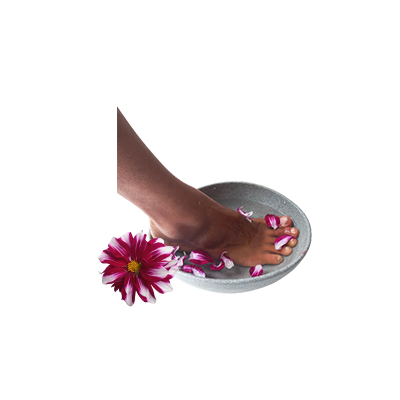
2. Relieving foot fatigue
- Pick fresh dahlia flowers, then put them into water.
- Then put your feet into a container containing the flower-soaked water.
- Let it sit until foot fatigue decreases.
Reference Sources
- Royal Botanic Gardens. 2017. Plants of the World Online: Dahlia pinnata Cav.. http://www.plantsoftheworldonline.org/taxon/urn:lsid:ipni.org:names:30027297-2. 15-10-2021.
- Useful Tropical Plants. 2021. Dahlia pinnata. https://tropical.theferns.info/viewtropical.php?id=Dahlia+pinnata. 15-10-2021.
- Fibrianty Eka. 2020. Keragaman Genetik Dahlia pinnata. Iptek hortikultur. No. 16 - November 2020. https://hortikultura.litbang.pertanian.go.id/IPTEK/2020/1.%20Eka%20Dahlia.pdf. 15-10-2021.