Daucus carota L.
Summary
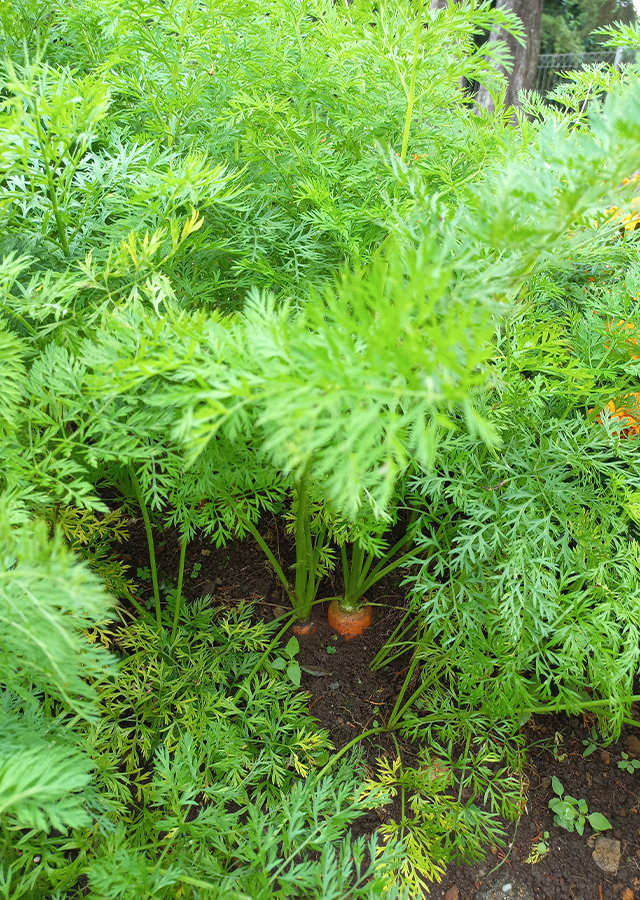
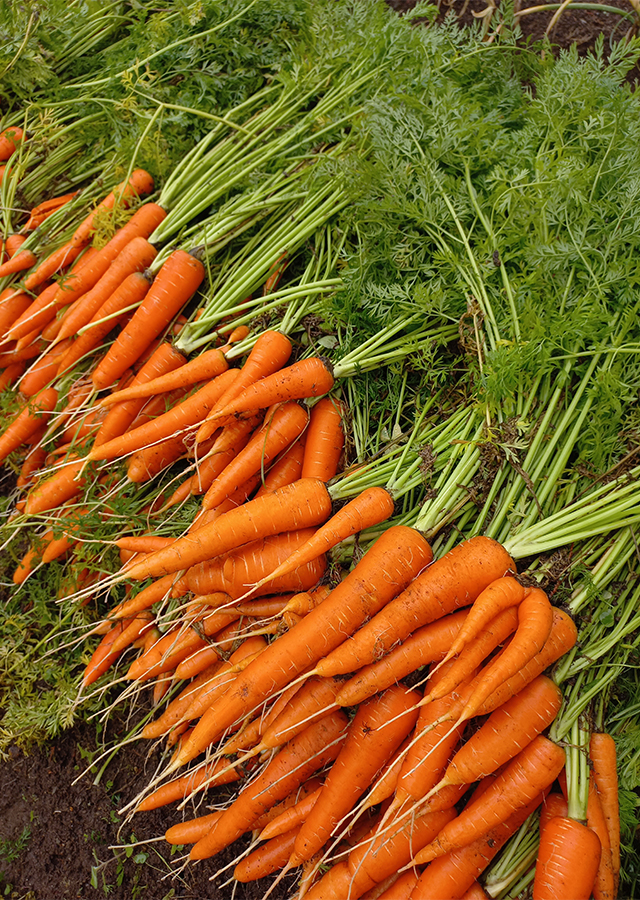
Carrot (Daucus carota) is an annual or biennial herb 20-50 cm tall from the Apiaceae family with a genetic source in East and Central Asia, first cultivated around the Mediterranean Sea before spreading worldwide. Its root, rich in carotene, is converted by the liver into vitamin A which maintains eye health. In traditional European medicine, carrot is used to treat jaundice and liver disorders.
Agroecology
Carrot can be found growing in grasslands, along coastal cliffs, sand dunes, shrublands, lush grasslands, roadsides, abandoned fields, degraded grasslands, and vacant lots. This plant is widely grown in temperate regions during winter, while in Indonesian carrot production centers, carrots are generally cultivated in highlands, at elevations between 1,200-1,500 m asl. If grown in lowlands, it will only grow tall and will not form a tuber. The optimal temperature for carrot plant growth is 15-21°C. Such a temperature is suitable for root and top growth so the root color and shape can be optimal. Soil suitable for carrot growth is well-drained, rich in organic matter, and fertile. Sandy loam soil is suitable for carrot cultivation because it allows easy root penetration so growth can reach an optimal length and size. This plant can grow well in soil with a pH of 5-8.
Morphology
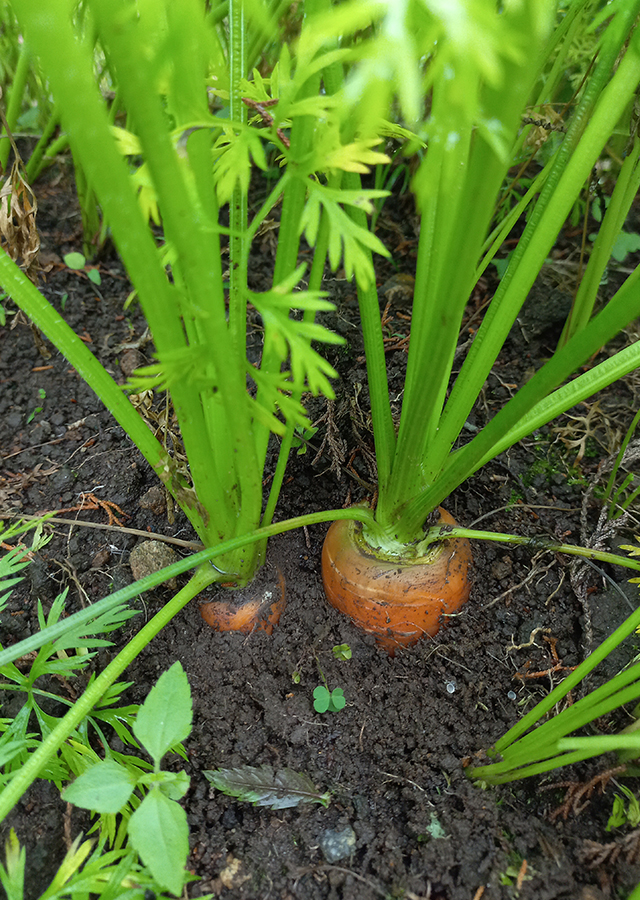
- Roots a fleshy taproot, thick, straight, conical to cylindrical shaped, skin and flesh yellow or orange (most common), the upper part of the root often green.
- Stem very short, appearing almost invisible, grooved.
- Leaves compound, doubly or triply pinnate, leaflets lanceolate or linear shaped with margins lobed and attached to the petiole. Grows in a rosette with long, hairless, green petioles, the long petioles often sheathed at the base.
- Flowers compound, inflorescence a compound umbel or double umbrella. Each umbel consists of 50 or more umbellets, each of which has up to 50 flowers. Small in size (2 mm diameter), white, 5-lobed with 2 carpels and 2 styles.
- Fruit small, ellipsoid or oblong-ovate, a dry schizocarp (splitting into 2 parts when it falls), primary ridges ciliate, secondary ridges with hooked spines.
- Seeds small and hairy.
Cultivation
- Propagation is done generatively using seed.
- Seeds should preferably be sown directly by broadcasting in the planting field; this is recommended because using a nursery bed usually causes considerable root damage when transplanting seedlings to the field, resulting in poor plant growth. Carrot seed size is very small, so to ease planting the seeds are mixed with clay to form larger granules that are easy to broadcast.
- Carrot seeds are planted at a depth of about 3-5 cm, or even planted on the soil surface without being covered again.
- Carrots can be harvested after 100 days old (depending on the variety). Delayed harvesting will cause the tuber to become woody.
Chemical Content
Essential oil (pyrrolidine, daucine, mannitol, α-pinene, sabinene, germacrene D, geranyl acetate, cedrone S, azarone E), alkaloids, flavonoids, saponins, tannins, polyphenols, glycosides, oxygenated sesquiterpenes (carotol, daucene, trans-α-bergamotene, trans-ß-farnesene, ß-bisabolene, ß-himachalene).
Benefits
Improves eyesight and skin health (eczema, burns, wounds, ulcers, boils), treats jaundice and liver disorders, cancer, kidney problems, improves urine flow and waste excretion by the kidneys, cough and chest pain, stomatitis (mouth sores), treats acne and dark spots, a vermifuge, colic, edema pain, considered a calming tonic, a uterine stimulant during labor, uterine pain, chronic diarrhea, is aphrodisiac, diuretic, carminative, and abortifacient. Has antioxidant activity.
Simplisia
- Prepare an adequate amount of fresh carrot seeds, wash clean with running water.
- Dry under the sun or with an oven at 40°C until the moisture content reaches 10%.
- Grind using a blender until it becomes powder.
- Store in a clean, airtight container.
Local Names
Bortol (Sunda), Wertel, wortel, dan bortel (Java), Ortel (Madura).
Traditional Recipes
The following recipes reflect traditional knowledge passed down through generations, not a substitute for professional medical diagnosis or advice. Consult a healthcare provider before use.
1. Burns
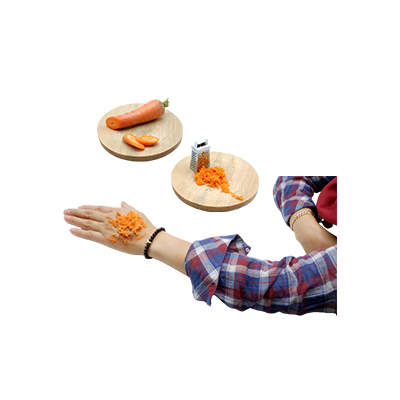
- Take an adequate amount of fresh carrots.
- Wash with running water until clean then grate.
- Apply the grated carrot to the burned skin.
2. Vermifuge
- Prepare an adequate amount of fresh carrots.
- Wash until clean.
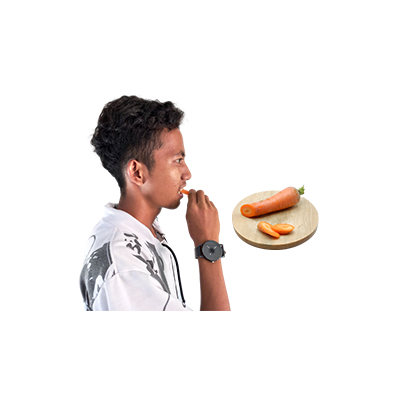
- Eat the carrot directly to treat worm infestation.
Reference Sources
- Royal Botanical Gardens. 2021. Plats of teh World Online: Daucus carota L. https://powo.science.kew.org/taxon/urn:lsid:ipni.org:names:841063-1. 21-01-2022.
- Useful Temperate Plants Database. 2021. Daucus carota sativus. https://temperate.theferns.info/plant/Daucus+carota+sativus. 21-01-2022.
- Pusat Penelitian dan Pengembangan Hortikultura. 2013. Budidaya Tanaman Wortel. https://hortikultura.litbang.pertanian.go.id/web/berita-363-budidaya-tanaman-wortel.html. 21-01-2022.
- CAB International. 2022. Invasive Species Compendium: Daucus carota (carrot). https://www.cabi.org/isc/datasheet/18018#toPictures. 21-01-2022.
- Stuartxchange. 2020. Philippine Medicinal Plants: Karot. http://www.stuartxchange.org/Karot. 21-01-2022.
- Flora Fauna Web. 2021. Daucus carota subsp. sativus. https://www.nparks.gov.sg/florafaunaweb/flora/5/9/5923. 21-01-2022.