Debregeasia longifolia (Burm.f.) Wedd.
Summary
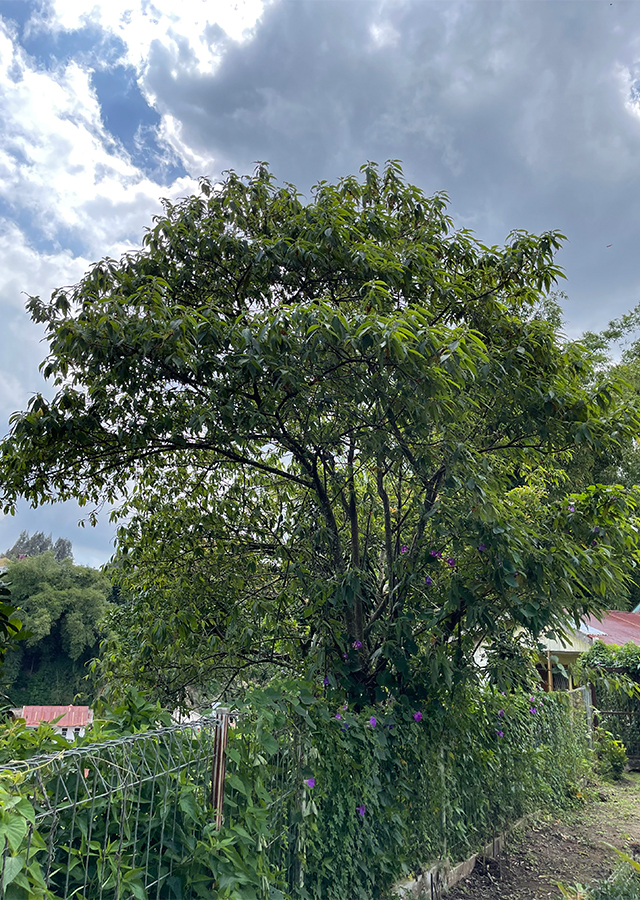
Debregeasia longifolia or totongoan is widely distributed from China and the Indian subcontinent to Southeast Asia and the Philippines, and is classified as 'Least Concern' on the IUCN Red List 2019. Its bark is taken as a source of quality fiber for rope and fishing line, its leaves are made into a vegetable by the Batak Karo people and the Garo tribe in India, while in China this plant is traditionally used to treat scabies, itching, and rheumatism.
Agroecology
Totongoan is usually found growing in shaded, moist locations, especially in forests, riverbanks, tea plantations, and watery mountainsides, at elevations of 200-2,500 m asl. In the Himalayas, this species is mainly found in old cultivated land, at elevations up to 2,100 m asl. Totongoan or Debregeasia longifolia is a plant of tropical and subtropical regions that can tolerate occasional lowest temperatures down to about -5°C. This species' growth prefers fertile, well-drained loamy soil in shaded locations and has the ability to grow in acidic water.
Morphology
- Stem slender, sometimes zigzagging from node to node. Bark gray, smooth. Branches round, slender, reddish-brown or purplish, grayish hairy.
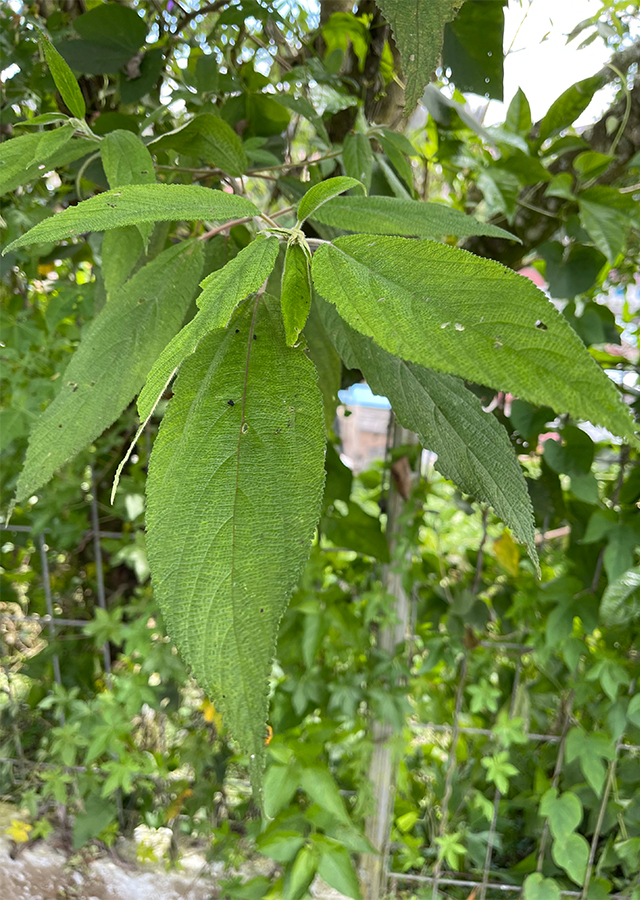
- Leaves alternate, spiral, blade thin, narrowly oblong or lanceolate to ovate or broadly elliptic, often slightly asymmetric, base tapering to narrowly rounded, margin serrate, tip acute or acuminate, with 3 veins and (4-)5-6(-9) pairs of lateral veins. Upper leaf surface rough, hairy, and green, while the lower surface is grayish green, thinly hairy or grayish-white tomentose. Stipules lanceolate, bifid, 1 cm long, fused, falling off and leaving a scar. Petiole grayish hairy.
- Flowers button-like. Flower heads rounded, small, bright red during the flowering phase. Flower stalk velvety hairy. Inflorescence emerging in the axils, branching, with densely clustered flowers, usually unisexual, rarely arranged with male clusters in the lower axils and female clusters toward the tip, with intermediate ones in between. Male flower clusters 3-5 mm in diameter, female flower clusters 1.5-2.5 mm in diameter. Male flowers with 4-5 perianth parts, tepals oblong, while female flowers have a 4-branched or lobed perianth, stigma linear.
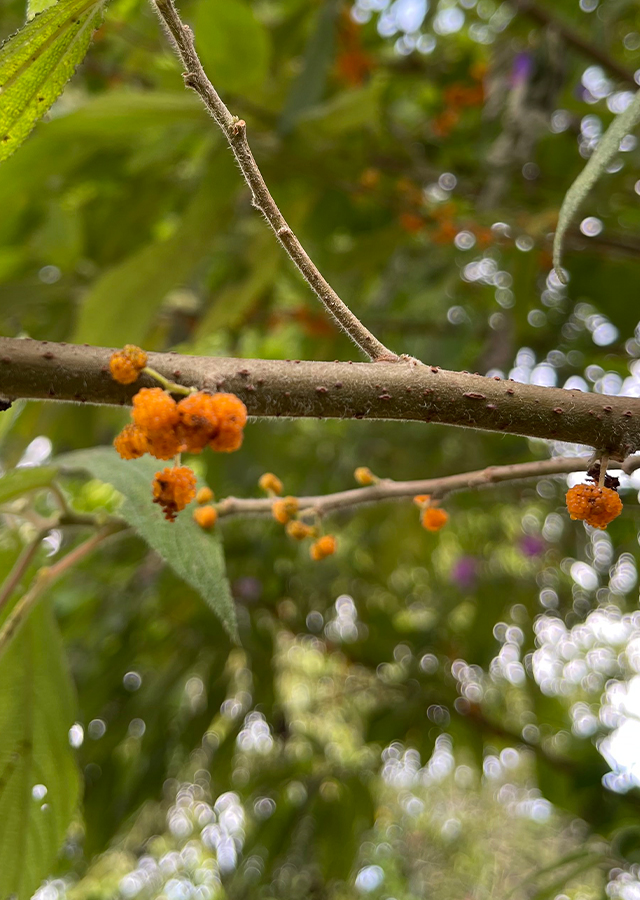
- Fruit obliquely ovoid or ovoid shaped, achene slightly laterally compressed, rich in fiber. Ripe fruit red, sour tasting.
- Seeds pod orange-yellow when ripe.
Cultivation
- Plant propagation through seed (generative) and stem cuttings.
- Propagation through seed is done by sowing first. Germination usually occurs within 1-2 months at 20°C.
Chemical Content
Flavonoids (epicatechin, quercetin 3-O-β-D-galactopyranoside, kaempferol 3-O-β-D-galactopyranoside, quercetin 7-O-β-D-glucopyranoside, apigenin 7-O-β-D-glucopyranoside), phenolic compounds.
Benefits
Treats scabies, itchy skin, rheumatism, arthritis, digestive disorders, antidiabetic, addresses sunburn on the skin, is sudorific (increases sweating). Has antioxidant activity.
Local Names
Mencokan, Tongo (Jawa), Ki tongo (Sunda), lang-alang (Madura), Cepira (Karo).
Traditional Recipes
The following recipes reflect traditional knowledge passed down through generations, not a substitute for professional medical diagnosis or advice. Consult a healthcare provider before use.
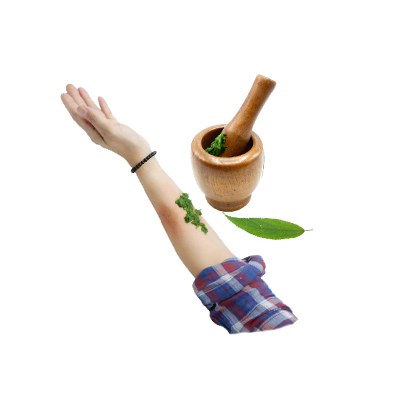
1. Treats arthritis
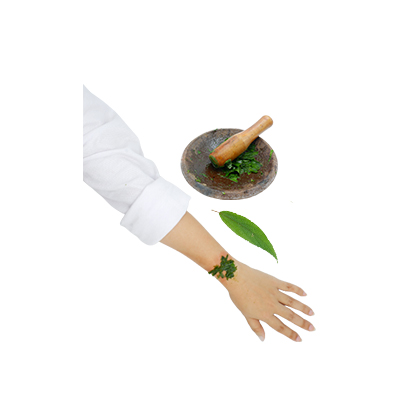
- Take an adequate amount of fresh totongoan leaves and wash until clean.
- Grind until it becomes a paste.
- Apply the leaf paste to the arthritis.
2. Skin scabies
- Prepare an adequate amount of fresh totongoan leaves and wash until clean.
- Grind until it becomes a paste.
- Apply the leaf paste to the scabies.
Reference Sources
- Royal Botanic Gardens. Plants of the World Online: Debregeasia longifolia (Burm.f.) Wedd.. https://powo.science.kew.org/taxon/urn:lsid:ipni.org:names:851412-1. 30-05-2022.
- Plant Resources of South-East Asia. 2016. Debregeasia longifolia (PROSEA). https://uses.plantnet-project.org/en/Debregeasia_longifolia_(PROSEA). 30-05-2022.
- Tropical Plants Database, Ken Fern. 2021. Debregeasia longifolia. http://tropical.theferns.info/viewtropical.php?id=Debregeasia+longifolia. 30-05-2022.
- Qin Bo, Wang Hanqing, Zhu Dayuan. 2003. Investigation on the chemical constituents of Debregeasia longifolia. Natural Product Research and Development, 15(1):21-23. https://europepmc.org/article/cba/361087. 30-05-2022.
- Purba E. P., Silalahi M. 2021. Edible plants of the Batak Karo of Merdeka District, North Sumatra, Indonesia. Ethnobotany Research & Applications 22:01.
- Flowers of India. Orange Wild Rhea. https://www.flowersofindia.net/catalog/slides/Orange%20Wild%20Rhea.html. 30-05-2022.