Decalobanthus mammosus (Lour.) A.R.Simões & Staples
Summary
Decalobanthus mammosus or bidara upas is not native to Indonesia, originating instead from India, the Andaman Islands, and Indochina, but has long been cultivated in Java, Bali, Maluku, and Madura as a medicinal plant and food source from its tuber. Its status is classified as rare according to the 2003 Indonesia Biodiversity Strategy and Action Plan, yet bidara upas remains popular as an ingredient in traveling herbal medicine (jamu gendong) and the small-scale traditional medicine industry, while its satin-sheened fiber is used to make cloth.
Agroecology
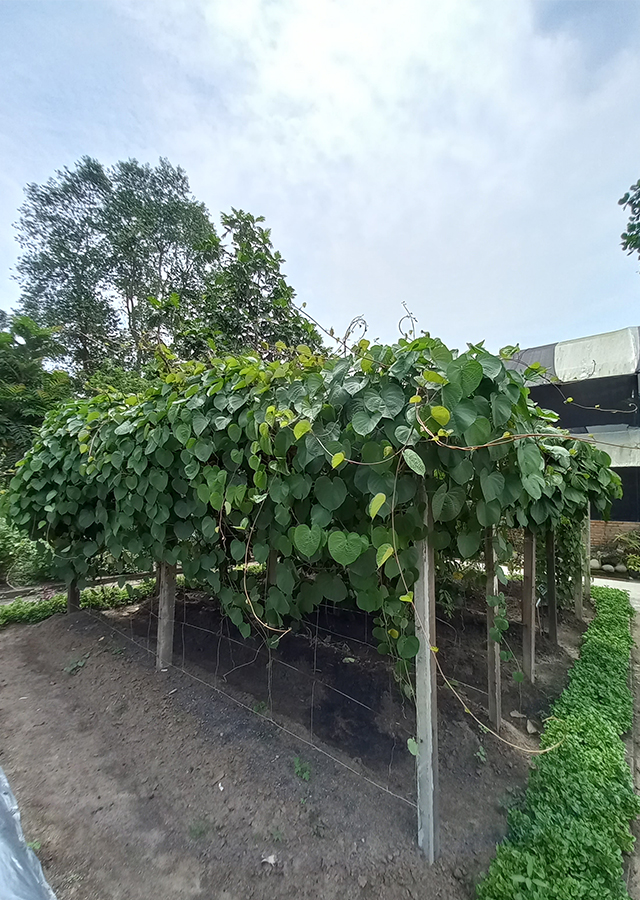
Grows wild in forests, sometimes planted in yards near fences. Grows well in tropical regions from lowlands up to elevations of 250 m asl. On the island of Java, bidara upas grows at elevations >500 m above sea level.
Morphology
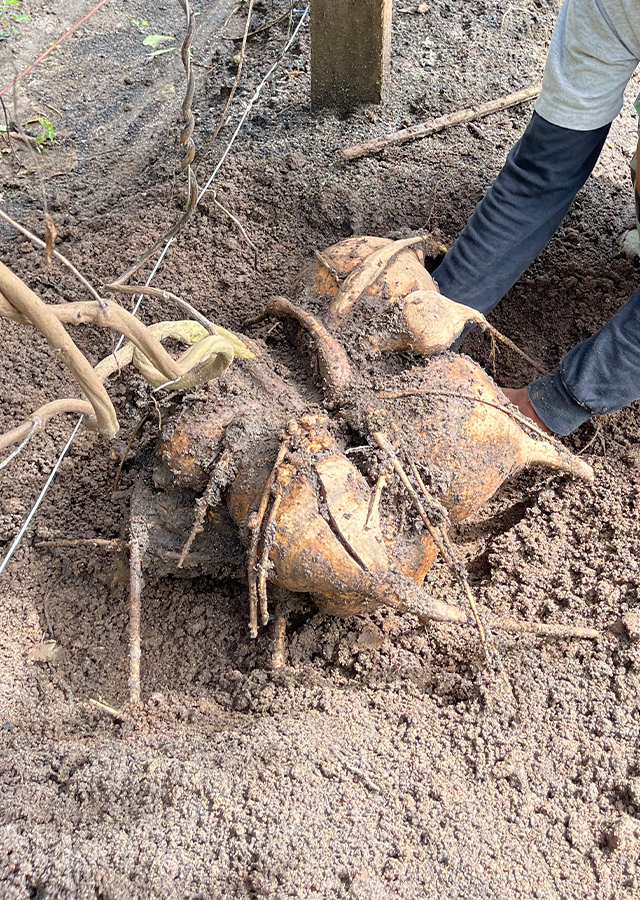
- Tubers clustered underground, resembling sweet potato. Tuber skin color yellowish brown, skin thick and exudes white sap, turning brown when dry.
- Stem small, somewhat slippery to the touch, and somewhat dark in color.
- Leaves single, long-petiolate, heart-shaped, margin entire, tip acuminate, 5-12 cm long, 4-15 cm wide, dark green in color.
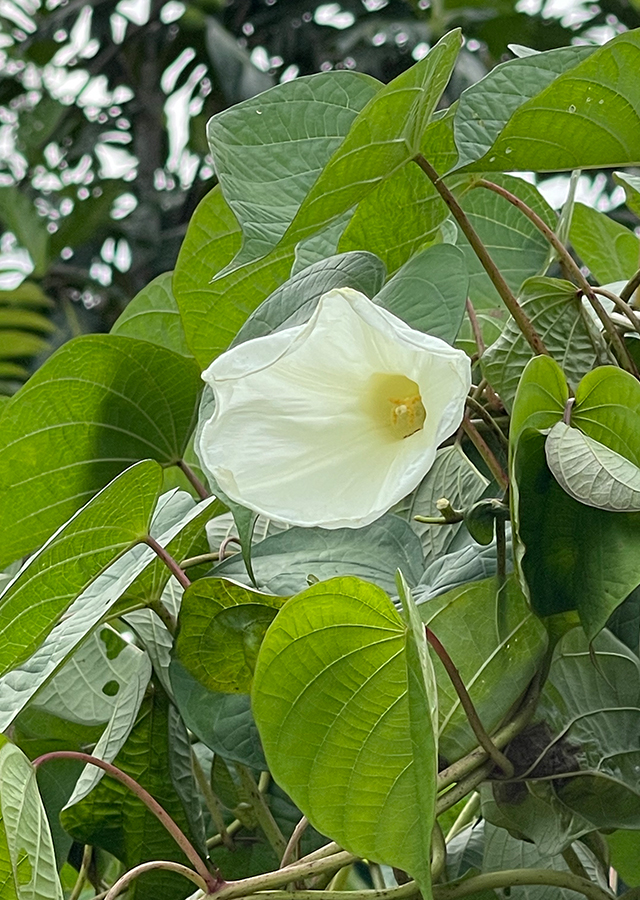
- Flowers bell-shaped, white, 7-8 cm long, with 4 petals. Inflorescence forked, umbrella-shaped, clustered 1-4 flowers.
Cultivation
Propagated by stem cuttings or by planting tubers or tuber sections.
Chemical Content
Oxidase (in its sap), flavonoids, quinones, phenolic compounds, triterpenoids, and steroids.
Benefits
Reduces fever, treats respiratory disorders, digestive disorders, wounds from snake bites or burns, diabetes, cough, hoarseness, diphtheria, sore throat, lung inflammation (pneumonia), appendicitis, typhoid, constipation, bloody and mucous stools, vomiting blood, leprosy, melanoma, syphilis, bladder stones or kidney stones, used in cancer treatment therapy, addresses food poisoning, relieves swelling, promotes breast milk flow (external use), acts as a laxative and cooling agent. Has anti-inflammatory, analgesic (pain relieving), antidote (neutralizing poison) activity.
Local Names
Blanar, Widara upas (Jawa), Hailale (Ambon).
Traditional Recipes
The following recipes reflect traditional knowledge passed down through generations, not a substitute for professional medical diagnosis or advice. Consult a healthcare provider before use.
1. Diabetes
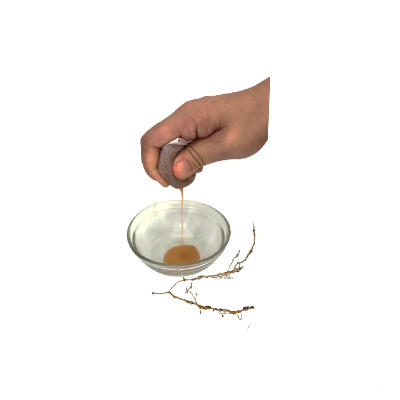
- Take 100 g of bidara upas root and wash until clean.
- Grate then squeeze using a piece of cloth.
- Drink every morning, half an hour before eating.
Reference Sources
- Royal Botanic Gardens, Kew. Plants of the World Online. Decalobanthus mammosus (Lour.) A.R.Simões & Staples. 07-09-2022.
- Cancer Chemoprevention Research Center (CCRC). 2008. Bidara Upas (Merremia mammosa). https://ccrc.farmasi.ugm.ac.id/?page_id=126. 07-09-2022.
- Cahyaningsih R., Hidayat S., Hidayat E. 2017. Perbanyakan Vegetatif Bidara Upas (Merremia mammosa (Lour.) Hallier f) Kebun Raya Bogor. Berita Biologi, Jurnal Ilmu-Ilmu Hayati 16(2), Agustus 2017.
- Herbal Medicine. 2014. Diabetes mellitus use Merremia mammosa. https://www.herbs-medicine.com/2016/01/17-benefits-merremia-mammosa-for-health.html. 07-09-2022.
- Sadiyah E. R., Yuliawati K. M., Aniq L. Phytochemical Study of Bidara Upas (Merremia mammosa (Lour.) Hallier f.) Leaf. Proceeding of “The International Conference on Herbal Medicine Industrialization as Complementary Therapy in Natural Disasters.