Decalobanthus peltatus (L.) A.R.Simões & Staples
Summary
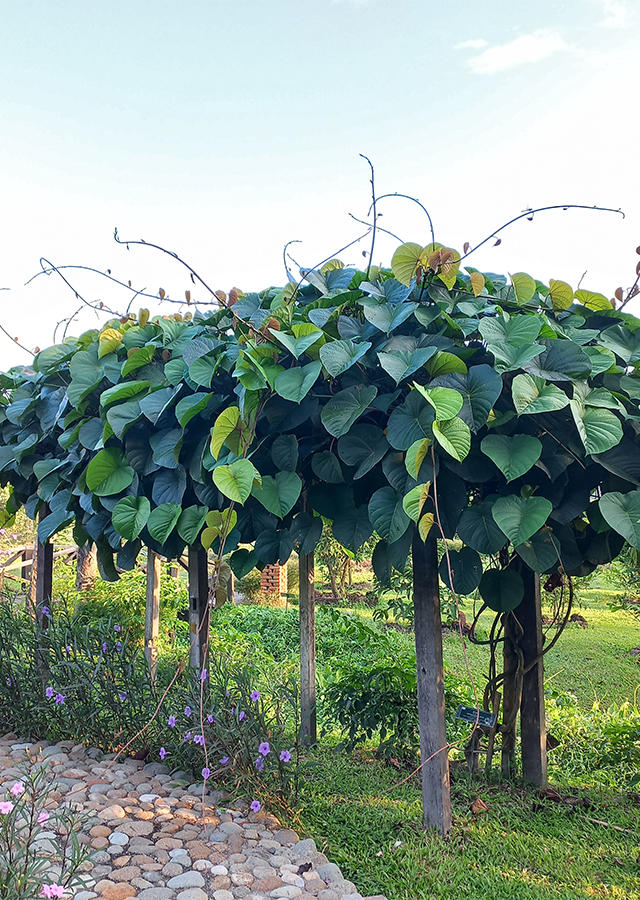
Matangan (Decalobanthus peltatus) is a vine 5-30 meters long from the Convolvulaceae family spread from East Africa to the Pacific. The Serampas community in Jambi uses it to address coughs, while the West Sumatran community uses its leaves as a wound compress and traditional anticancer remedy. Matangan leaves are also believed to promote hair growth and prevent hair loss.
Agroecology
Matangan is a humid tropical plant, generally found growing at the edges of primary and secondary lowland rainforest, land clearings, thickets and plantations, from sea level up to an elevation of 700 m asl. However this species has a tendency to grow along riverbanks or in places with abundant water content. This species can grow densely in open areas with a pH of 6.1-7.8.
Morphology
- Tuber large.
- Stem growing from a large underground tuber, producing milky sap.
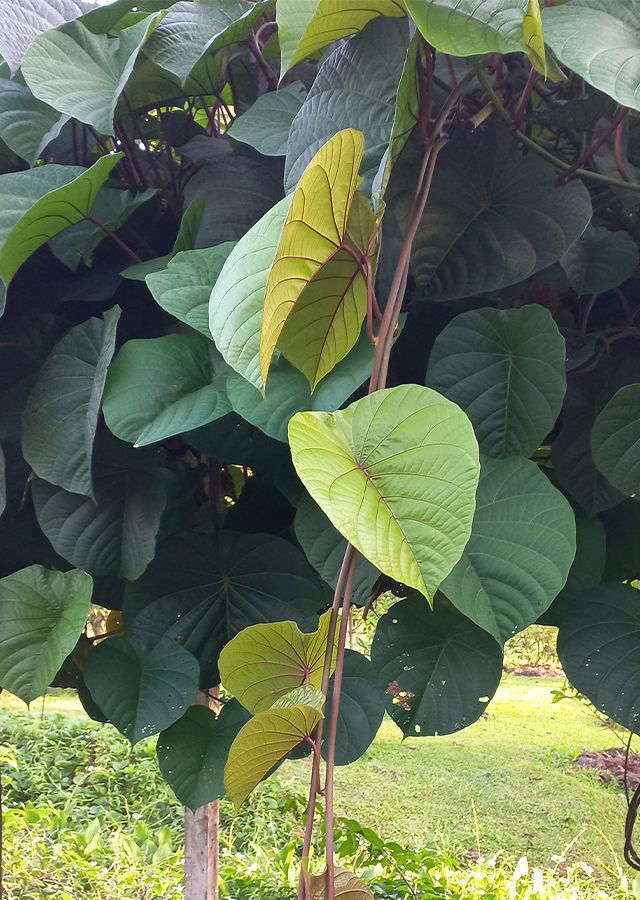
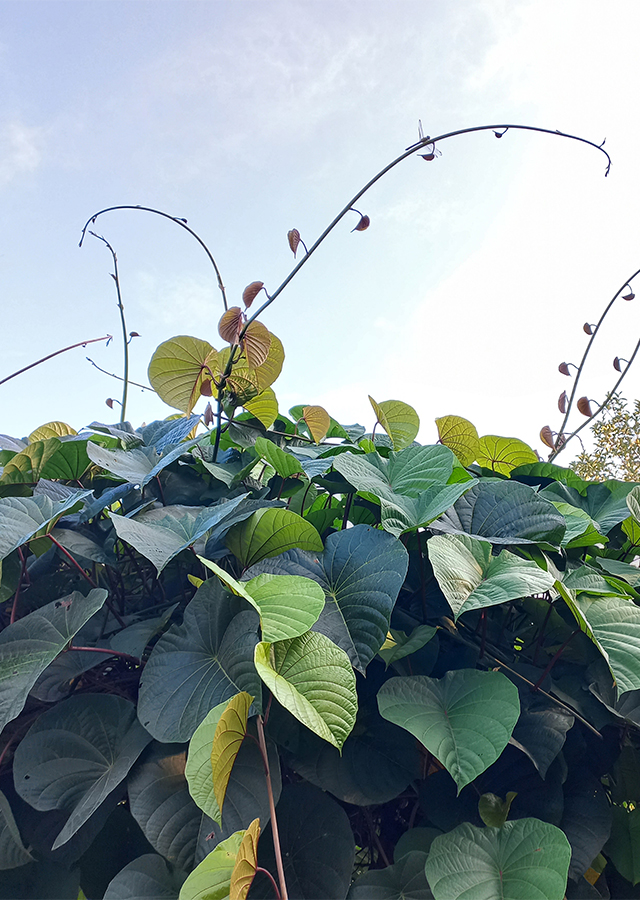
- Leaves alternate, peltate, nearly round, about 20 cm wide, but with a pointed or mucronate tip, heart-shaped at the base, hairless, smooth leaf texture, maroon colored when the leaf is still young.
- Flowers large, clustered, corolla funnel-shaped, 5-7 cm long, usually white, sometimes golden yellow. Filament widened and hairy at the base, anther spirally twisted, hairy. Inflorescence appears axillary.
- Fruit a 4-celled ovate capsule, about 15 mm in diameter.
- Seeds solid, yellowish to dark brown, tomentose.
Cultivation
Propagation generatively using seeds, and vegetatively through root cuttings.
Chemical Content
Terpenoid, steroid, saponin, phenolic compounds, alkaloid, and flavonoid.
Benefits
Heals burns, wounds, sores and swelling, worm remedy, treats uterine bleeding, cough and diarrhea, eye pain, addresses fever and malaria, promotes hair growth and prevents hair loss, treats boils, maturative for breast inflammation, infections, and appendicitis, treats abdominal muscle stiffness, hernia disease, filariasis, elephantiasis, rhinitis, centipede bites, eye or ear drops, stomach ache, eases childbirth, increases lactation, laxative.
Simplisia
- Prepare fresh matangan leaves as needed and wash with clean water.
- After clean, drain to remove excess wash water.
- Dry by air-drying in a place protected from sunlight.
- Store in a clean, airtight container.
Local Names
Areuy carayun (Sunda), Hailale (Ambon), Kuge (Ternate).
Traditional Recipes
The following recipes reflect traditional knowledge passed down through generations, not a substitute for professional medical diagnosis or advice. Consult a healthcare provider before use.
1. Wounds
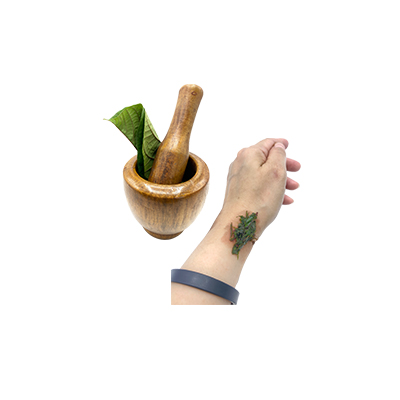
- Prepare matangan leaves as needed and wash with running water until clean.
- Mash the leaves into a paste.
- Apply the leaf paste to the wounded skin.
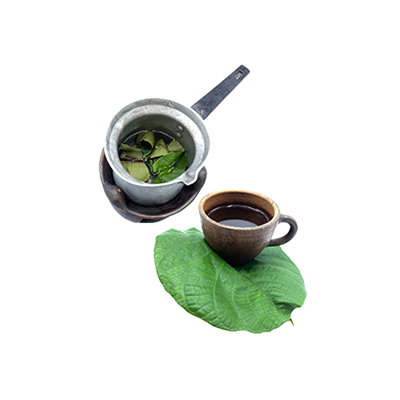
2. Appendicitis
- Take matangan leaves then wash until clean.
- Boil until boiling.
- Let stand until warm/cool.
- Strain, then drink.
Reference Sources
- Royal Botanic Gardens. Plant of the World Online: Decalobanthus peltatus (L.) A.R.Simões & Staples. http://powo.science.kew.org/taxon/urn:lsid:ipni.org:names:77163209-1. 14-10-2021.
- CAB International. 2021. Invasive Species Compendium: Merremia peltata. https://www.cabi.org/isc/datasheet/33476#toPictures. 14-10-2021.
- Stuartxchange. 2018. Philippine Medicinal Plants: Bulakan. http://www.stuartxchange.org/Bulakan. 14-10-2021.
- PROSEA. 2016. Merremia peltata (PROSEA). https://uses.plantnet-project.org/en/Merremia_peltata_(PROSEA). 14-10-2021.