Derris elliptica (Wall.) Benth.
Summary
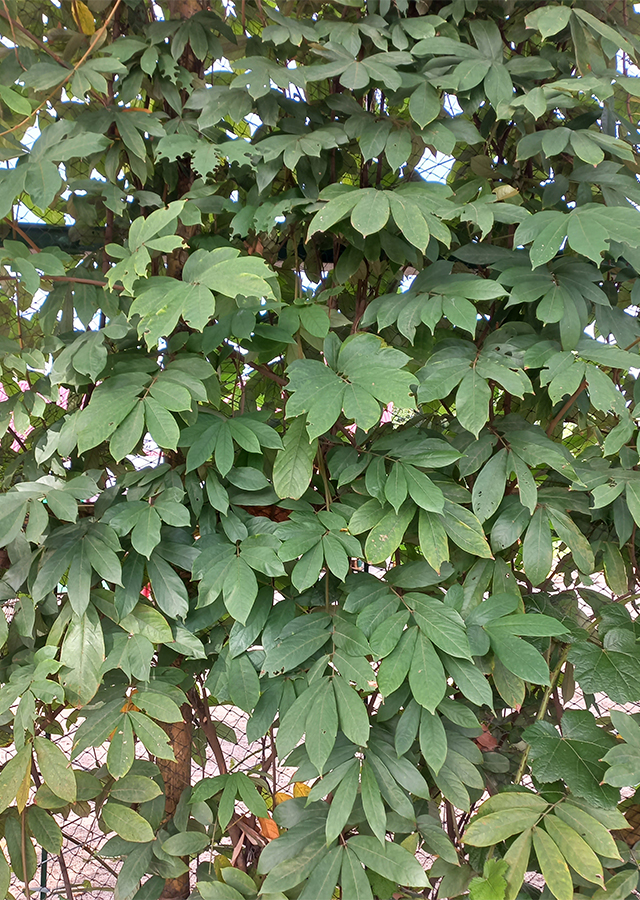
Akar tuba (Derris elliptica) is a climbing liana up to 7-10 meters tall of the Fabaceae family, native to tropical Asia, distributed as far as Africa and the Pacific. Its root contains rotenone, a strong poison traditionally used as a fish poison and natural insecticide. In traditional Asian medicine, akar tuba is also used to treat leprosy, itching, and as a wound antiseptic.
Agroecology
Derris elliptica prefers moist and very humid tropical regions. Can be found growing along riverbanks, in thickets, secondary forests, roadsides, forest edges and plantation forests at low to medium elevations (1,500 m above sea level). Tuba root prefers full sunlight or light shade with average annual rainfall ranging between 1,800 mm-3,500 mm (but tolerating 1,400-5,000 mm) and average annual temperature in the range of 24-30°C (but can tolerate 20-36°C). However, tuba root is able to survive dry periods of up to 4 months. This species is adapted to grow in many soil types from sandy to heavy loam with a pH ranging from 4.3-8.6, sensitive to waterlogging and not tolerant of frost.
Morphology
- Stem woody, it is able to twine and climb. Its woody stem has twigs with acne-like lenticels and dark brown color (on mature twigs).
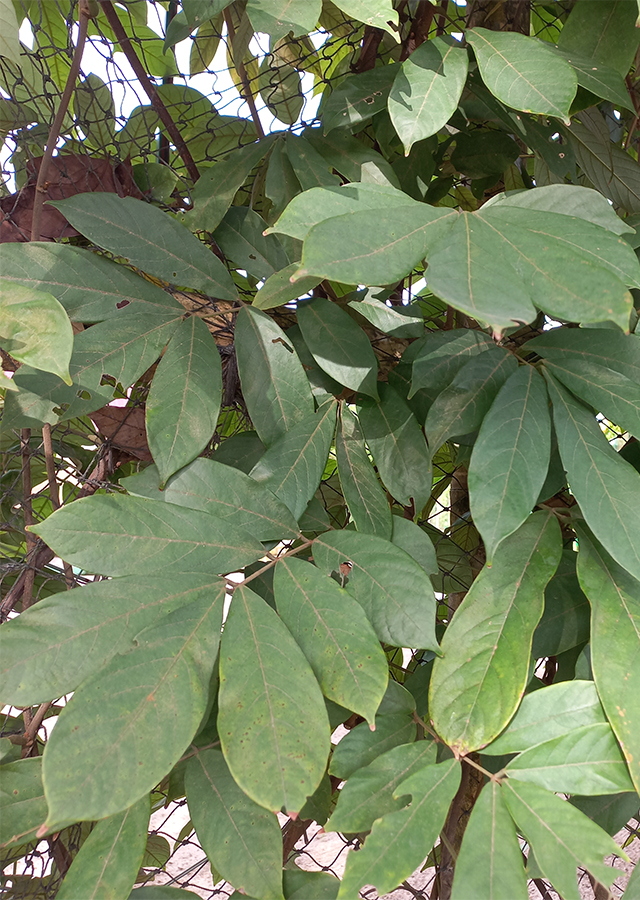
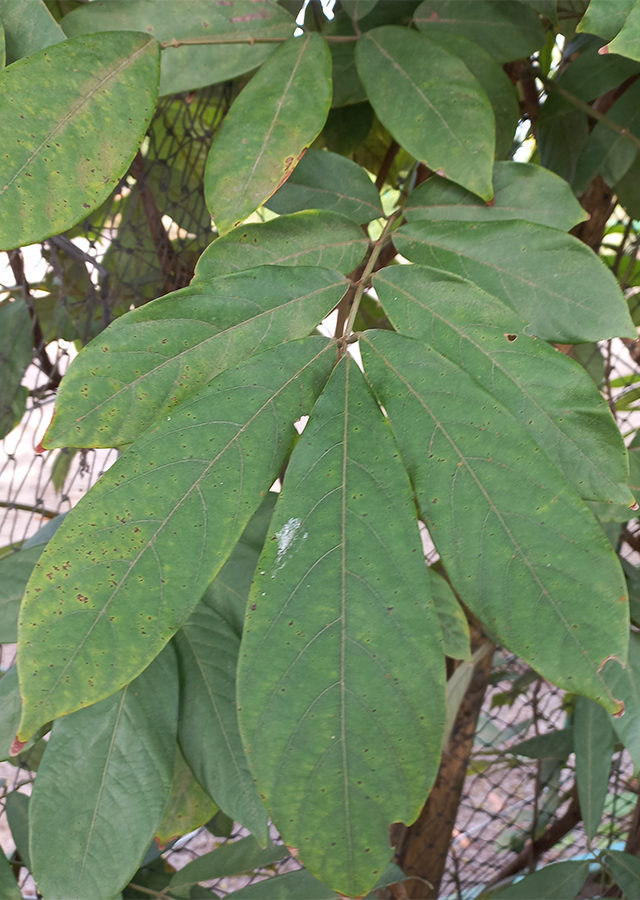
- Leaves odd-pinnate compound and alternately arranged along the stem. New leaves are red but turn green when mature. Leaflets are ovate and coriaceous with a pointed tip and pale green underside.
- Flowers in racemes, shallow cup-shaped sepal, 4 × 6-7 mm, corolla pink to whitish, broadly oval to ovate shaped.
- Fruit oblong (oval) shaped, with a thin wing along both sides. 9 cm in size, 0.6-2.5 cm wide with 1-4 seeds in one pod.
- Seeds flat, reniform, black or brown color.
Cultivation
The tuba root plant is propagated by seed and by stem cuttings.
Chemical Content
Rotenone, derrid, anhydroderrid, derrin, tubotoxin, tuba, tephrosin, toxicarol, rotenoid, deguelin, ceramide, and poly-hydroxyl octadecenoic acid.
Benefits
Treats itching, leprosy, boils, wounds, skin disease, scabies, emmenagogue, as a blood tonic and anticancer.
Simplisia
- Prepare the root of the tuba root plant and wash thoroughly with running water.
- Dry the root in direct sunlight until dry.
- Once the root is completely dry, store in a clean, closed container.
Local Names
Tuwa laleur, Tuwa leteng, Areuy kidang (Sunda), Jenu, Jelun, Tuba, Oyod tungkul, Tungkul (Java), Tobha, Jheno, Mombul (Madura).
Traditional Recipes
The following recipes reflect traditional knowledge passed down through generations, not a substitute for professional medical diagnosis or advice. Consult a healthcare provider before use.
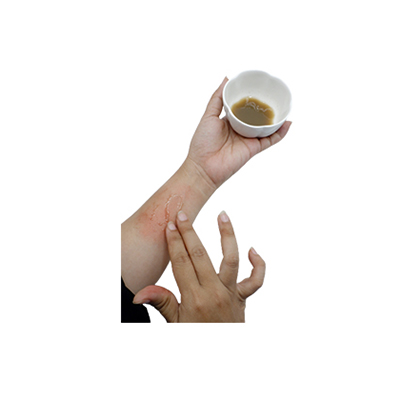
1. Itchy wounds
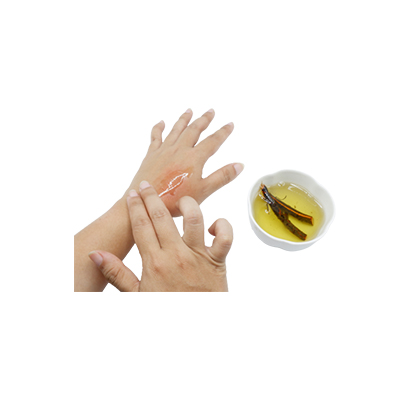
- Prepare root and coconut oil as needed.
- Boil the root with coconut oil until boiling.
- Wait until cool then apply the decoction to the itchy wound.
2. Boils and leprosy
- Take root as needed then wash with running water until clean.
- Grind the root into a paste.
- Apply the root paste to the boil or leprosy.
Reference Sources
- CAB Intternational. 2020. Derris elliptica (tuba root). https://www.cabi.org/isc/datasheet/19971. 02-09-2021.
- Royal Botanical Garden. 2017. Plants of the World Online: Derris elliptica (Wall.) Benth. http://www.plantsoftheworldonline.org/taxon/urn:lsid:ipni.org:names:491300-1. 02-09-2021.
- Alamendah. 2010. Tuba, Tanaman Peracun Ikan dan Serangga. https://alamendah.org/2010/01/12/tuba-tumbuhan-peracun-ikan-dan-serangga/. 02-09-2021.
- Stuartxchange. 2019. Philipphine Medicinal Plants:Tubli. /http://www.stuartxchange.com/Tubli.html. 02-09-2021.