Desmodium heterophyllum (Willd.) DC.
Summary
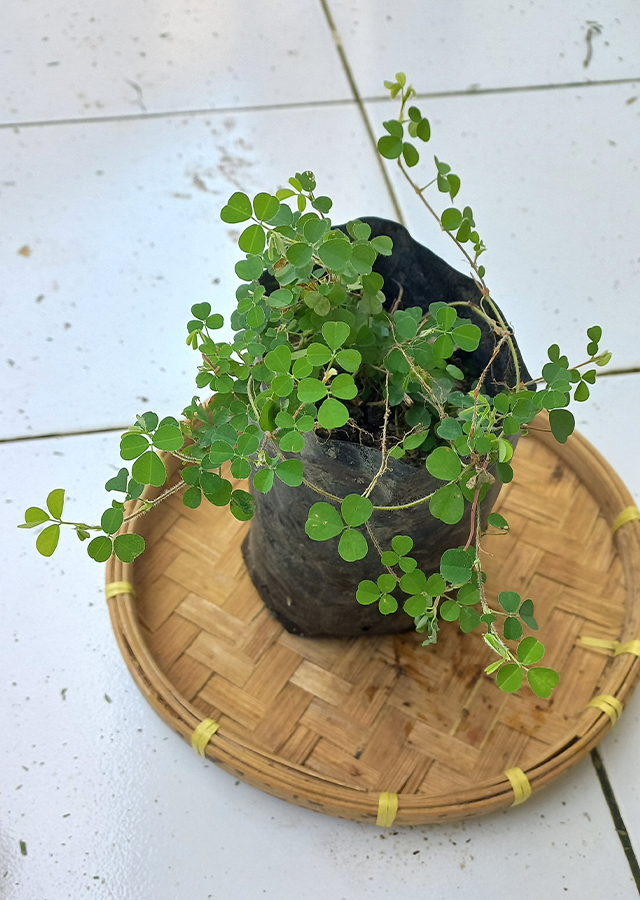
Sisik betok (Desmodium heterophyllum) is a low creeping shrub up to 1.5 meters long from the Fabaceae family spread across tropical Asia, from Mauritius to Taiwan. West Java communities traditionally use it as postpartum medicine, while Lombok communities use its root, stem, and leaves for scabies and itching. Sisik betok also serves as a ground cover plant in reclaiming former mining land.
Agroecology
Sisik betok is a humid tropical plant that can be found in areas up to an elevation of 900 m asl, generally growing along riverbanks, roadsides, field edges, and grasslands. Its growth prefers full sun (6-8 hours per day) but tolerates shade, with annual daytime temperatures in the range of 23-28 °C, but tolerating 12-35 °C, average annual rainfall in the range of 2,000-4,000 mm and able to survive through dry seasons of up to 5 months. Sisik betok is suitable planted in various soil types from sand to loam with soil acidity (pH) in the range of 5-6, but tolerating 4.5-7 and is drought-resistant.
Morphology
- Roots have nitrogen-fixing nodules.
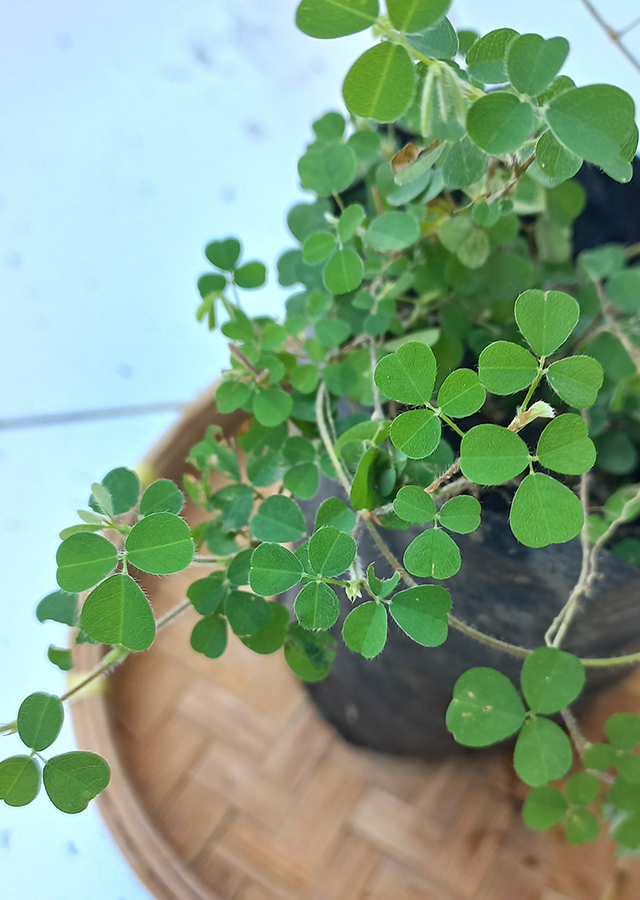
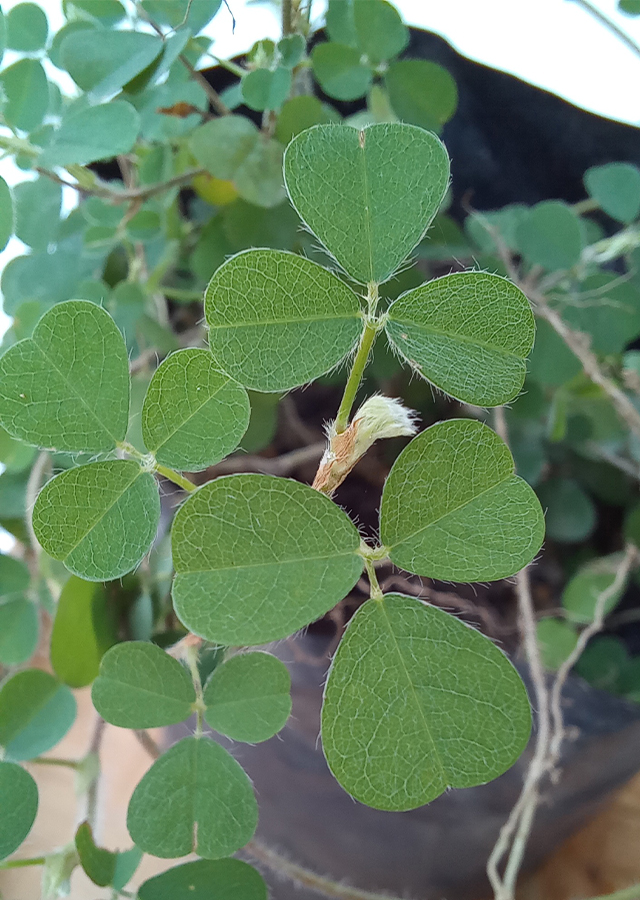
- Stem reddish-brown, branched, young stems covered with soft white-reddish-brown hairs while mature stems are woody and hairless.
- Leaves green, compound, trifoliate, leaf blade oval to oblong, smooth margin with a slight notch at the tip (emarginate). Upper surface hairless while the lower surface is sparsely and long-haired.
- Flowers small, solitary or binate in the leaf axils or 2-3 scattered on the rachis. Calyx consists of 5 parts, the upper part has 2 lobes deeply incised near the base, finely hairy and curved. Corolla purplish-pink to white.
- Fruit a short straight or curved pod with a wavy margin, consisting of 3-5 chambers.
- Seeds bean-shaped or transversely elliptical, dark brown and smooth.
Cultivation
Propagation can be done vegetatively (cuttings) and generatively (seeds).
Chemical Content
(3R)-2',4',5,7-tetrahydroxy-6-methylisoflavanone, 4',5,7-trihydroxy-3'-methoxyisoflavone, 2',4',5,7-tetrahydroxyisoflavone, alkaloids, isoflavanones, dalbergioidin, genistein.
Benefits
Treats dysentery, diarrhea, rheumatism, relieves fever, treats earaches, stomach ache and other stomach complaints, postpartum remedy, treats skin problems (scabies and itching), treats wounds, boils, coughs, asthma, has diuretic and galactagogue (increasing breast milk production) properties.
Local Names
Heuheulangan (Sunda), Sukut jareman (Java), Kimulas.
Traditional Recipes
The following recipes reflect traditional knowledge passed down through generations, not a substitute for professional medical diagnosis or advice. Consult a healthcare provider before use.
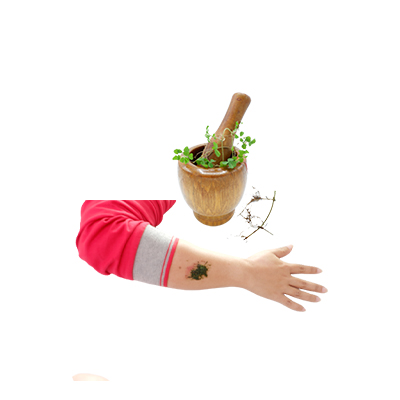
1. Wounds
- Take sisik betok root and leaves and wash until clean.
- Mash into a paste.
- Apply to the wound.
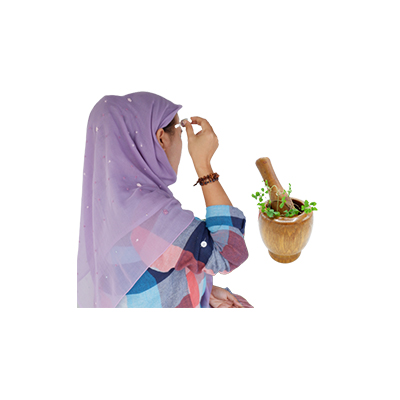
2. Treating earaches
- Take sisik betok leaves and wash until clean.
- Mash into a paste.
- Squeeze and take the liquid.
- Drip into the ear to treat earaches.
Reference Sources
- PROSEA. 2016. Desmodium heterophyllum (PROSEA). https://uses.plantnet-project.org/en/Desmodium_heterophyllum_(PROSEA). 21-09-2021.
- Flora Fauna Web. 2020. Desmodium heterophyllum (Willd.) DC. https://www.nparks.gov.sg/florafaunaweb/flora/1/9/1925. 21-09-2021.
- Stuartxchange. 2020. Philippine Medicinal Plants: Spanish clover. http://www.stuartxchange.org/Hetero.21-09-2021.
- Useful Tropical Plants Database. 2021. Desmodium heterophyllum. http://tropical.theferns.info/viewtropical.php?id=Desmodium+heterophyllum
- Ha LM et al. 2018. Isoflavonoids from Desmodium heterophyllum Aerial Parts. Natural Product Communications 13(6).
- The Plant List. 2020. Desmodium heterophyllum (Willd.) DC. http://www.theplantlist.org/tpl/record/ild-34569. 21-09-2021.