Dialium indum L.
Summary
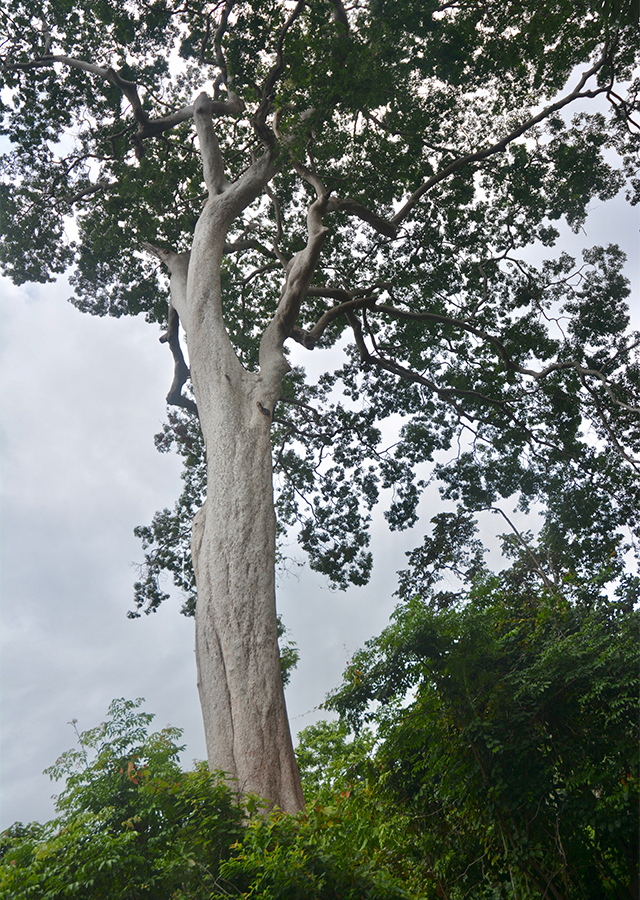
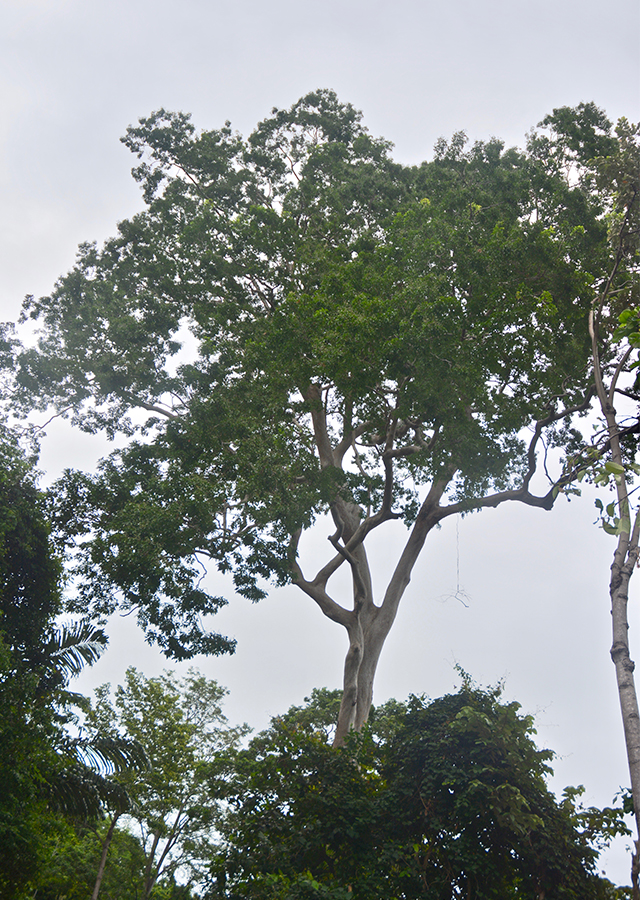
Asam keranji (Dialium indum) is a tree up to 40 meters tall of the Fabaceae family, distributed from West Africa to Thailand, Sumatra, Java, and Kalimantan. Its hard, dense wood has high economic value as building material and furniture. Traditionally, asam keranji is also believed to relieve canker sores, diarrhea, and help maintain balance in pregnant women's bodies.
Agroecology
Grows in swamps, peat forests, on flat land and hills up to elevations of 1,150 m above sea level. Prefers hot, wet tropical regions especially monsoon areas with good water drainage. Widely grows wild in forests. Fairly shade-tolerant. Tolerant of fertile to nutrient-poor soil.
Morphology
- Roots taproot, dirty white.
- Stem upright, round, sympodial branching, thorny, dirty white.
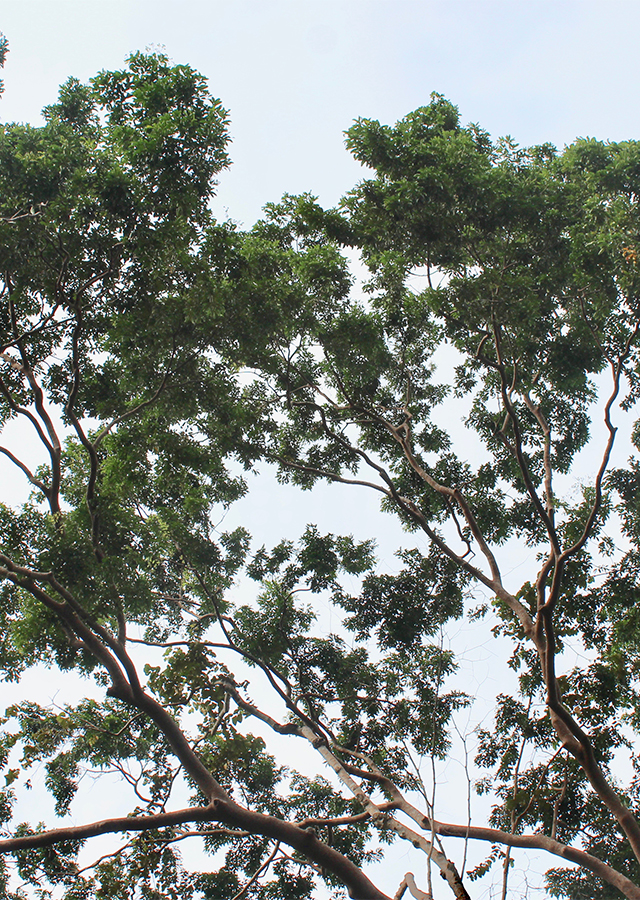
- Leaves compound, alternating, evenly pinnate, 4 oblong leaflets, blunt tip and base, 2-4 cm long, 1-2 cm wide, smooth edges, pinnate venation, thin, green.
- Flowers compound, panicle, at branch tips or leaf axils, cylindrical stalk, yellow, yellowish-white petals.
- Fruit a pod, 7-15 cm long, green when young turning reddish-green when mature.
- Seeds flat round, has a white membrane, smooth surface, and black.
Cultivation
Propagated generatively (by seed).
Chemical Content
Steroids, terpenoids, alkaloids, flavonoids, phenolics, methyl salicylate, geraniol, amino acids, polyols, dicarboxylic acid, saponins, tannins, gallic acid, glutamic acid, oleic acid, palmitic acid.
Benefits
Relieves canker sores, treats diarrhea, heals bleeding gums, reduces excess pain, anticholesterol, prevents anemia in pregnant women, maintains the pH and body acid balance of pregnant women and the fetus, addresses infections in pregnant women and the fetus.
Simplisia
- Prepare keranji fruit. Peel the keranji fruit skin.
- Wash thoroughly with running water.
- Air-dry under shade for several days or use an oven at 40 °C.
- Store in clean, airtight plastic.
Local Names
Asam cina, Kuranji, Ki pranji (Sunda), Parangi, Keran-keran, Keranji bernang, Keranji madu (Kalimantan).
Traditional Recipes
The following recipes reflect traditional knowledge passed down through generations, not a substitute for professional medical diagnosis or advice. Consult a healthcare provider before use.
1. Diarrhea
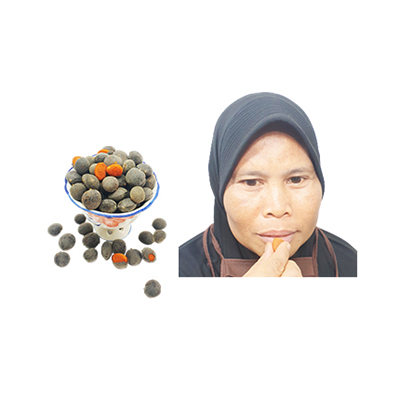
- Select 15 g of sufficiently ripe keranji fruit flesh.
- Wash thoroughly with running water.
- Eat while still fresh.
Reference Sources
- Tropical Plants Database, Ken Fern. tropical.theferns.info. Dialium indum. http://tropical.theferns.info/viewtropical.php?id=Dialium+indum 20-01-2021
- Researchgate.net. Antioxidant activities of Dialium indum L. fruit and gas chromatography-Mass spectrometry (GC-MS) of the active fractions. https://www.researchgate.net/publication/328655230_Antioxidant_Activities_of_Dialium_indum_L_Fruit_and_Gas_Chromatography-Mass_Spectrometry_GC-MS_of_the_Active_Fractions 24-03-2021
- Asosiasi Herbalisnusantara (pusat pelatihan dan pengobatan herbal indonesia. download 699 ebook tanaman obat indonesia. herbalisnusantara.com 18-07-2020