Dianthus chinensis L.
Summary
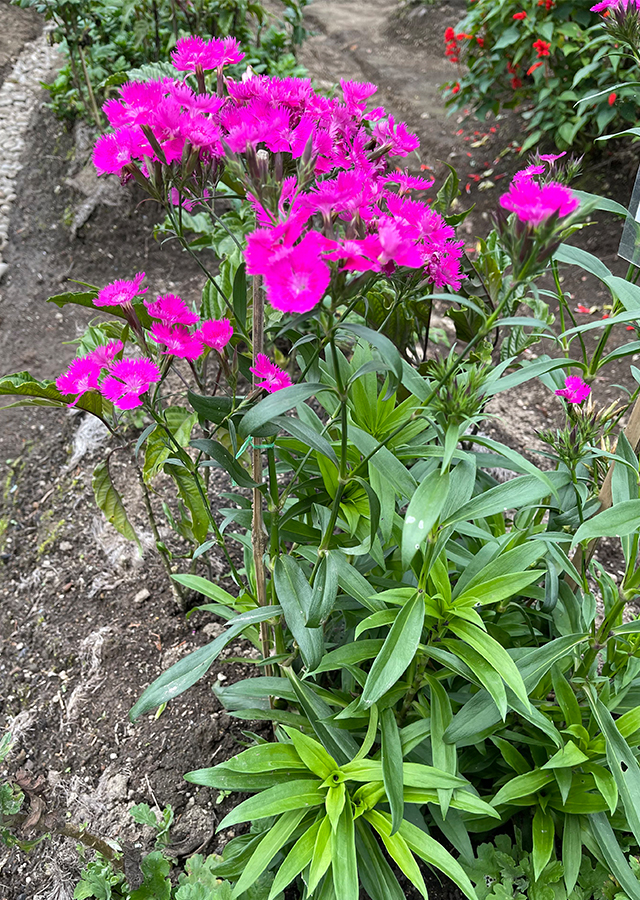
Chinese pink (Dianthus chinensis) is a herb 30-50 cm tall from the Caryophyllaceae family widely distributed across various Chinese provinces, naturalized as far as Russia and Europe. Its beautiful flowers are popular as a potted ornamental, while this plant has been used for over 2,000 years in Chinese herbal medicine. Chinese pink is traditionally used to treat acute urinary tract infections and urinary tract stones.
Agroecology
Dianthus chinensis prefers fertile, well-drained neutral to alkaline loamy soil in a sunny position, but succeeds in most soils including dry ones.
Morphology
- Stem loosely caespitose, upright, distally branched.
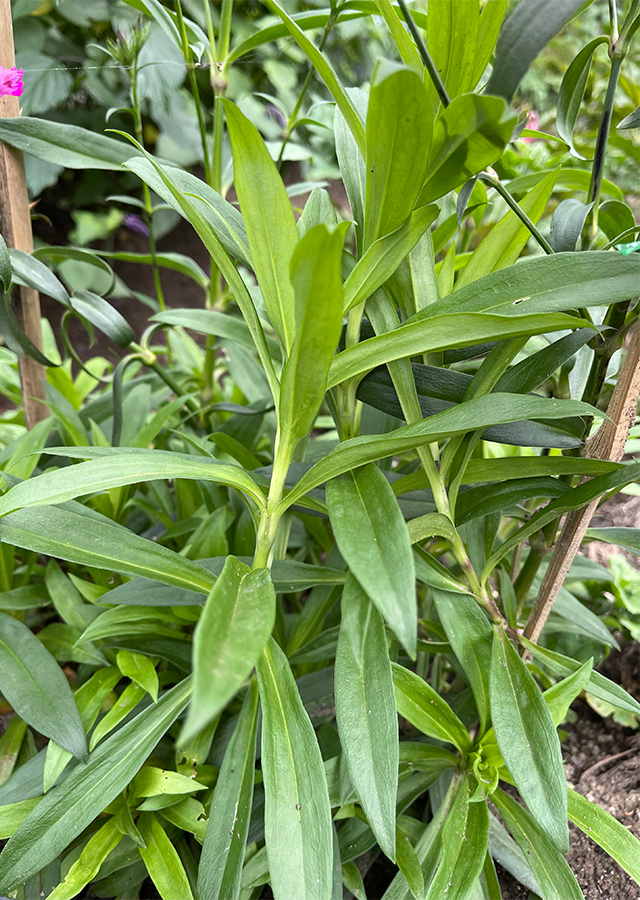
- Leaves linear-lanceolate, 3-5 cm × 2-4 mm, midrib prominent, base slightly narrowed, margins entire or denticulate, apex tapering.
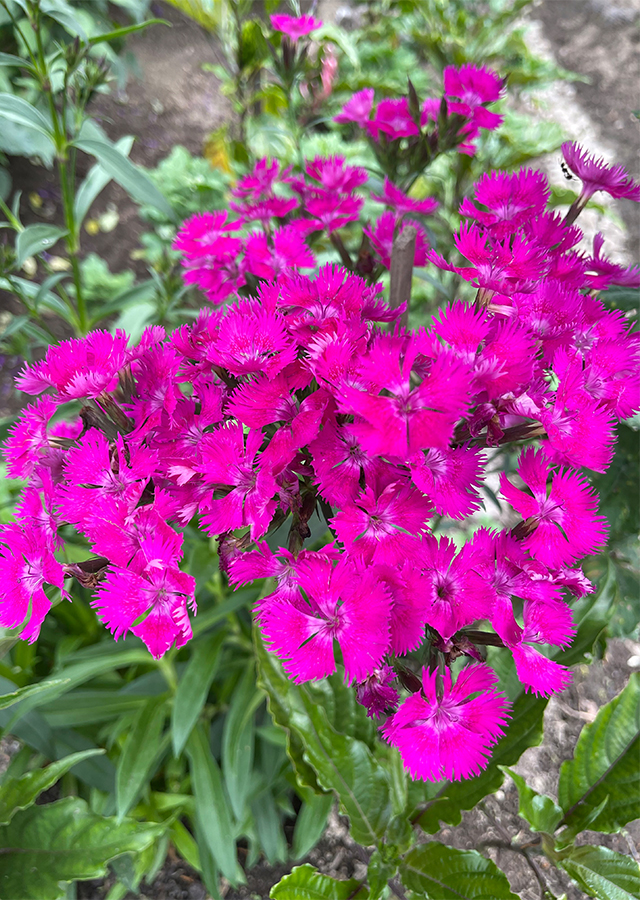
- Flowers solitary or several in cymes; pedicel 1-3 cm, bracts 4, ovate, about 1/2 as long as the calyx, margins membranous, ciliate, apex long-pointed. Calyx cylindrical, 1.5-2.5 cm × 0.4-5 mm, striate; teeth lanceolate, 5 mm, margins ciliate, apex sharply pointed. Petals 1.6-1.8 cm; limb bright red, purplish red, pink, or white, ovate-triangular, 1.3-1.5 cm, throat spotted and loosely bearded, apex irregularly toothed. Stamens exserted, anthers blue. Ovary suboblong. Style linear.
- Fruit a cylindrical capsule, enclosed by the calyx, apex 4-toothed.
- Seeds black, round-flattened shaped.
Cultivation
Propagation uses seed (generative) and tip cuttings and division/clump division (vegetative). Seeds usually germinate within 2-3 weeks. When they are large enough, plant the seedlings into individual pots. Seeds can also be sown thinly in an outdoor nursery bed. Tip cuttings use semi-hardwood stems. Division - larger clumps can be replanted directly to their permanent position, though it is best to plant smaller clumps and grow them in a cold frame until well rooted.
Chemical Content
Cyclopentapeptide dianthin I, pseudostellarin A, heterophyllin J, saponins (dianchinensoides A and B).
Benefits
The whole plant is a bitter tonic herb that stimulates the digestive, urinary, and intestinal systems, used internally in treating acute urinary tract infections (especially cystitis), urinary tract stones, constipation and menstrual failure, to treat skin inflammation and swelling, and to clear the vision.
Local Names
Informasi tidak ditemukan. Butuh penelusuran lebih lanjut.
Traditional Recipes
The following recipes reflect traditional knowledge passed down through generations, not a substitute for professional medical diagnosis or advice. Consult a healthcare provider before use.
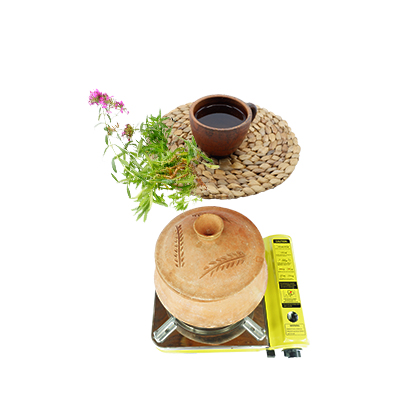
1. Stimulates the digestive system
- Take an adequate amount of the whole fresh Chinese pink plant and wash until clean.
- Boil until it boils.
- Let it cool to warm/cold.
- Strain then drink as a tonic to stimulate the digestive system.
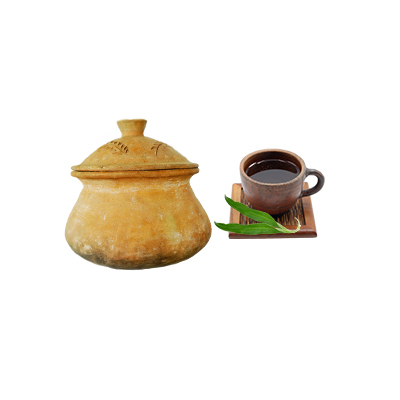
2. Constipation
- Take an adequate amount of fresh Chinese pink leaves and wash until clean.
- Boil until it boils.
- Let it cool to warm/cold.
- Strain then drink to treat constipation.
Reference Sources
- Royal Botanic Gardens. 2017. Plants of the World Online: Dianthus chinensis L.. https://powo.science.kew.org/taxon/urn:lsid:ipni.org:names:153215-1#descriptions. 25-02-2022.
- Useful Temperate Plants Database. 2022. Dianthus chinensis. https://temperate.theferns.info/plant/Dianthus+chinensis. 25-02-2022.
- Flora of China. Dianthus chinensis. FOC Vol. 6 Page 104. http://www.efloras.org/florataxon.aspx?flora_id=2&taxon_id=200007038#:~:text=Dianthus%20chinensis%20is%20a%20very,also%20including%20the%20cultivated%20material. 25-02-2022.
- Jing Han, Maobo Huang, Zhe Wang, Yuqing Zheng, Guangzhi Zeng, Wenjun He, Ninghua Tan. 2015. Cyclopentapeptides from Dianthus chinensis. Journal of Peptide Science/Volume 21, Issue 7/ p. 550-553.
- Hong Yu Li, Kazuo Koike, Taichi Ohmoto. 1993. Dianchinensoides A and B, Two New Saponins From Dianthus Chinensis. Journal of Natural Product vol. 56, No. 7pp. 1065-1070, July 1993.