Dioscorea esculenta (Lour.) Burkill
Summary
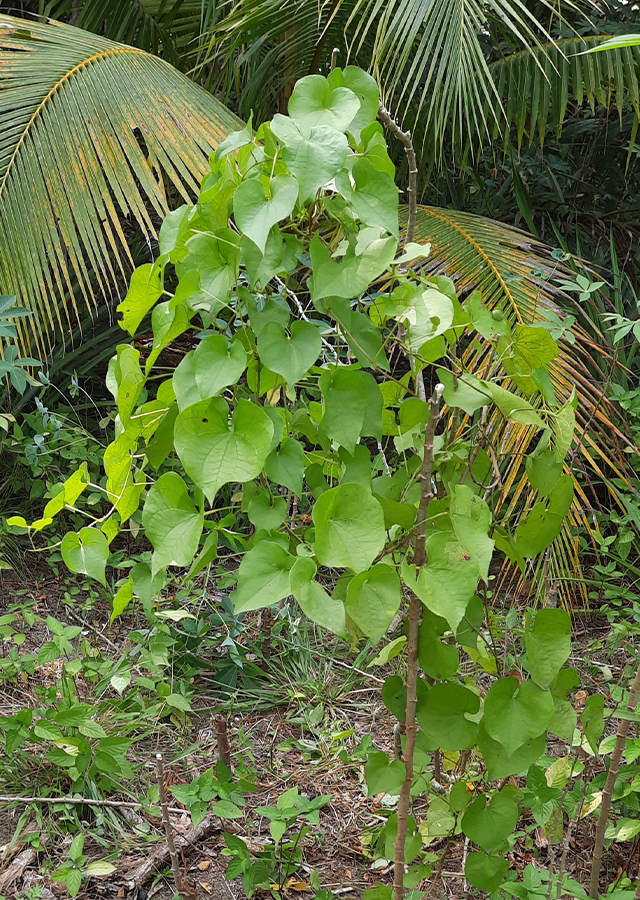
Gembili (Dioscorea esculenta) is an annual climbing plant up to 3 meters tall of the Dioscoreaceae family, originating from Thailand and Vietnam, spreading widely across tropical regions since the 16th century. Its tuber has potential as a staple food processed into flour. Gembili is also traditionally believed to help relieve swelling, rheumatism, and boils.
Agroecology
This plant grows in tropical lowlands up to elevations of 900 m above sea level. Grows well at daytime temperatures of 28-32 °C, average annual rainfall of 800-2,000 mm/year, in full sunlight or shade, sandy clay loam soil with deep solum, well-drained, pH in the range of 5.5-6.5.
Morphology
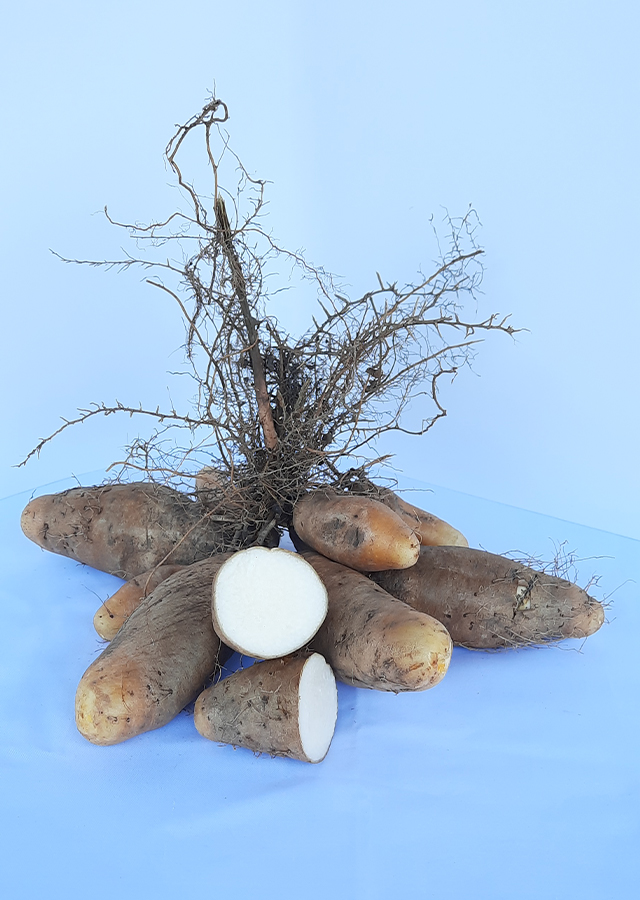
- Roots fibrous, has thorny roots in wild plants.
- Tuber round to oblong, smooth surface, tuber flesh clean white to cloudy white in color. Skin cream to light brown in color. Tuber length 15 to 20 cm.
- Stem round, slender, slightly hairy, thorny, twining to the right.
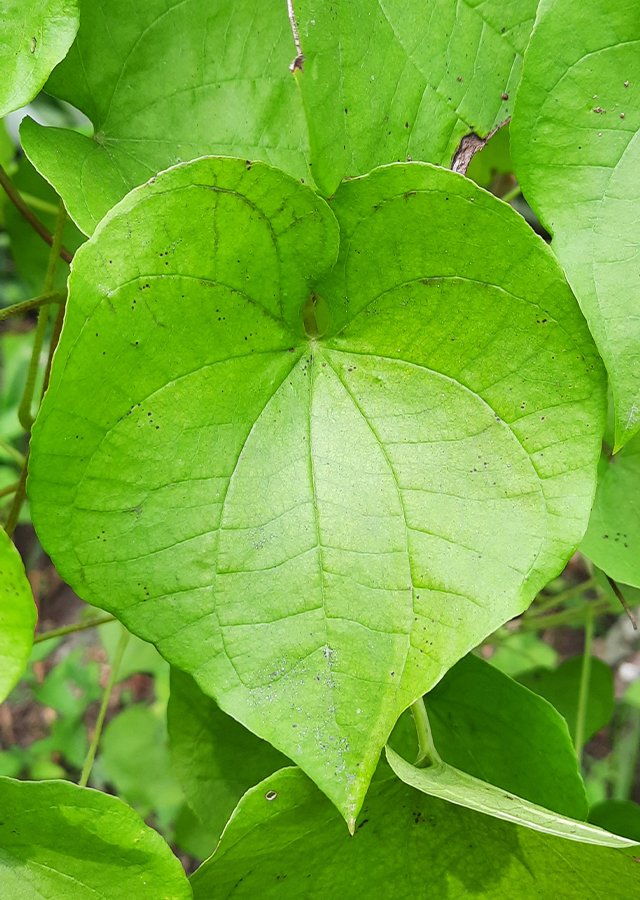
- Leaves single, alternating, heart-shaped, 8–15 cm long, 7–15.5 cm wide. Light green to dark green color with sparse to dense leaf density. Stalk color green, purple-tipped, or green with purple edges, leaf stalk length 2–15.5 cm.
Cultivation
Propagated by tuber cuttings. Tuber pieces, weighing about 50-80 g with dormant buds, are planted at a depth of 4-8 cm with the stem facing downward.
Chemical Content
Saponins, diosgenin, ß-sitosterol, stigmasterol, cardiac glycosides, catechins, epicatechins, chlorogenic acids, leucoanthocyanidins, anthocyanins, flavonoids, alkaloids.
Benefits
Treats swelling, rheumatism, boils, abscesses, beriberi, menopause symptoms and other genital organ disorders, diuretic.
Simplisia
- Wash the tuber of soil and other dirt.
- Blanch by soaking in hot water at 80 °C for 1 minute until the whole tuber is submerged in water.
- Peel the gembili tuber skin with a knife.
- Slice with a slicer to a thickness of 1-2 mm then soak the tuber in a 5% salt solution and 0.3% sodium metabisulfite for 2 hours.
- Wash with running water and dry in a cabinet dryer at 60 °C for 6-8 hours. Then blend the dried tuber and sift to an 80 mesh size.
- Pack the dried material in a clean, airtight container.
Local Names
Ubi aung (West Java), Ubi gembili (Central Java), Kombili (Ambon).
Traditional Recipes
The following recipes reflect traditional knowledge passed down through generations, not a substitute for professional medical diagnosis or advice. Consult a healthcare provider before use.
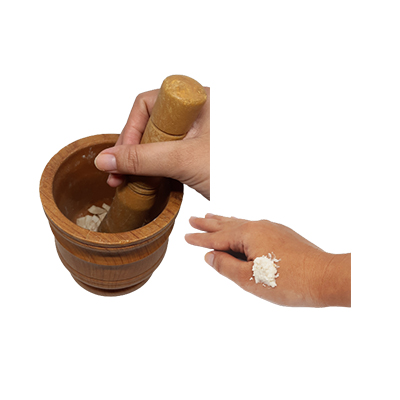
1. Boils and Abscesses
- Prepare an adequate amount of gembili tuber.
- Wash thoroughly.
- Mash into a paste
- Apply to the boil or abscess.
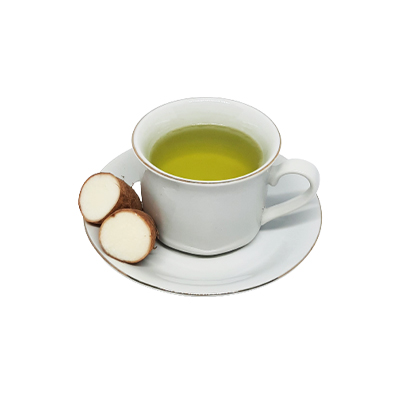
2. Rheumatism and Diuretic Remedy
- Take an adequate amount of gembili tuber, wash. thoroughly then peel the skin.
- Boil the tuber with an adequate amount of water.
- Drink the decoction while warm.
Reference Sources
- Tropical Plants Database, Ken Fern. tropical.theferns.info. Dioscorea esculenta. http://tropical.theferns.info/viewtropical.php?id=Dioscorea+esculenta 29-01-2021
- Stuartxchange. Philippine Medicinal PlantsTugi. Dioscorea esculenta Lour. Lesser Yam. http://www.stuartxchange.org/Tugi.html. 29-01-2021
- AgriTAni. Budidaya Gembili. http://agri-tani.blogspot.com/2014/02/budidaya-gembili.html 29-02-2021
- Pratiwi Tyas, Affandi Dian Rachmawanti, Manuhara Godras Jati. 2016. APLIKASI TEPUNG GEMBILI (Dioscorea esculenta) SEBAGAI SUBSTITUSI TEPUNG TERIGU PADA FILLER NUGGET IKAN TONGKOL (Euthynnus affinis). Program Studi Ilmu dan Teknologi Pangan. Fakultas Pertanian. Universitas Sebelas Maret. Jurnal Teknologi Hasil Pertanian IX(1). 29-01-2021