Dioscorea hispida Dennst.
Summary
Gadung (Dioscorea hispida) is a climbing plant up to 10 meters tall of the Dioscoreaceae family, originating from western India and South China, spreading to Southeast Asia through to Papua New Guinea. Its tuber, which contains a natural toxin, must be specially processed before being made into a traditional snack in various regions. Gadung is also traditionally believed to reduce fever, be antirheumatic, and relieve menstrual pain.
Agroecology
This plant is often found growing wild in forests, yards, and plantations at elevations up to 1,200 m above sea level. Prefers full sunlight locations, rainfall 760-1,000 mm/year, and a minimum temperature of 10 °C.
Morphology
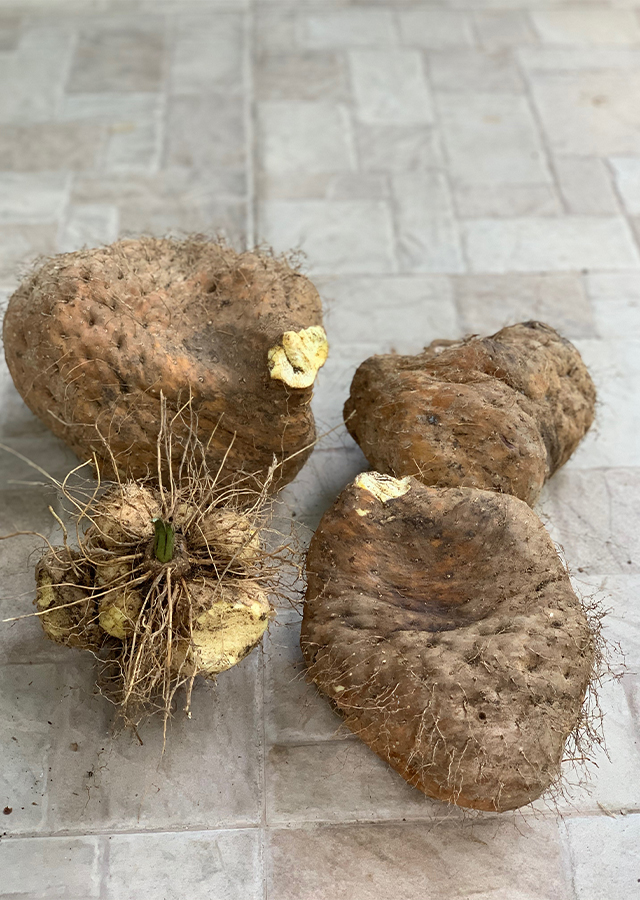
- Tuber round covered with large, stiff root hairs, skin ivory or light brown colored, tuber flesh ivory-white or yellow.
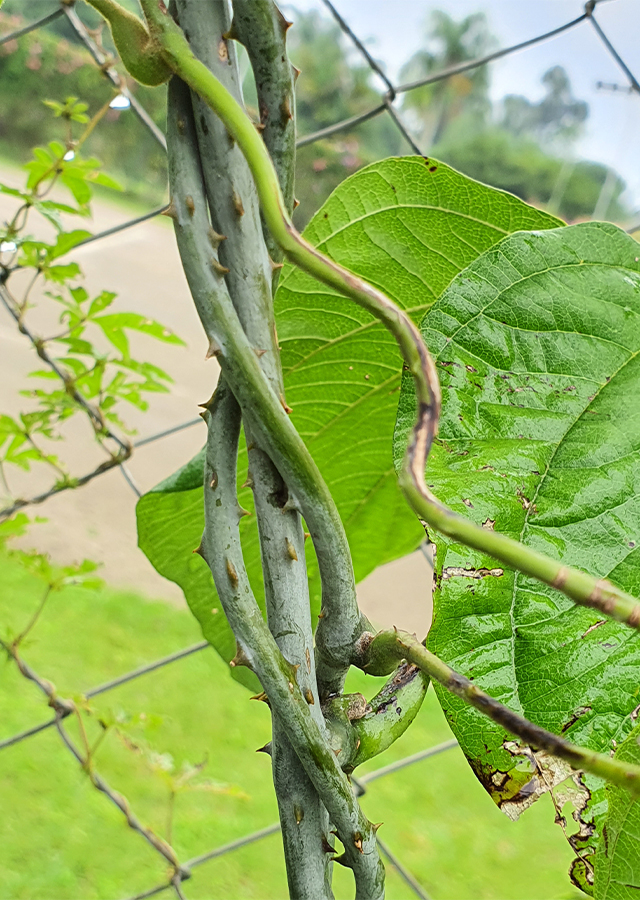
- Stem round, hairy, thorny along the stem and leaf stalk.
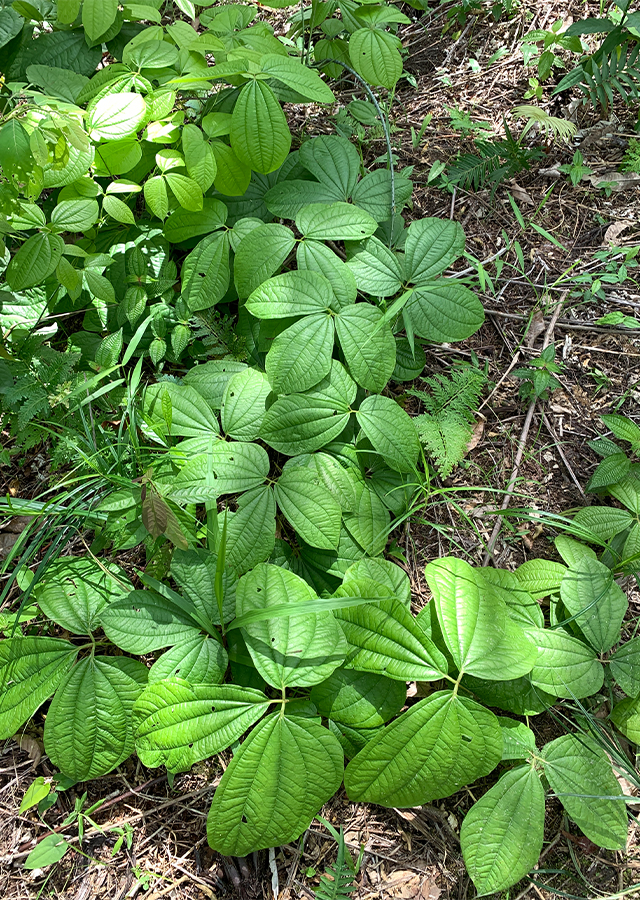
- Leaves compound, consisting of 3 leaflets.
- Flowers compound, arranged at leaf axils, spike-shaped. Petals yellow, six stamens.
Cultivation
- Propagated using shoots found on the tuber.
- Plant the shoot facing upward, at a soil depth of 15-20 cm.
- Harvested when the gadung is 1 year old.
Chemical Content
Dioscorine, alkaloids, flavonoids, saponins, tannins, diosgenin, hydroxybenzoic acid, hydroxybenzaldehyde, protocatechuic acid.
Benefits
Fever reducer, antirheumatic, diuretic, expectorant, relieves menstrual pain, treats diabetes, corn/callus remedy.
Simplisia
Gadung flour
- Select good tubers then wash thoroughly and peel. Wash again until separated from all its skin. Slice to a thickness of 1-2 mm, coat the slices evenly with table salt. Let sit for 24 hours.
- Rinse thoroughly then soak for 72 hours, drain.
- Dry at 55 °C for 12 hours or until dry.
- Blend until fine, sift into flour.
- Store in a closed, airtight place.
Local Names
Janèng (Aceh), Janiang (Minang), Bitule (Gorontalo), Gadu (Bima), Iwi (Sumba), Kapak (Sasak), Salapa (Bugis), and Sikapa (Makassar).
Traditional Recipes
The following recipes reflect traditional knowledge passed down through generations, not a substitute for professional medical diagnosis or advice. Consult a healthcare provider before use.
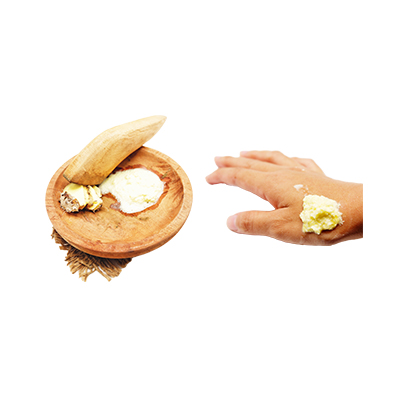
1. Calluses
- An adequate amount of gadung rhizome and an adequate amount of water.
- Grind or mash until it becomes like a paste. Rub on the hardened part of the skin.
- Renew the application every 3 hours.
Reference Sources
- Indiabiodiversity India. Dioscorea hispida Dennst. https://indiabiodiversity.org/species/show/243782 15-01-2021.
- Remaja Kerokhanian Sapta Darma Sragen. 2014. Daftar Tanaman Obat Indonesia. Sragen 118-119.