Dolichandra unguis-cati (L.) L.G.Lohmann
Summary
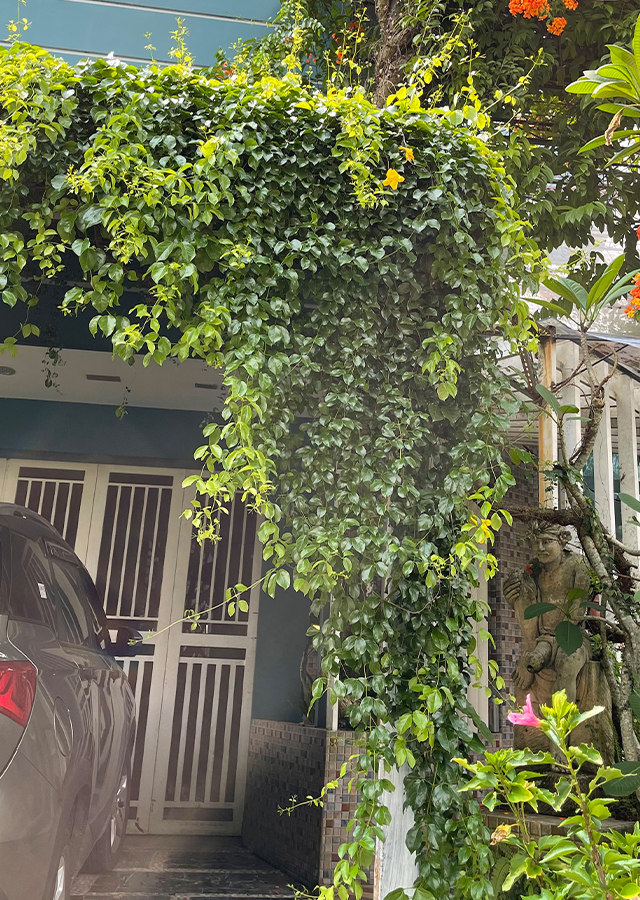
Dolichandra unguis-cati or cat's claw creeper is native to tropical America, from Mexico to Argentina and the West Indies, and has now been naturalized in Asia, Africa, Europe, and Australia after being commercialized as an ornamental. In Guyana, this plant is traditionally used to address female infertility and bleeding, while in other regions it is popular as a remedy for venereal disease, fever, and snake bites thanks to its diuretic and anti-inflammatory properties.
Agroecology
D. unguis-cati is a highly aggressive invasive plant in riparian zones (waterway banks) and rainforest plant communities. Within its native distribution range, this species is found in tropical dry forest, tropical moist forest, lowland and mid-elevation rainforest, savanna, seasonally deciduous forest, and Amazonian seasonally flooded forest. In areas where it has been naturalized, this species grows in gardens, grasslands, urban open spaces, riverside forests, and along roadsides and forest edges in temperate, subtropical, and tropical habitats. In the West Indies (i.e., Puerto Rico), it grows from near sea level up to elevations over 600 m asl, in locations receiving mean annual rainfall of about 750 to 2,400 mm. The growth of D. unguis-cati prefers a position in full sun or partial shade. Tolerates most soils, except very poorly drained soil. This species is frost-hardy and can also survive grazing and fire, but is displaced by deep grassland. In Australia it has been found growing around estuarine wetlands, showing higher tolerance for saline conditions.
Morphology
- Roots produce tubers that generate stolons (runners).
- Stem cylindrical, lenticellate, woody, with claw-shaped leaf tendrils and adventitious roots. Younger stems hairless (glabrous) and green, often with reddish-brown or bronze tips. Stems turn light brown or grayish and become woody with age (old stems can reach 15 cm or more thick). Older stems attach to supports through small roots, while younger stems attach to supports through claw-like leaf tendrils.
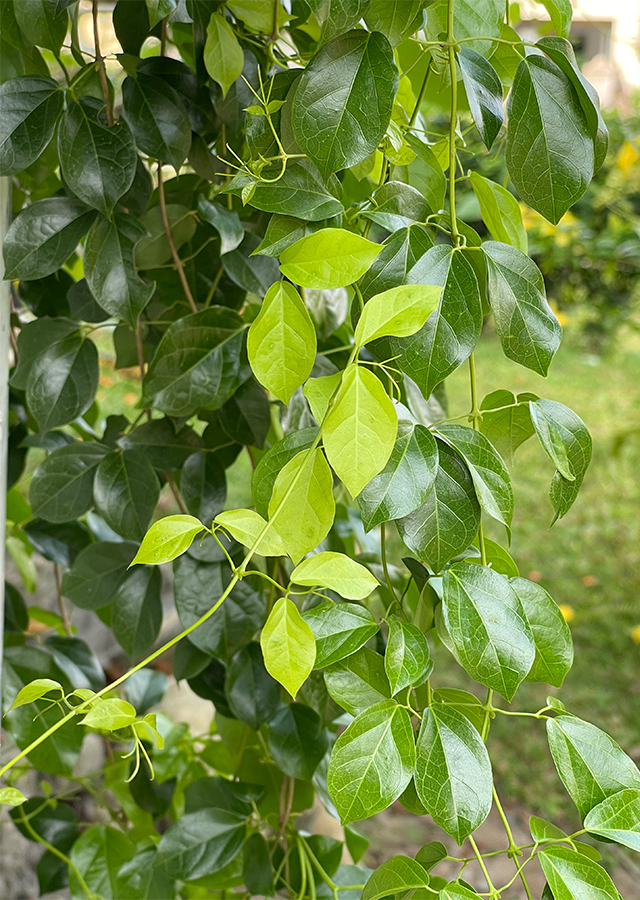
- Leaves compound, arranged in pairs along the stem, green. Each leaf consists of 2 leaflets (2-foliolate), and a terminal tendril with 3 claws, generally short. Blade elliptic, oblong or ovate, hairless or with punctiform scales, tip pointed or tapering, base pointed or rounded, margin entire or wavy. However, young seedlings have simple leaves with slightly toothed margins. Upper surface dark, glossy, with sunken venation; lower surface light green, dull, with prominent venation.
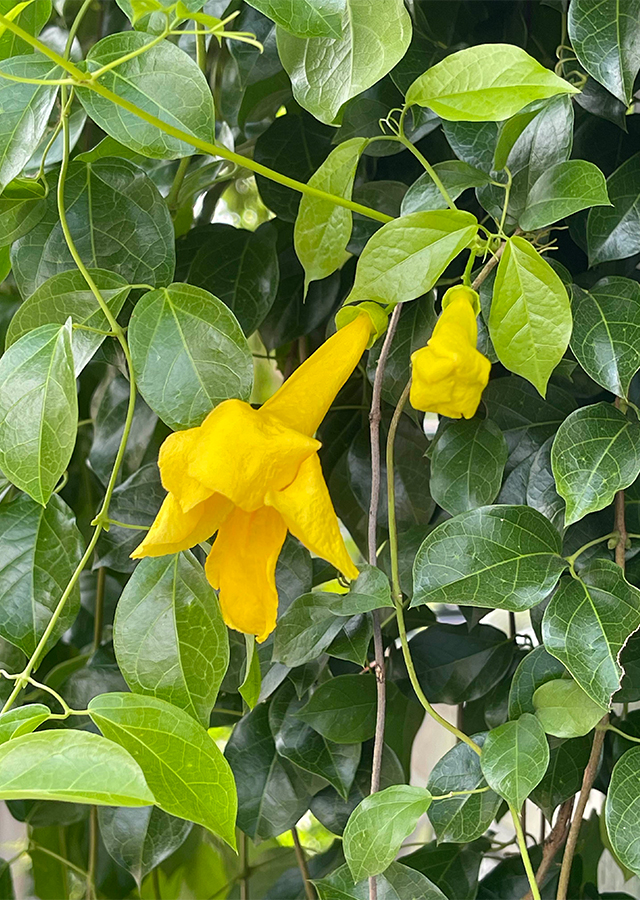
- Flowers solitary or paired, trumpet-shaped, pedicel 2 cm long, clustered in the leaf axils. Calyx green, cone-shaped, 12-16 mm long, with five partially fused sepals (calyx tube). Corolla bright yellow with orange lines running along the corolla tube or throat, infundibuliform, with five unequal, rounded lobes. Stamens 4, didynamous, inserted. Ovary covered with punctiform scales.
- Fruit a flattened, linear capsule, somewhat woody, initially glossy green, but turning dark brown when ripe.
- Seeds thin, numerous, 1-3.5 cm long, oblong shaped with two translucent membranous wings.
Cultivation
- Plant propagation through seed, stem cuttings, and a tuberous root system that easily roots at the nodes.
- Soon after the seed germinates, the young plant begins forming an underground tuber that increases in size each year. Capsules mature about six months after flowering.
- Seeds are usually dispersed by wind and water, while tuberous roots can be spread by flooding and during human activities involving significant soil movement.
Chemical Content
Phenolic compounds, six flavonoids (8-methoxy, acacetin, 7-O-glucoside; 6-methoxy apigenin 7-O-glucoside; 4'-O-methyl scutellarin, 6-O-apiosyl galactoside; acacetin, 7-O-glucosyl, 8-C-rhamnosyl, 3-O-α-arabinofuranoside; 4'-methyl, 6-methoxy kaempferol, 7-O, 8-C-diglucoside; and vicenin II), lapachol, quinovic acid, 3-(O-fucosyl) alcohol, β-amyrin, and β-sitosterol.
Benefits
Reduces fever, treats venereal disease, cough, flu and headache, snake bites, dysentery, diarrhea, inflammation and rheumatism, addresses female infertility and bleeding, as a quinine substitute for malaria. Is diuretic, anti-inflammatory, and emollient.
Local Names
Informasi tidak ditemukan. Butuh penelusuran lebih lanjut.
Traditional Recipes
The following recipes reflect traditional knowledge passed down through generations, not a substitute for professional medical diagnosis or advice. Consult a healthcare provider before use.
1. Treats snake bites
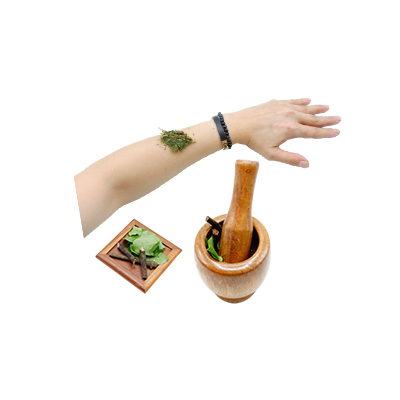
- Prepare an adequate amount of cat's claw creeper leaves and stems and wash until clean.
- Grind the ingredients until it becomes a paste.
- Apply the paste to the snake bite.
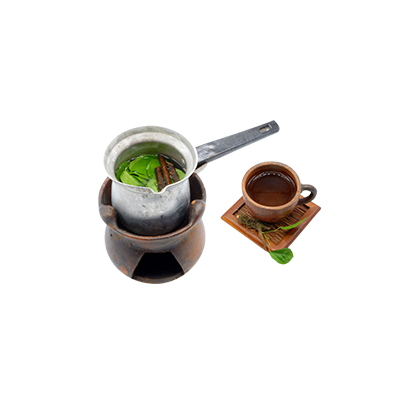
2. Cough
- Take an adequate amount of cat's claw creeper leaves and stems and wash until clean.
- Boil until it boils.
- Let it cool to warm/cold.
- Strain then drink.
Reference Sources
- Royal Botanic Gardens, Kew. Plants of the World Online. Dolichandra unguis-cati (L.) L.G.Lohmann. https://powo.science.kew.org/taxon/urn:lsid:ipni.org:names:77100466-1. 01-07-2022.
- CAB International. 2022. Invasive Species Compendium: Dolichandra unguis-cat (cat's claw creeper). https://www.cabi.org/isc/datasheet/9159#tosummaryOfInvasiveness. 01-07-2022.
- Flora Fauna Web. 2022. Dolichandra unguis-cati (L.) A. Gentry. https://www.nparks.gov.sg/florafaunaweb/flora/1/4/1444. 01-07-2022.
- BioNET-EAFRINET, Keys and Fact Sheets. Macfadyena unguis-cati (Cat's Claw Creeper). https://keys.lucidcentral.org/keys/v3/eafrinet/weeds/key/weeds/Media/Html/Macfadyena_unguis-cati_(Cats_Claw_Creeper).htm. 01-07-2022.
- E.A. Aboutabl, F.A. Hashem, A.A. Sleem, A.A. Maamoon. 2008. Flavonoids, Anti-Inflammatory Activity and Cytotoxicity of Macfadyena Unguis-Cati L. African Journal of Traditional, Complementary and Alternative Medicines, 5(1): 18-26.