Donax canniformis (G.Forst.) K.Schum.
Summary
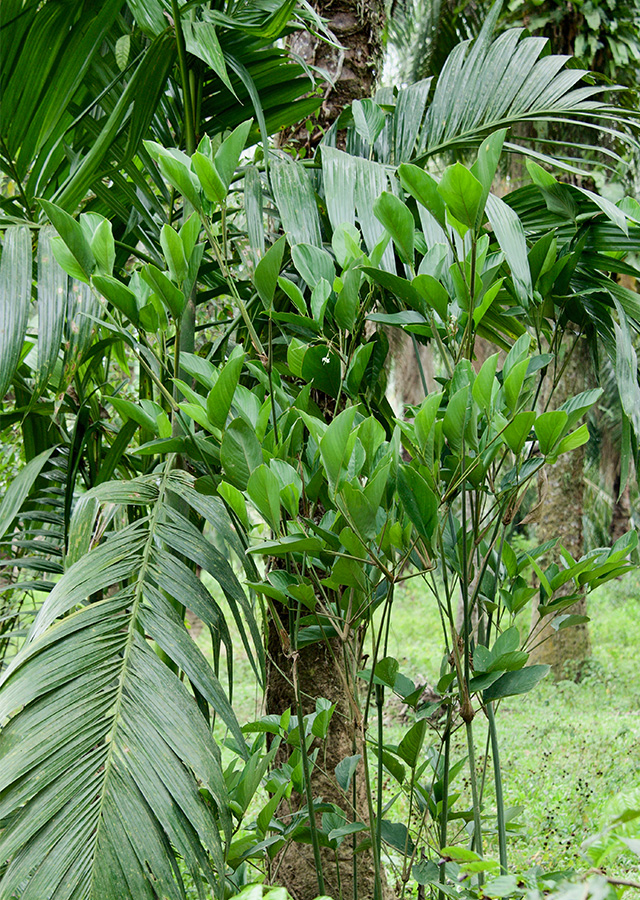
Bamban (Donax canniformis) is a clump-forming herb 1.5-4 meters tall of the Marantaceae family, distributed from India through Southeast Asia to Taiwan and Polynesia, generally thriving in swampy regions. Its tough stem bark serves as raw material for handicraft weaving among local communities. In addition, this plant is traditionally used to relieve swelling, boils, and snakebites.
Agroecology
Bamban is often found growing wild along waterways or in wet areas, as well as in bamboo forests. Grows well up to an elevation of 1,000 m above sea level. Favors open areas exposed to direct sunlight.
Morphology
- Roots fibrous, with a bright brown rhizome.
- Stem cylindrical, dark green, with long internodes.
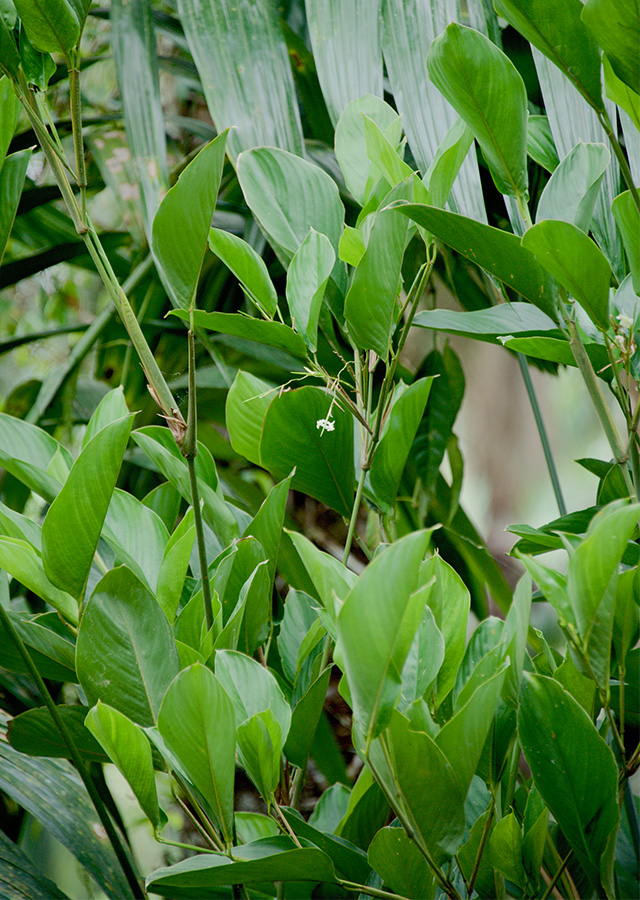
- Leaves simple and stalked, with broad ovate to oblong blades.
- Flowers in inflorescences that are often branched at the base, up to 20 cm long. Sepals white, ovate-triangular, hairless, white to pale cream, dry and non-dehiscent.
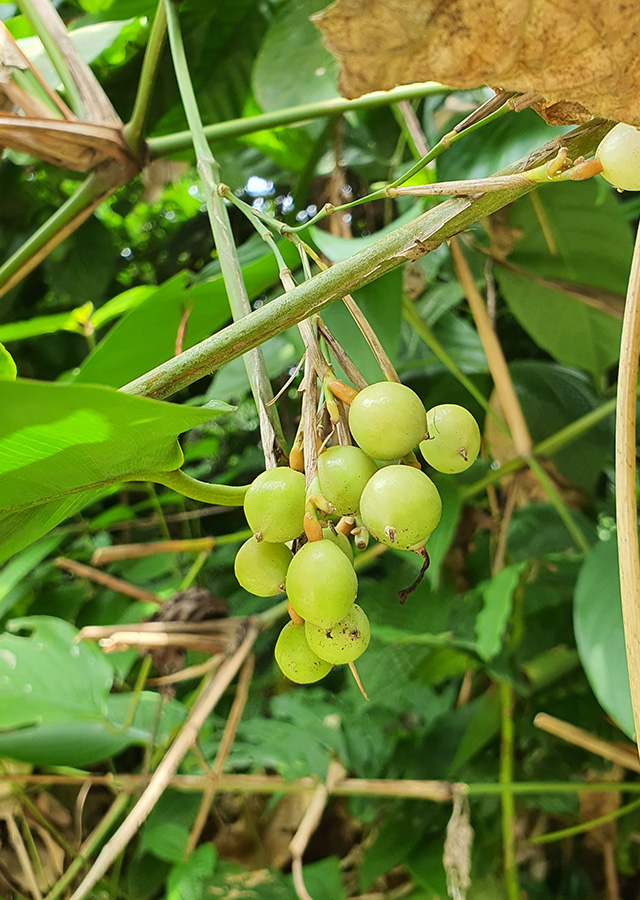
- Seeds brown, 1-2 per fruit.
Cultivation
Propagated generatively with offshoots and seed (seeds are sown first) and vegetatively with stem cuttings.
Chemical Content
Saponins, flavonoids, cardiac glycosides, polyphenols, tannins, phytosterols, terpenoids, steroids, alkaloids.
Benefits
Treats diabetes, boils, eye ailments; reduces swelling; heals snakebites; has antibacterial and antioxidant activity.
Simplisia
- Take fresh roots and clean under running water.
- Drain and dry under direct sunlight or in an oven at 40 °C until the moisture content is below 10%.
- Once dry, store in clean, airtight plastic.
Local Names
Mbamban (Madura), Bomban, Banban (Batak), Bangban (Sunda), Wuwu (Java), Kelangisan (Bali), Burung, Borong (South Sulawesi), Mundung, Wuwudu (Gorontalo), Moa (Manado, Ternate, Ambon), Biawa, Biara (Halmahera).
Traditional Recipes
The following recipes reflect traditional knowledge passed down through generations, not a substitute for professional medical diagnosis or advice. Consult a healthcare provider before use.
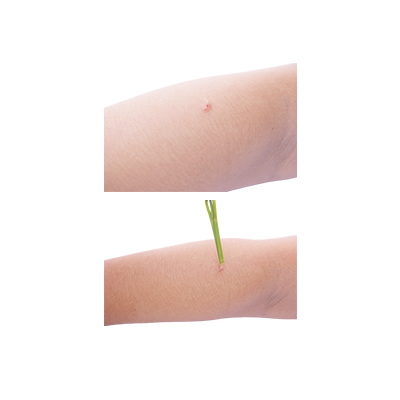
1. Treating Boils, Swelling, and Snakebite Pain
- Prepare a sufficient amount of young bamban stem.
- Cut the stem and apply the sap that comes out onto the snakebite wound or boil, then wrap with a clean cloth.
2. Treating Boils, Swelling, and Snakebite Pain
- Prepare a sufficient amount of young bamban stem.
- Cut the stem and apply the sap that comes out onto the snakebite wound or boil, then wrap with a clean cloth.
Reference Sources
- Globin Med. (No date). Donax canniformis (G. Forster) K. Schumann. https://www.globinmed.com/index.php?option=com_content&view=article&id=62912:donax-canniformis-g-forster-k-schumann. 21-12-2020
- StuartXchange. (2016). Philippines Medicinal Plants: Donax cannaeformis. http://www.stuartxchange.org/Bamban.html. 21-12-2020
- Bharti R, Ahuja G, Sujan Ganapathy PS, Dakappa SS. 2012. A review on medicinal plants having Antioxidant potential. J. Pharm. Res. 5(8): 4278-4287.
- Hidayatullah, Anam S, Tandah MR. 2015. Profil kandungan kimia dan aktivitas antibakteri ekstrak metanol daun bamban (Donax canniformis (G. Forst.) K. Schum) terhadap Staphylococus aureus. GALENIKA Journal of Pharmacy 1(2): 141-148.
- PlantUse. Donax canniformis (PROSEA). https://uses.plantnet-project.org/en/Donax_canniformis_(PROSEA). 13-01-2021