Dracaena trifasciata (Prain) Mabb.
Summary
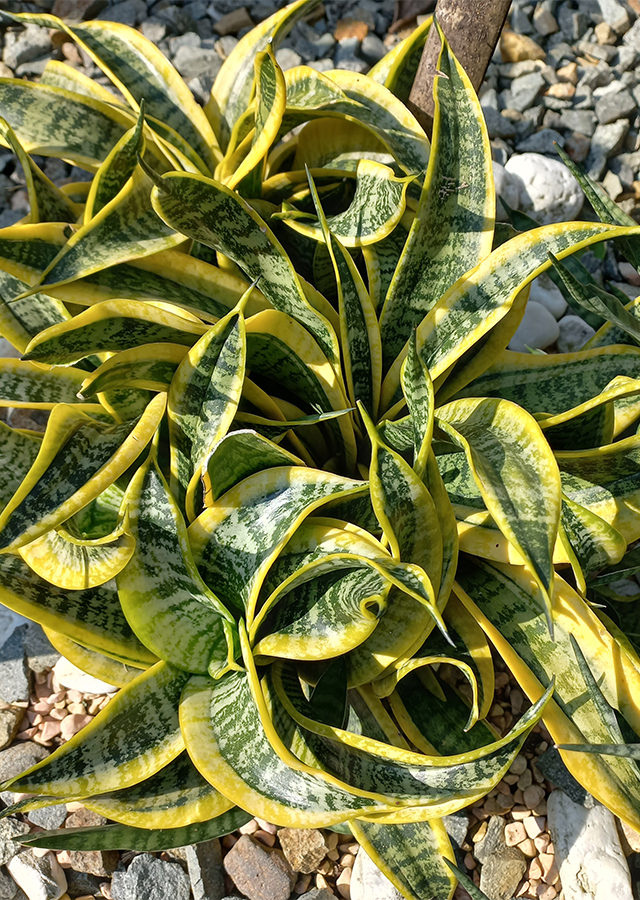
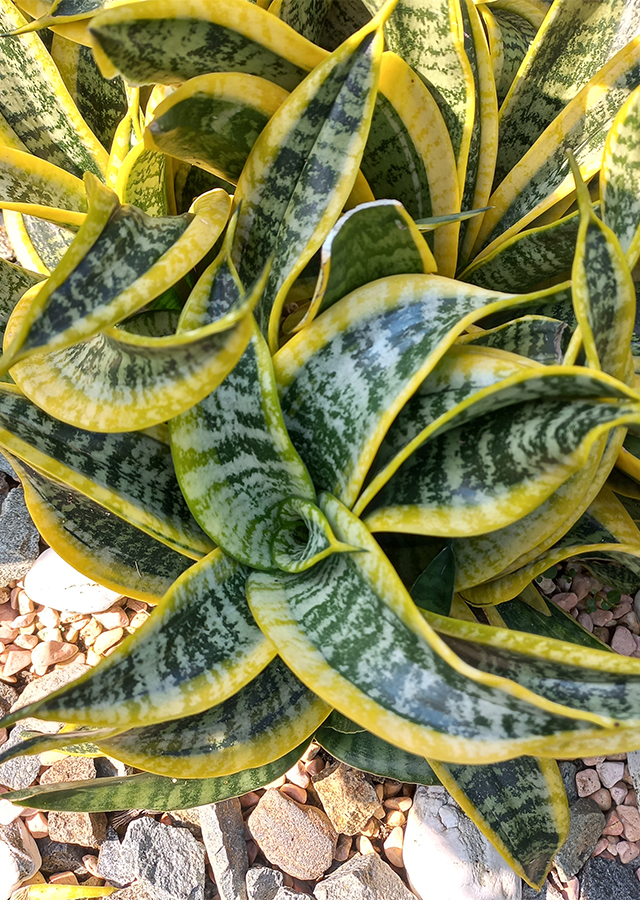
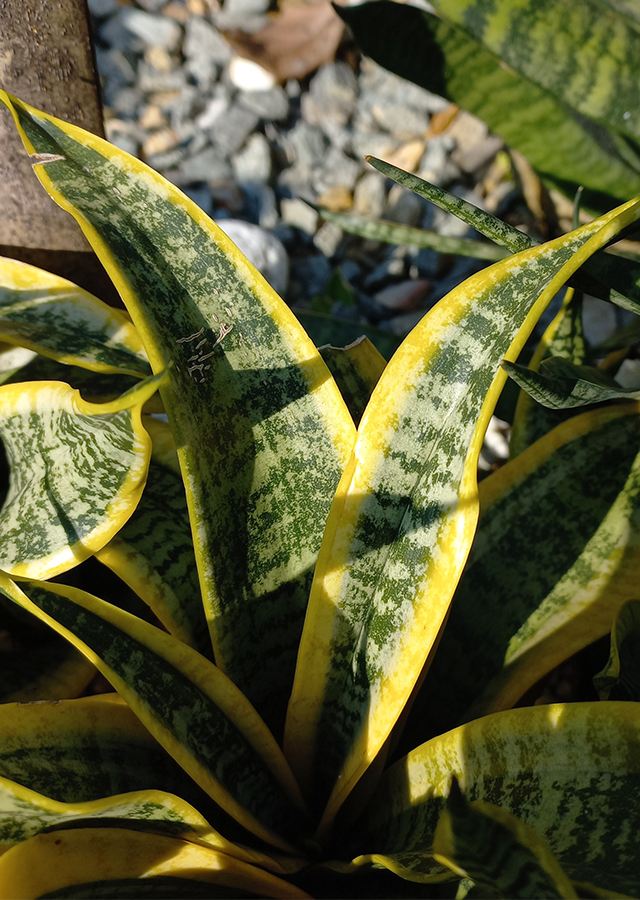
Lidah mertua (Dracaena trifasciata) is a succulent up to 90 cm tall from the Asparagaceae family that originates from tropical Africa, known as one of the most effective plants for cleaning indoor air of pollutants like formaldehyde and benzene. This long-lived plant is also a source of fiber for rope and mats. In Sri Lanka, lidah mertua rhizome is traditionally used to treat coughs and colds.
Agroecology
Lidah mertua can be found growing in tropical, subtropical and warm climates under various light conditions from open full-sun areas to shaded areas under forest canopy. This species is a common weed along roadsides, abandoned gardens, waste areas, disturbed sites, coastal forests, secondary wet forests, mesic forests, and dry forests. Found at elevations between 500-1,200 m asl. Its growth prefers areas with average annual rainfall in the range of 500-1,000 mm, and sandy, fertile, well-drained soil structure, with soil acidity (pH) between 6-7, but tolerant of low-pH (acidic) soil as well as high-pH (alkaline) soil and low-nutrient soil. In addition, this species is also drought and heat tolerant.
Morphology
- Roots fibrous, white, has a rhizome that spreads below and can also be above the soil surface.
- Stem covered by stiff, long, and thick leaves so it is considered a pseudostem. Stem pale white and tightly fibrous.
- Leaves form a basal rosette, the number of leaves in each rosette is about 4-6 leaves that cross each other in position, linear-lanceolate reversed (oblanceolate), thick, upright, stiff, watery, smooth surface, sword-shaped, long, and variously patterned with grayish-white transverse marks, tapering leaf tip. The adaxial surface is generally greenish-white as a base color, has irregular horizontal lines that are dark green.
- Flowers stalked, found in a panicle growing upright from the base of the stem, solitary or clustered in 2-3 groups, white or greenish-white. Emits a fragrant aroma, especially at night. The pistil and pollen are not in the same flower.
- Fruit a berry, fleshy, subglobose to oblong-elliptical shape, bright orange-red.
- Seeds single-coated, the outermost part of the seed is a thick skin. However the seed formation process very rarely occurs naturally.
Cultivation
- Propagation generatively (seeds) or vegetatively (leaf segment and rhizome cuttings).
- Leaf segments and rhizomes grow easily and can grow quickly forming dense and nearly impenetrable thickets. However propagation by seed rarely occurs, because the position of the stigma and pollen are not in the same flower, so pollination is usually done with the help of human hands.
Chemical Content
Sapogenin, alkaloid, flavonoid, saponin, tannin, phenol, steroid, glycoside, triterpene.
Benefits
Treats wounds and snake bites, boils, coughs, colds, bronchitis, traumatic wounds, ringworm disease, scabies, fungus, diabetes, hemorrhoid remedy. Has anti-inflammatory activity.
Simplisia
- Prepare lidah mertua leaves as needed and wash with clean water.
- After clean, drain to remove excess wash water.
- Slice at 1.5 cm width so drying occurs faster.
- Dry by air-drying in a place protected from sunlight.
- Blend the dried leaves into powder then sieve with a 60-mesh sieve.
- Store in a clean, airtight container.
Local Names
Pedang-pedangan, Tanaman ular, Tali busur ular berbisa.
Traditional Recipes
The following recipes reflect traditional knowledge passed down through generations, not a substitute for professional medical diagnosis or advice. Consult a healthcare provider before use.
1. Diabetes
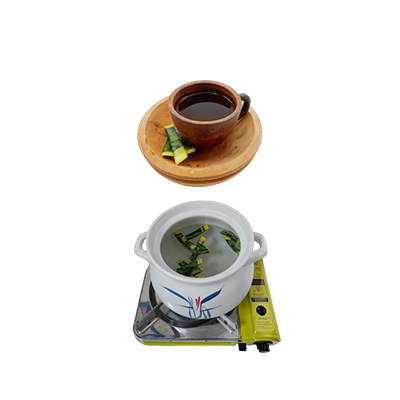
- Take one lidah mertua leaf and wash until clean and cut into pieces.
- Boil with 3 glasses of water until only one glass remains.
- Let stand until warm/cool.
- Strain, then drink.
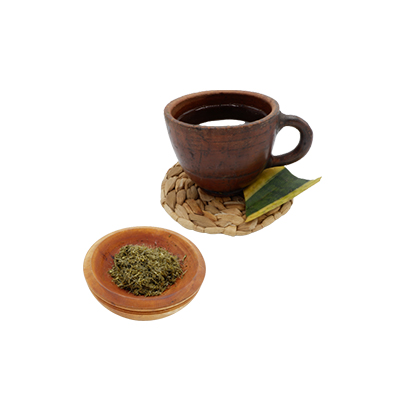
2. Hemorrhoid remedy
- Take one dried leaf.
- Boil with 3 glasses of water until one glass remains.
- Strain the decoction, then drink while warm.
Reference Sources
- Royal Botanic Gardens. 2021. Plant of the World Online: Dracaena trifasciata (Prain) Mabb. http://www.plantsoftheworldonline.org/taxon/urn:lsid:ipni.org:names:77164235-1. 07-10-2021.
- CAB International. 2021. Invasive Species Compendium: Sansevieria trifasciata (mother-in-law’s tongue). https://www.cabi.org/isc/datasheet/48196#tosummaryOfInvasiveness. 07-10-2021.
- Stuartxchange. 2019. Philippine Medicinal Plants: Tigre. http://stuartxchange.com/Tigre.html. 07-10-2021.
- Flora Fauna Web. 2020. Dracaena trifasciata (Prain) Mabb. https://www.nparks.gov.sg/florafaunaweb/flora/2/4/2420. 07-10-2021.
- Useful Tropical Plants Database. 2021. Sansevieria trifasciata. https://tropical.theferns.info/viewtropical.php?id=Sansevieria+trifasciata. 07-10-2021.
- Aisyah W., Harijati N., Arumingtyas E.L. 2011. Kajian Morfologi, Anatomi dan Serat Daun Tanaman Sansevieria trifasciata yang Terdapat di Kota Malang. NATURAL B, 1(2).