Drymaria cordata (L.) Willd. ex Schult.
Summary
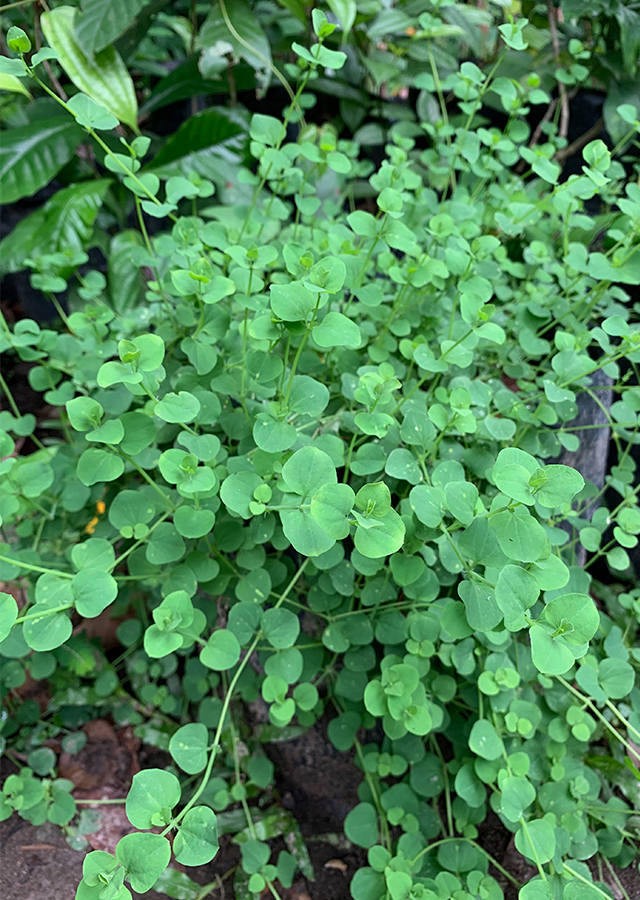
Cemplonan (Drymaria cordata) is a creeping herb up to 1 meter long of the Caryophyllaceae family, originally native to tropical America before spreading to Southeast Asia, India, China, and Australia. Its small, attractive flowers belie its medicinal value—one use being as an ingredient in Karo oil, a traditional remedy from North Sumatra. This plant is also used to relieve boils, fever, and respiratory ailments such as bronchitis.
Agroecology
Grows well in moist, shady areas, along roadsides, rivers, ditches, and secondary forest at elevations of 10-2,000 m above sea level. Temperature around 25 °C, favoring sandy, loamy, and clay soil with a pH between 6.1-7.8.
Morphology
- Roots white.
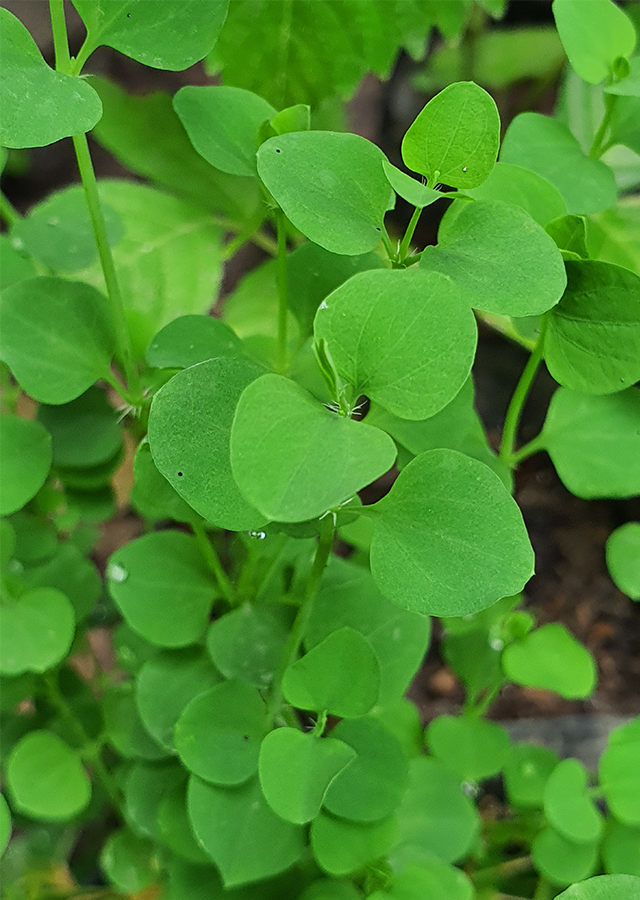
- Stem creeping, trailing up to 1 m, green.
- Leaves bluish-green surface with a fine waxy layer.
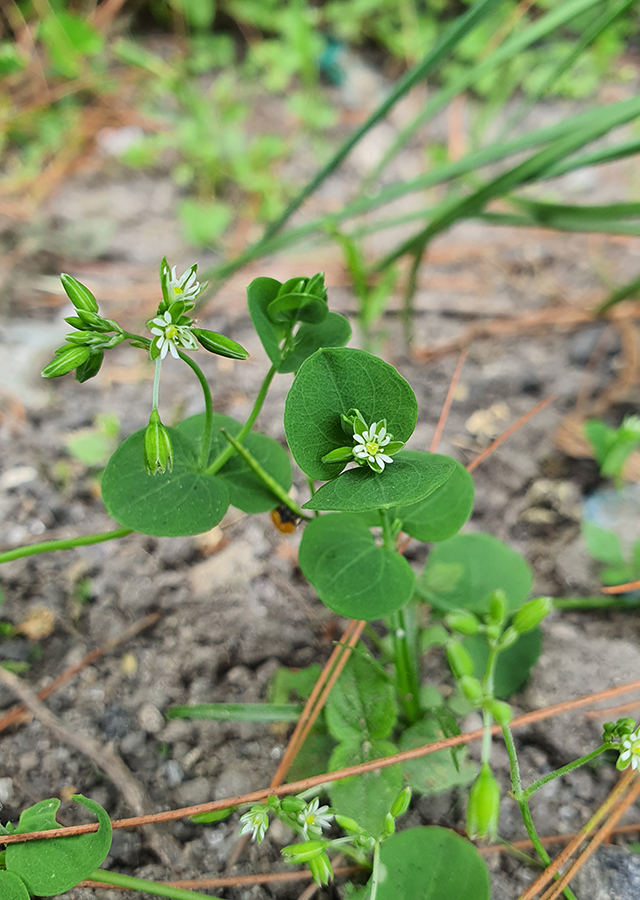
- Flowers umbrella-shaped with a funnel-like, split calyx. Corolla star-shaped, white.
- Fruit oblong, covered by a fruit membrane, green.
- Seeds black, round, and small.
Cultivation
- Propagated using stem cuttings, separation of offshoots, and seeds.
- Apply organic fertilizer if you intend to use it as a medicinal plant.
Chemical Content
Alkaloids, polyphenols, saponins, cordatamine, tannins, glycosides, flavonoids, diterpenes, steroids, stigmasterol, triterpenes.
Benefits
Treats boils (furunculosis); acts as a laxative; treats herpes; reduces fever, antipyretic, analgesic; treats respiratory ailments (colds, bronchitis), hepatitis, stomach problems; used as a wound poultice; treats tumors, leprosy, eye disorders, leg edema; anti-inflammatory, antibacterial.
Simplisia
- Collect the whole plant and wash thoroughly.
- Air-dry on a tray for several days, or use an oven at 40 °C until the moisture content is below 10%.
- Store the dried material in a closed container.
Local Names
Sirampas bide (Karo), Piti-piti (Makasar), Jukut ibun (Sunda), Angleng, Kantingan, Randa nunut, Selaton, Cebungan (Java), Rekere nindu (Madura).
Traditional Recipes
The following recipes reflect traditional knowledge passed down through generations, not a substitute for professional medical diagnosis or advice. Consult a healthcare provider before use.
1. Boils
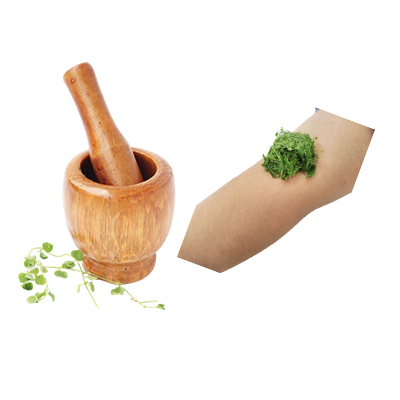
- Pound a sufficient amount of fresh cemplonan leaves until fine.
- Apply to the area affected by the boil.
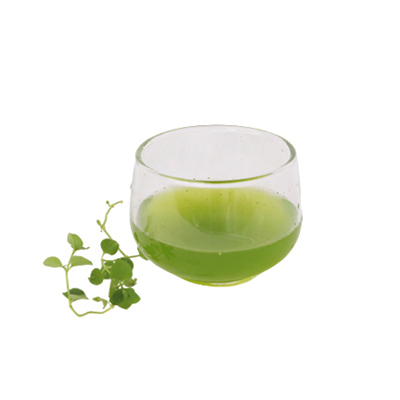
2. Fever and as a Laxative
- Wash 25 g of fresh cemplonan leaves thoroughly, pound until fine, then squeeze and strain.
- Drink all at once, once a day.
Reference Sources
- Adeyemi OO, Akindele AJ, Nwaubani N. 2008. Anti-inflammatory activity of Drymaria cordata extract. J. Nat. Remedies 8(1): 93-100.
- Mukherjee PK, Saha K, Bhattacharya S, Giri SN, Pal M, Saha BP. 1997. Studies on antitussive activity of Drymaria cordata Willd. (Caryophyllaceae). J. Ethnopharmacol. 56(1):77-80.
- Bhattacharya S, Saha K, Giri SN, Pal M, Saha BP. 1997. Antibacterial evaluation of Drymaria cordata Willd (Fam. Caryophyllaceae) extract. Phytotherapy Res. 11(3): 249-250.
- Tropical Plants Database, Ken Fern. tropical.theferns.info. Drymaria cordata. http://tropical.theferns.info/viewtropical.php?id=Drymaria+cordata 18-01-2021
- Kinho Julianus dkk. 2011. Tumbuhan obat tradisional di sulawesi utara Jilid II. Balai Penelitian Kehutanan Manado Badan Penelitian dan Pengembangan Kehutanan Kementerian Kehutanan
- Philippine Medicinal Plants. Bakalanga. Drymaria cordata (L.) Willd. ex Schult. Tropical Chickweed. http://www.stuartxchange.org/Bakalanga.html 4-03-2021