Duranta erecta L.
Summary
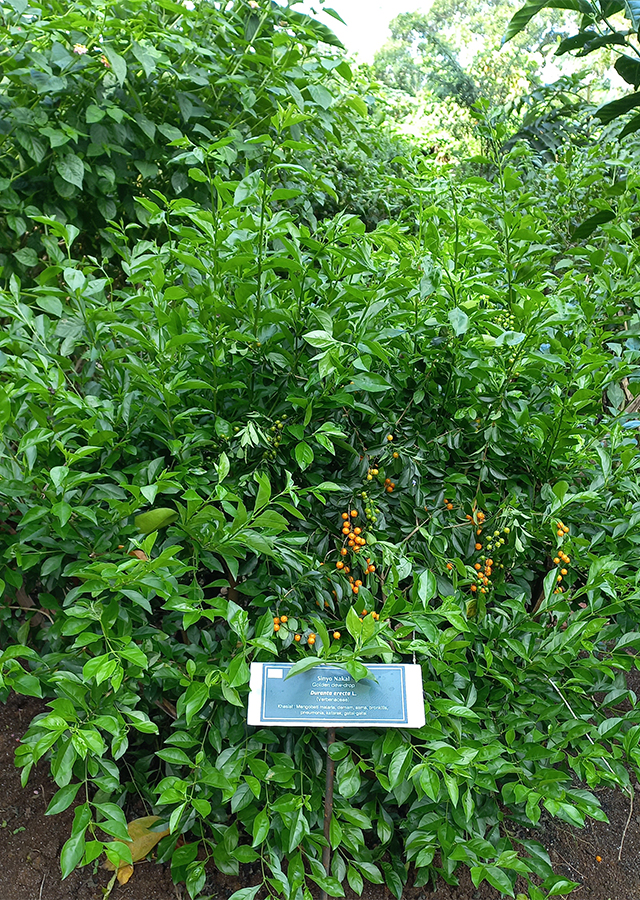
Sinyo nakal (Duranta erecta) is a shrub up to 1-2 meters tall from the Verbenaceae family that originates from Mexico and Central America, popular as a living hedge plant in various countries. In China, its fruit, toxic to humans, is nevertheless traditionally believed to treat malaria, while in Andhra Pradesh, India, a decoction of this plant is used to address asthma and bronchitis.
Agroecology
Sinyo nakal is generally found in disturbed areas (dry to humid), along roadsides, and in thickets, at elevations of 150-1,650 m asl. Grows best in full sun, but tolerates partial shade, with average annual rainfall usually between 800-1,800 mm/year. Prefers moist, fertile, well-drained soil. Sinyo nakal tolerates acidic to slightly alkaline soil and is fairly salt-tolerant.
Morphology
- Roots taproot, dirty yellow in color.
- Stem round, many-branched, when young the stem has short, fine hairs (pubescent). Bark light brown and slightly wrinkled. Mature plant stems usually have sharp axillary thorns.
- Leaves single, simple, ovate to lanceolate, thin, pointed base, pointed or rounded tip, serrated to smooth margins, paired, oppositely arranged, pinnate venation, smooth surface, green or yellowish-green.
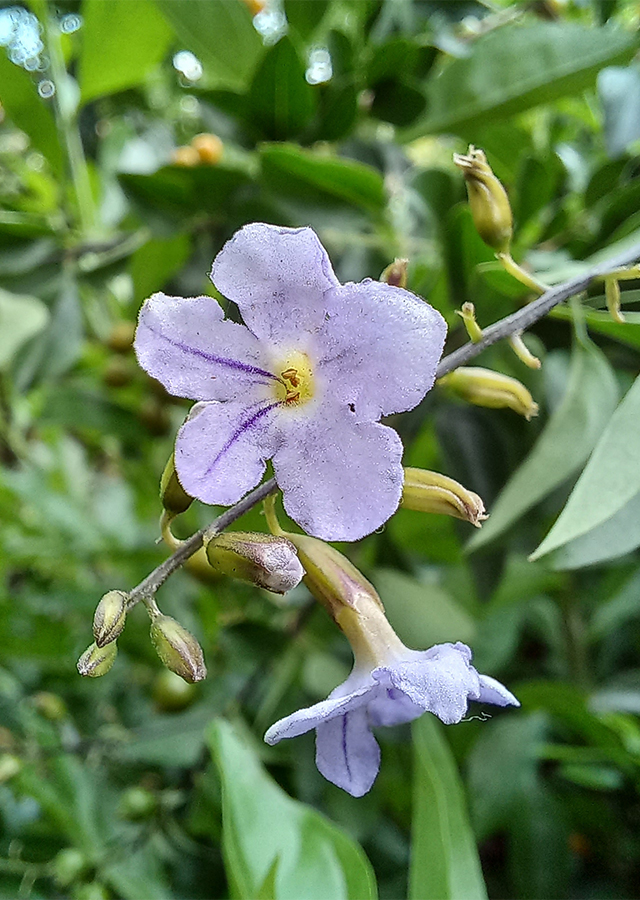
- Flowers compound, tubular with 5 lobes, light purple and white. Flowers hang in long racemes. Calyx green and pubescent on both surfaces. Corolla tube about 7 mm, unscented.
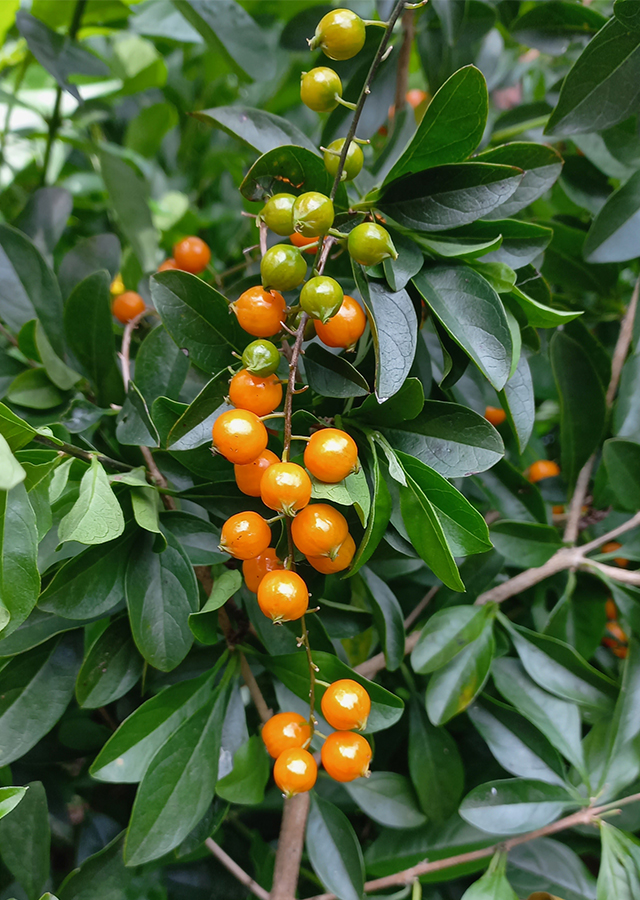
- Fruit fleshy, green when young and turning orange-yellow or golden when ripe, ovate, arranged in large hanging clusters.
- Seeds round, hard, greenish-white.
Cultivation
Propagation is done generatively (seeds) and vegetatively (stem cuttings).
Chemical Content
Glucosides, saponins, durantosides I, II, III, IV, and V, oleanolic acid, ursolic acid, (E)-cinnamic acid, beta-sitosteryl-3-O-beta-D-glucopyranoside, (E)-p-methoxycinnamic acid, kusaginin, alkaloids, flavonoids, steroids, triterpenoids, tannins, phenols, anthocyanin, oxalate, rutin, epicatechin, lunamarine, saponin, sapogenin, ribalinidine, phytate, kaempferol, catechin, duranterectosides A, B, C, and D, lamiide, lamiidoside, verbascoside.
Benefits
Treats itchy skin, fever, boils, malaria, infertility, pneumonia, asthma, bronchitis, cataracts, improves blood circulation. Has diuretic, anthelmintic, antioxidant, and antibacterial activity.
Local Names
Teh-tehan (Java), Pokok janda gedik (Malay), Anak nakal.
Traditional Recipes
The following recipes reflect traditional knowledge passed down through generations, not a substitute for professional medical diagnosis or advice. Consult a healthcare provider before use.
1. Improving blood circulation
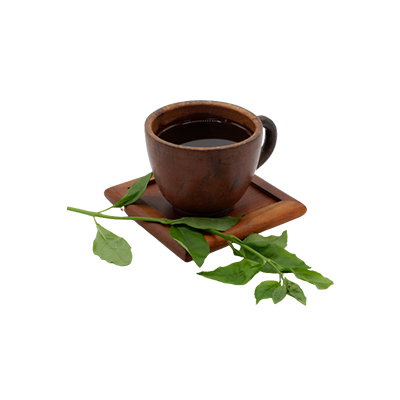
- Take 30 g fresh leaves and wash until clean.
- Boil with 400 ml water for 10 minutes.
- Strain the water.
- Drink twice a day, morning and evening.
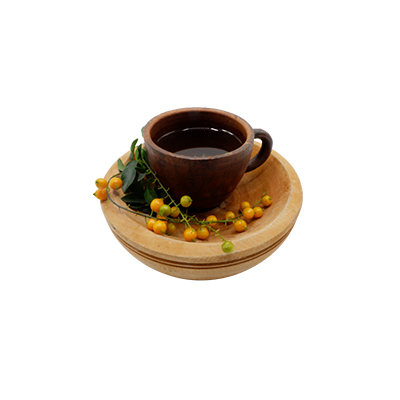
2. Malaria
- Prepare 20 g fresh sinyo nakal fruit and wash until clean.
- Boil with 200 ml water for 15 minutes.
- Strain, drink the water all at once.
- Do this 2-3 times a day.
Reference Sources
- Royal Botanical Garden. 2021. Plant of the World Online: Duranta erecta L. http://www.plantsoftheworldonline.org/taxon/urn:lsid:ipni.org:names:330606-2. 18-09-2021.
- Useful Tropical Plant Database. 2021. Duranta erecta. https://tropical.theferns.info/viewtropical.php?id=Duranta+erecta. 18-09-2021.
- Stuartxchange. 2018. Philippine Medicinal Plants: Duranta. http://www.stuartxchange.org/Duranta. 18-09-2021.
- CAB International. 2021. Invasive Species Compendium: Duranta erecta (golden dewdrop). https://www.cabi.org/isc/datasheet/20192#touses. 18-09-2021.
- Flora Fauna Web. 2019. Duranta erecta L. https://www.nparks.gov.sg/florafaunaweb/flora/1/9/1976. 18-09-2021. 18-09-2021.