Durio zibethinus L.
Summary
Durian (Durio zibethinus) is a giant tree 25-50 meters tall of the Malvaceae family, native to Malaysia, Sumatra, and Kalimantan, later spreading to Thailand and the Indian subcontinent. Its nickname "King of Fruits" comes from its distinctive aroma and taste, while its trunk is often used as building material and for household tools. Beyond its popular flesh, durian is also believed to support bone health and the digestive system.
Agroecology
Grows well at elevations of 100-500 m above sea level. This plant favors grumusol and andosol soil, fertile soil rich in organic matter with an ideal soil pH of 5-7 and an optimum pH of 6-6.5. Groundwater depth between 50-150 cm and 150-200 cm.
Morphology
- Roots taproot.
- Trunk cylindrical, woody. Its bark is reddish-brown, peeling irregularly.
- Leaves oblong-lanceolate, pointed tip. Simple leaves, upper surface glossy green, underside cream or brownish.
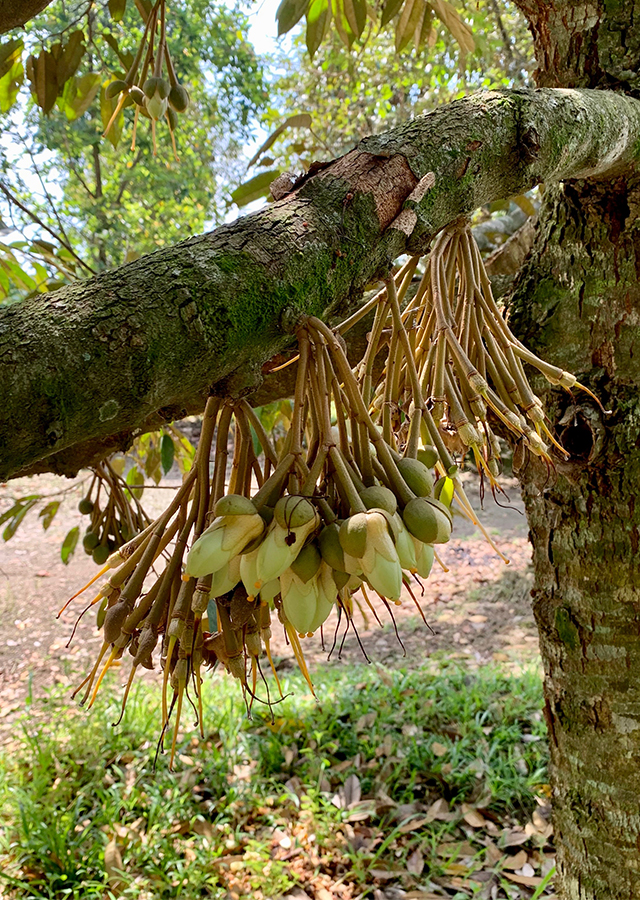
- Flowers clustered, stalked, bell-shaped calyx, white to golden-brown, emerging from the trunk or base of old branches.
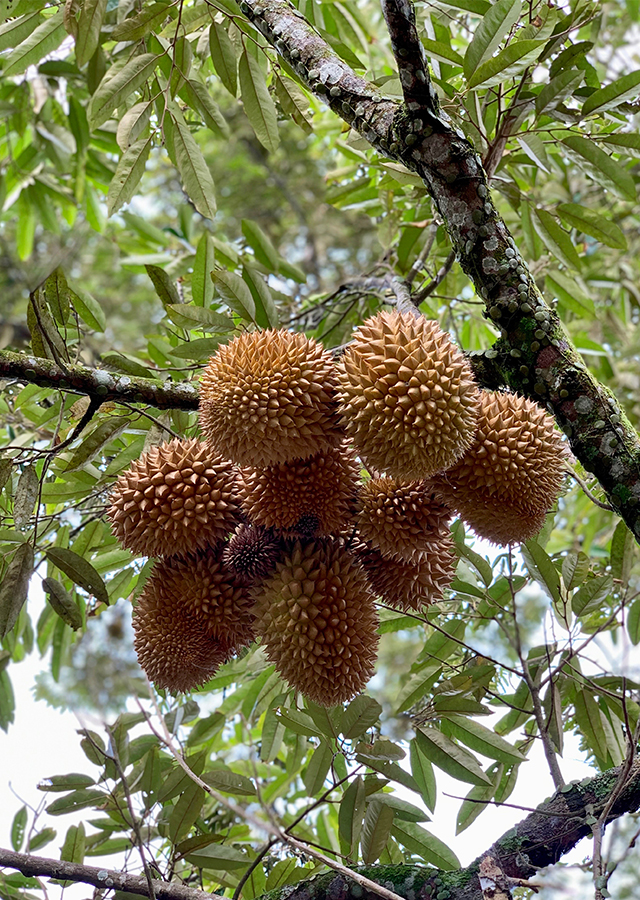
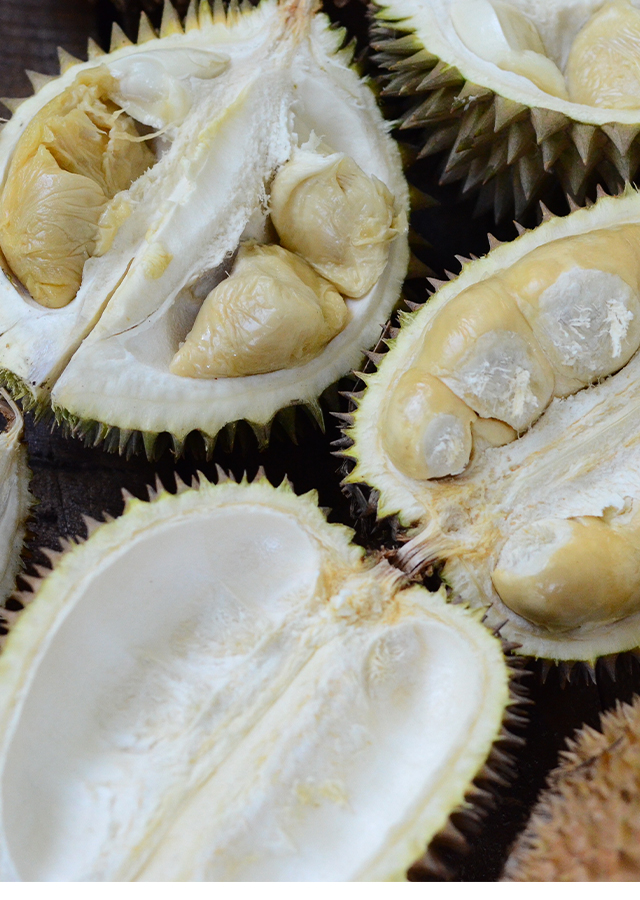
- Fruit round to oblong. Thick, spiny rind, with five compartments, distinctively aromatic.
Cultivation
- Propagated generatively (by seed) and vegetatively (by budding, air layering).
- Planting spacing of 10-12 x 10-12 m.
Chemical Content
Linoleic acid, myristic acid, oleic acid, 10-octadecenoic acid, palmitoleic acid, palmitic acid, stearic acid, anthocyanins, flavonoids and phenolics.
Benefits
Natural antidepressant; supports bone and dental health; helps prevent premature aging; supports digestive system health; addresses fever and skin ailments.
Simplisia
- Take the white part of the durian rind, wash thoroughly, and drain.
- Slice the material thinly.
- Dry and grind the slices.
- Pack in clean, airtight plastic.
Local Names
Duren (Java), Kadu (Sunda), Duriang (Manado), Duliang (Manado), Doriang (Ambon), Rulen (Seram Island).
Traditional Recipes
The following recipes reflect traditional knowledge passed down through generations, not a substitute for professional medical diagnosis or advice. Consult a healthcare provider before use.
1. Fever and Skin Ailments
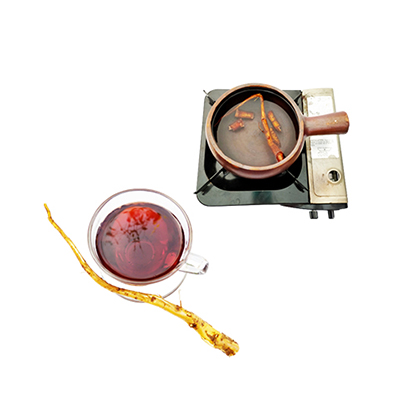
- Wash 15 g of durian root, then boil in 1 cup of water for 15 minutes, let cool, and strain.
- Drink the strained liquid all at once.
Reference Sources
- Ho LH, Bhat R. 2015. Exploring the potential nutraceutical values of durian (Durio zibethinus L.) – An exotic tropical fruit. Food Chem. 168: 80-89.
- Aziz NAA, Jalil AMM. 2019. Bioactive compounds, nutritional value, and potential health benefits of indigenous durian (Durio Zibethinus Murr.): A Review. Foods 8(3): 96.
- National Parks. Flora & Fauna Web. Durio zibethinus L. https://www.nparks.gov.sg/florafaunaweb/flora/2/8/2865 20-01-2021
- Widyaningrum Herlina, Tim Solusi Alternatif. 2019. Kitab Tanaman Obat Nusantara. Penerbit Media Pressindo, Jakarta.