Echinacea purpurea (L.) Moench
Summary
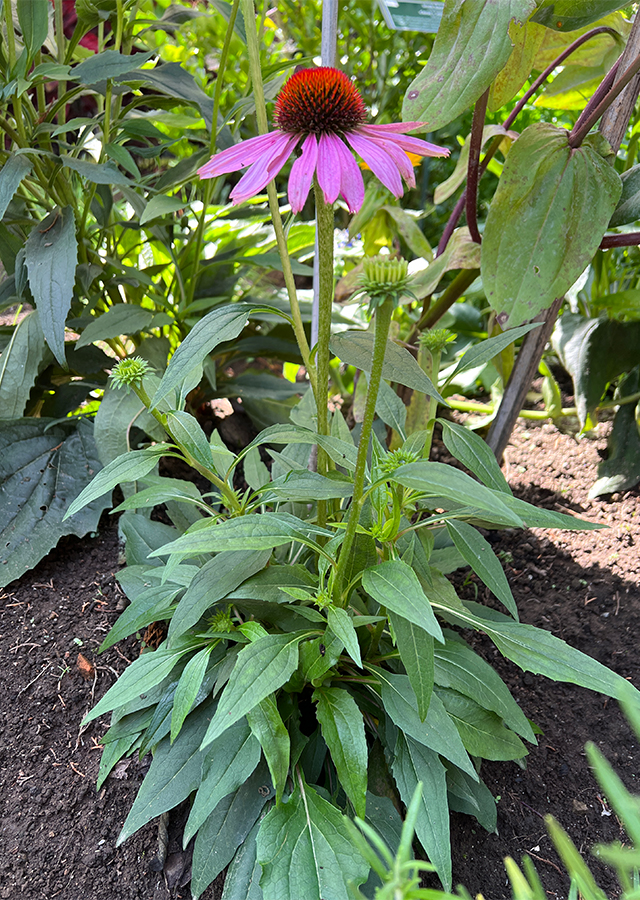
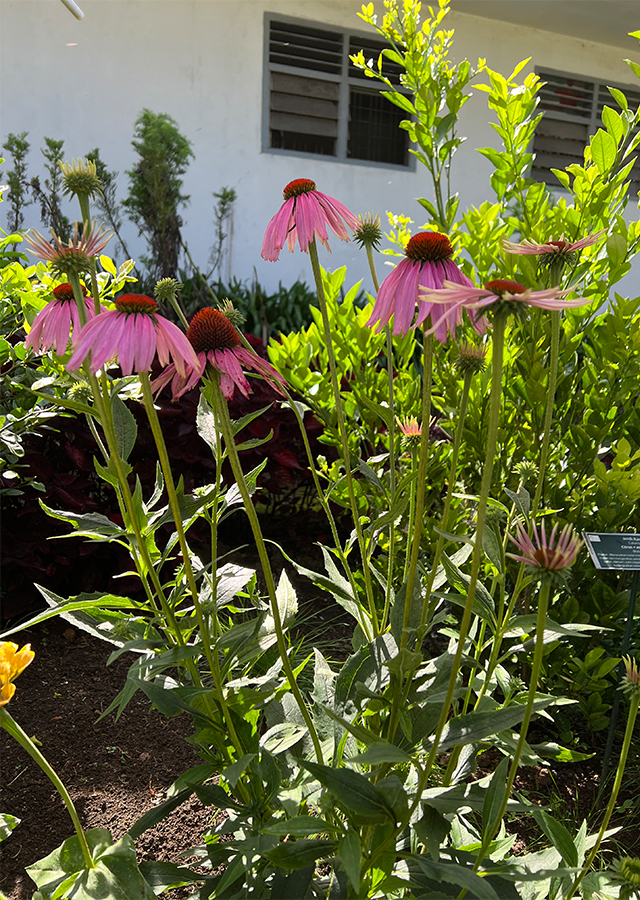
Echinacea purpurea or purple coneflower is a flowering plant native to eastern North America that has been cultivated for centuries, both as a garden ornamental and commercially as a medicinal plant. Its flowers, leaves, stems, and roots are used in various preparations such as tablets, extracts, and herbal teas, believed to boost the immune system, relieve sore throat, and help speed up healing of wounds and infections.
Agroecology
E. purpurea is usually found growing in open fields, grasslands, and open woodlands. Grows well in Indonesia's tropical environment at elevations of 450-1,100 m asl. Its optimal growth is in full sun and it does not tolerate shade. If shaded, the plant undergoes etiolation, becoming taller. E. purpurea prefers sandy or loamy textured soil, well-drained, loose, with adequate water, at a soil pH between 5.5-7.5. E. purpurea is fairly tolerant of drought and moist conditions.
Morphology
- Roots fibrous.
- Stem upright, branching, brownish green or hairy.
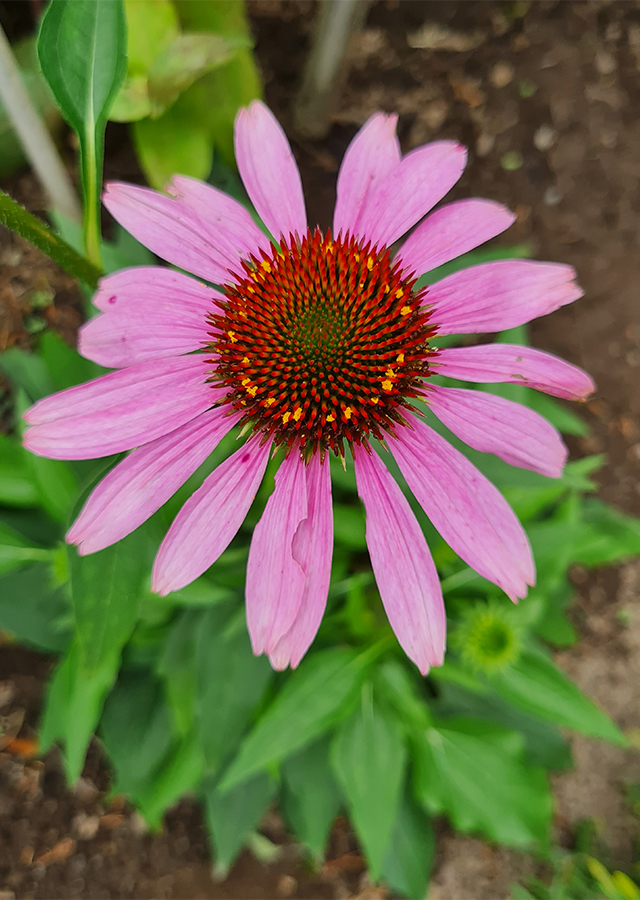
- Leaves single, alternate, simple, lower leaves broader ovate. Blade ovate-lanceolate becoming narrowly lanceolate, margin toothed, tip acute, base rounded to acute, veins arching. Involucral bracts linear to lanceolate. Disc cone-shaped to subglobose, disc florets with a greenish to pink or purple corolla. Ray floret corolla pink-purple to pinkish-purple, two-toothed at the tip, sparsely hairy below. Cypselae 3-4 angled, hairless, brown or bicolored with a dark brown distal band.
Cultivation
Plant propagation is generative through seed or vegetative by division, root cuttings, and basal cuttings.
Chemical Content
Polysaccharides, caffeic acid derivatives (caffeic acid, cichoric acid, caftaric acid, chlorogenic acid), phenolic acids, rosmarinic acid, alkamides, isobutylamide, flavonoids, and glycoproteins.
Benefits
Boosts the immune system, addresses mouth pain and sore throat, urinary tract infections, helps relieve muscle pain, inhibits cancer cell growth, relieves anxiety, lowers blood pressure, symptoms of the common cold in adults, treats colds, infections, wounds, boils, skin inflammation, an antidote for snake venom. Has antiviral, anti-inflammatory, and antioxidant activity.
Simplisia
- Prepare an adequate amount of dried purple coneflower flowers and wash until clean.
- Dry under the sun or with an oven at 40°C until the moisture content reaches 10%.
- Grind using a blender until it becomes powder.
- Store in a clean, airtight container.
Local Names
Informasi tidak ditemukan. Butuh penelusuran lebih lanjut.
Traditional Recipes
The following recipes reflect traditional knowledge passed down through generations, not a substitute for professional medical diagnosis or advice. Consult a healthcare provider before use.
1. Boosts the immune system
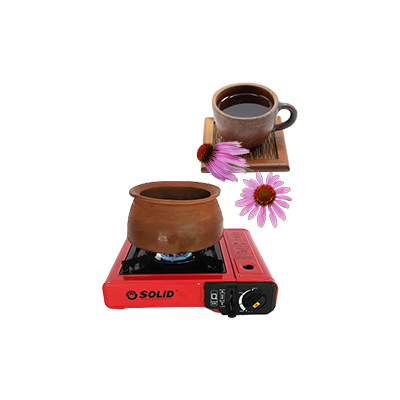
- Take an adequate amount of dried purple coneflower flowers and wash until clean.
- Boil the water and flowers for about 5-10 minutes and wait until the color changes.
- Once it boils and changes color, let it stand for a moment.
- Strain slowly so the broth and the residue are separated.
- The broth can be consumed while warm/hot and sweetener can also be added according to taste.
Reference Sources
- Royal Botanic Gardens, Kew. Plants of the World Online: Echinacea purpurea (L.) Moench. https://powo.science.kew.org/taxon/urn:lsid:ipni.org:names:1174497-2 01-07-2022.
- Lim T.K. 2013. Echinacea purpurea. Edible Medicinal and Non-Medicinal Plants, 3 : 340–371. dalam National Library of Medicine. https://www.ncbi.nlm.nih.gov/pmc/articles/PMC7121736/ 01-07-2022.
- IDN Medis. 2022. Echinacea Purpurea: Manfaat – Efek Samping dan Tips Penggunaan. https://idnmedis.com/echinacea-purpurea 01-07-2022.
- Rahardjo, M. Peluang Pembudidayaan Tanaman Echinacea (Echinacea purpurea) di Indonesia.