Emilia sonchifolia (L.) DC.
Summary
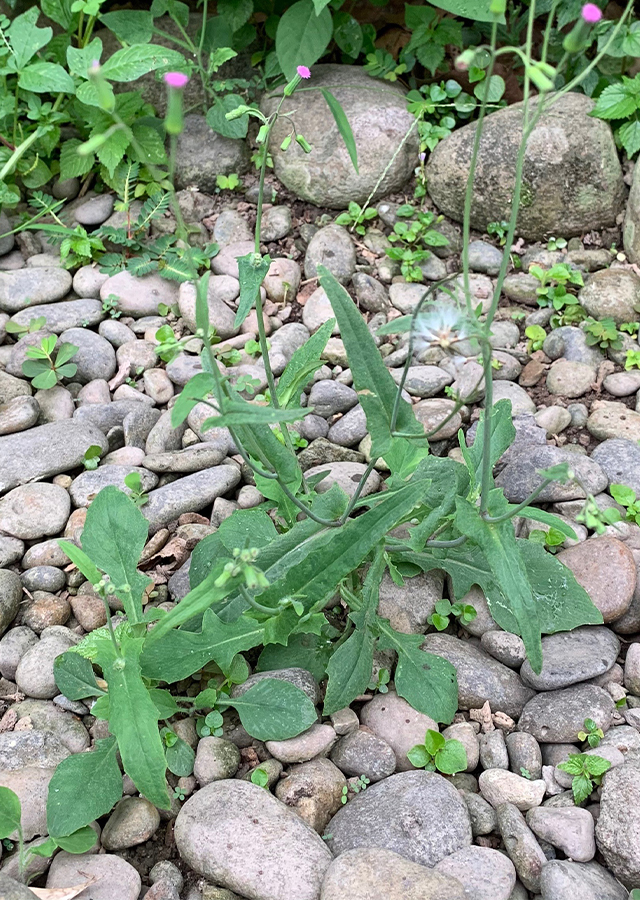
Tempuh wiyang (Emilia sonchifolia) is an annual upright herb up to 20-70 cm tall of the Asteraceae family, distributed from Southeast Asia and China to Africa and the Americas. Its slightly bitter-tasting leaves are commonly eaten raw or as a spice-flavored vegetable. Traditionally, tempuh wiyang is believed to be antibiotic and to help relieve fever and digestive disorders.
Agroecology
Tempuh wiyang grows wild along roadsides, ditch banks, cliffs, gardens, and grasslands. Generally found from lowlands up to elevations of around 3,000 m above sea level, average rainfall 1,000-2,000 mm/year, annual temperature 20-30 °C.
Morphology
- Root a fine taproot, white to yellowish in color, thread-like in shape, without segments or a root cap.
- Stem upright or drooping at the base and often branched. Solid and round in shape, smooth, sturdy stalk, finely hairy.
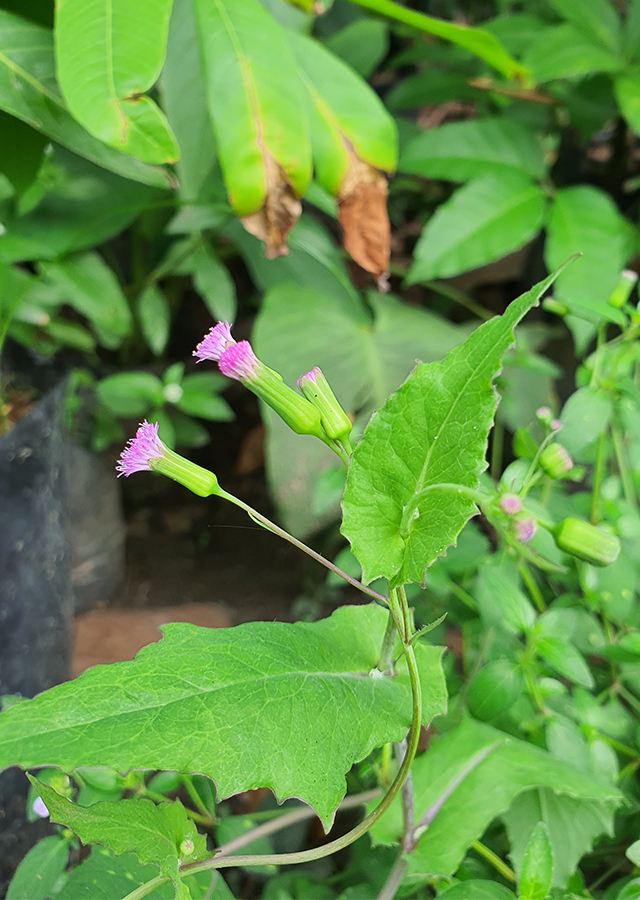
- Leaves triangular and tending to elongate. Green on the upper side and paler or purplish on the underside.
- Flowers purplish-white, 8-17 mm long, clustered in panicle-shaped inflorescences at the tip of the stalk.
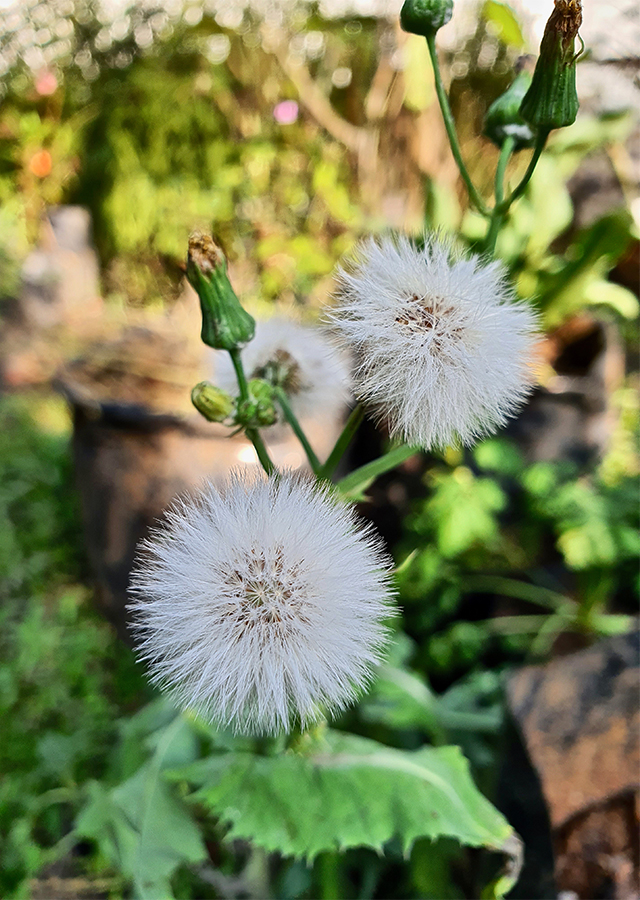
- Seeds ripen to a blackish color, 1.5-3 mm long, surface finely and shortly hairy, with a cluster of fine white hairs at the tip.
Cultivation
Propagated generatively using seed.
Chemical Content
Flavonoid, tannin, alkaloid, steroid, ursolic acid, kaempferol galactoside, quercitrine, rutoside, senecionine, pyrrolizidine alkaloid.
Benefits
Antibiotic, antitoxin, addresses fever, digestive problems, internal organ cancer, rheumatism, metabolic system, gout, wounds, respiratory tract infections, pneumonia, canker sores, boil infections, and ear inflammation.
Simplisia
- Choose fresh, non-rotten tempuh wiyang leaves. Clean off attached dirt, wash then drain.
- Slice the leaves and place them on a tray then dry in the sun for 2 days, covered with a thin dark-colored cloth.
- Once dry, place in a clean, tightly sealed or airtight plastic bag.
Local Names
Jonghe (Java), Jobang, Jonge (Sunda), Sarap/Sundilan (Madura), Kaho mahiri (Maluku), Gafu saru (Ternate), Lintapa and Halmah (Sulawesi).
Traditional Recipes
The following recipes reflect traditional knowledge passed down through generations, not a substitute for professional medical diagnosis or advice. Consult a healthcare provider before use.
1. Rheumatism and gout
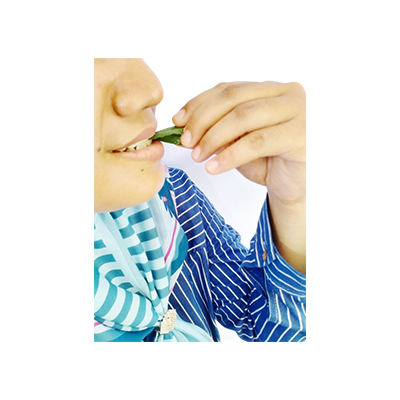
- Wash 5 fresh tempuh wiyang leaves thoroughly.
- Eat the raw leaves as a side dish.
- Best consumed 3 times a day.
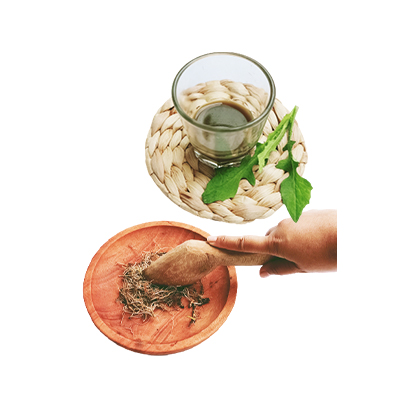
2. Stomach ache
- Grind the root as needed, press and take the extract.
- Drink twice a day for a week.
Reference Sources
- Motaleb Perut Mohammad Abdul. 2013. Commonly Used Medicinal Herbs and Shrubs by Traditional Herbal Practitioners. International Union for Conservation of Nature and Natural Resources.
- Tropical Plants Database, Ken Fern. tropical.theferns.info. Emilia sonchifolia. http://tropical.theferns.info/viewtropical.php?id=Emilia+sonchifolia 20-01-2021
- Kelompok Masyarakat Desa Simasari. 2008. Tumbuhan Obat Halimun. Yayasan Peduli Konservasi Alam Indonesia
- Stuartexchange. Philippine Medicinal Plants. Tagulinaw. Emilia sonchifolia (L.) DC, ex DC. LILAC TASSLEFLOWER. http://www.stuartxchange.org/Tagulinaw.html 03-03-2021