Epipremnum pinnatum L. Engl.
Summary
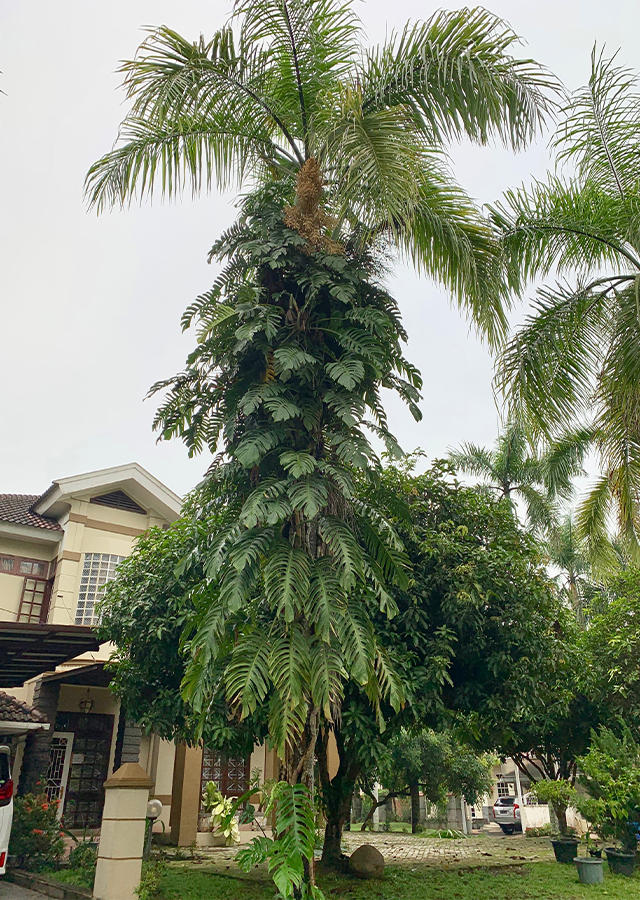
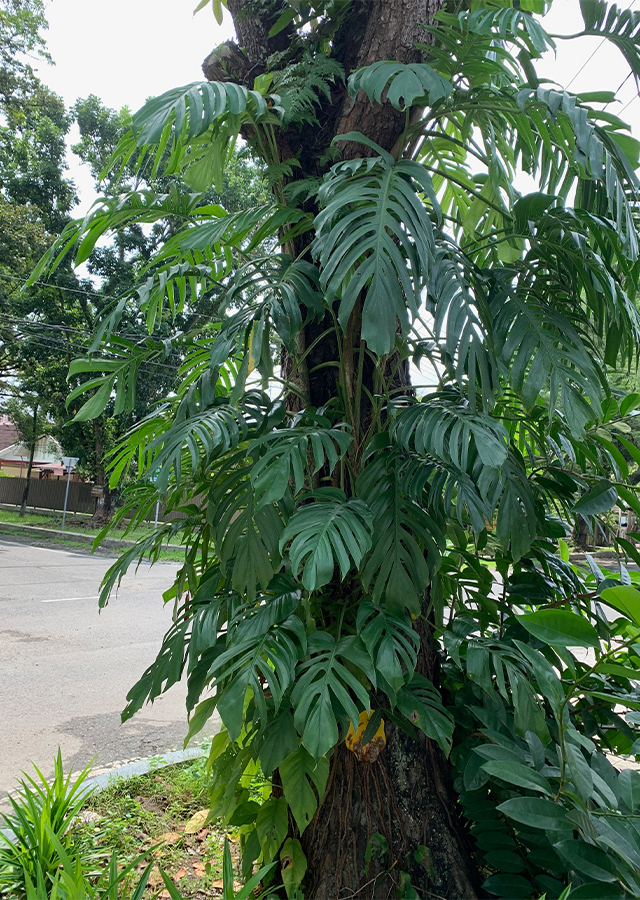
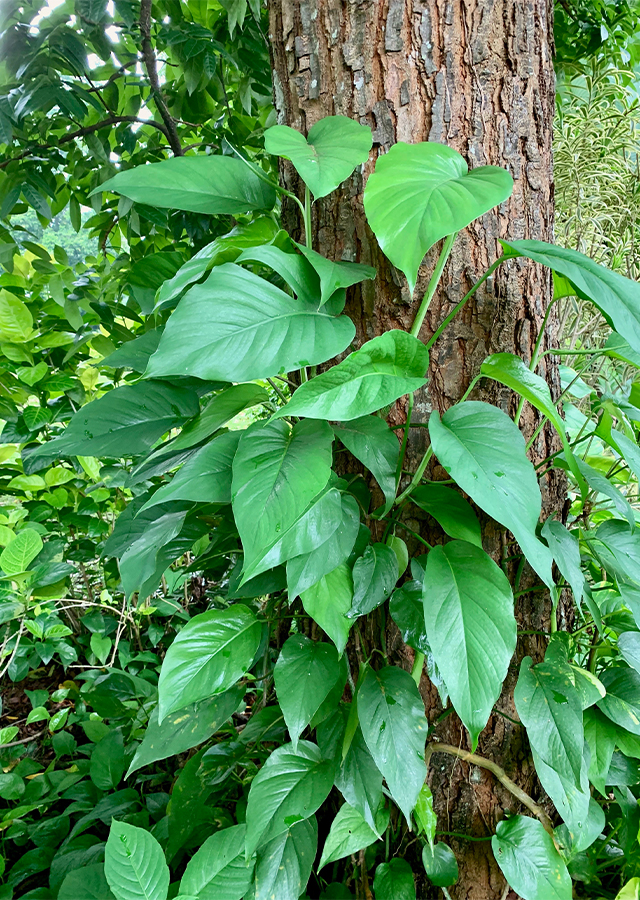
Dragon's tail (Epipremnum pinnatum) is an epiphytic climbing plant 5-50 meters long of the Araceae family, native to the Himalayan region and spreading as far as Australia. Its uniquely perforated leaf shape makes it a popular ornamental in many homes. Traditionally, this plant is also believed to lower cholesterol, relieve rheumatism, and speed the healing of skin wounds.
Agroecology
Generally grown in tropical and subtropical regions. Easily found in disturbed forests, roadsides, secondary and primary forests at elevations up to 350 m above sea level. Grows in various soil types including sandy loam and loam, pH ranging from 4-6, requiring adequate shade such as beneath trees.
Morphology
- Roots attach to their support and have aerial roots.
- Stem green, round, and jointed.
- Leaves large, broad, with lobes deeper than half the length of their 7-12 veins, pointed tip resembling a dragon's tail, green.
Cultivation
Not yet widely cultivated commercially. Generally propagated vegetatively (stem cuttings, and layering).
Chemical Content
Alkaloids, flavonoids, saponins, tannins, steroids/triterpenoids, glycosides, benzenoids.
Benefits
Lowers cholesterol; relieves rheumatism and cough; addresses skin infections and inflammation; has epithelializing (wound-healing), anticancer, antimutagenic, antioxidant, antibacterial, and antihypertensive activity.
Simplisia
- Prepare the plant material (leaves), then wash thoroughly under running water.
- Cut the leaves into small pieces, then dry by air-drying in an open space without direct sunlight.
- Once dry, grind the leaves into a powder.
- Store in a clean, closed container.
Local Names
Samblung (Bali), Jalu mampang (Java), Lolo munding (Sunda), Tapanawa tairis.
Traditional Recipes
The following recipes reflect traditional knowledge passed down through generations, not a substitute for professional medical diagnosis or advice. Consult a healthcare provider before use.
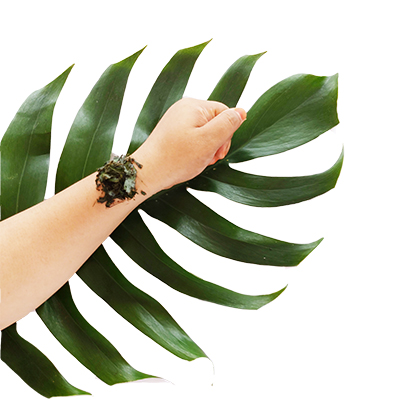
1. Addressing Skin Infection and Inflammation (Ringworm, Rashes, Boils, and Athlete's Foot)
- Take 1-2 dragon's tail leaves, wash thoroughly, then slice for easier pounding. Pound until mashed.
- Apply to the affected skin. Leave for 15 minutes, then rinse with clean water.
- Do this treatment daily for optimal results.
Reference Sources
- Docplayer. Ekor Naga (Rhaphidophora pinnata). https://docplayer.info/68515523-Ii-tinjauan-pustaka-2-1-ekor-naga-rhaphidophora-pinnata-schott.html 12-10-2019
- Masfria, Harahap U, Nasution MP, Ilyas S. 2014. Cytotoxic activity, proliferation inhibition and apoptosis induction of Rhaphidophora Pinnata (L.F.) Schott chloroform fraction to MCF-7 cell line. Int. J. Pharm. Tech. Res. 6(4): 1327-1333.
- Masfria, Sumaiyah, Dalimunthe A. 2017. Antimutagenic activity of ethanol extract of Rhaphidophora pinnata (L.f) Schott leaves on Mice. Scientia Pharmaceutica 85(1):7.
- Pandey G, Madhuri S. 2010. Some medicinal plants as natural anticancer agents. Pharmacognosy Rev. 3(6): 259-263.
- Rahman S, Kamri AM. 2019. Uji efek epitelisasi ekstrak daunEkor Naga (Rhaphidophora pinnata (L.f) Schott.) pada Tikus. As-Syifaa J. Farmasi 11(01): 75-81.
- Tropical Plants Database, Ken Fern. tropical.theferns.info. Epipremnum pinnatum. http://tropical.theferns.info/viewtropical.php?id=Epipremnum%20pinnatum 24-01-2021
- Rasyidin Salman. 2018. Cegah kanker dan tumor daun ekor naga bisa dimanfaatkan. https://palembang.tribunnews.com/2018/03/20/cegah-kanker-dan-tumor-daun-ekor-naga-bisa-dimanfaatkan 01-08-2020