Equisetum hyemale L.
Summary
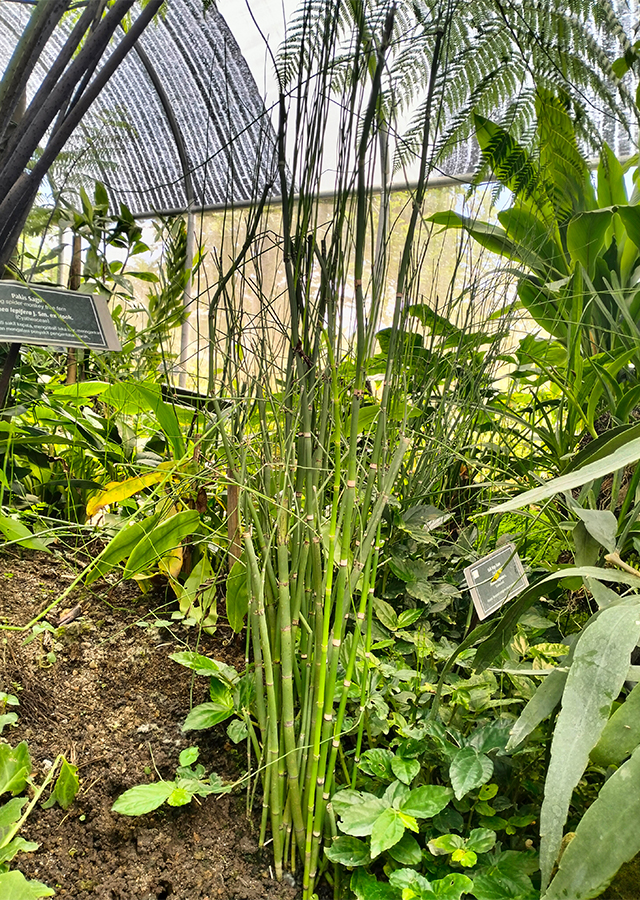
Equisetum hyemale or rumput bolong is an ancient fern ally classified as a primitive vascular plant, native to Eurasia and North America. Its silica-rich stem earned it the nickname 'scouring rush' because it was used to scrub dishes in the past, and in Mexico it is even used to polish furniture. Besides being popular as a potted and garden ornamental, rumput bolong is also used as a traditional medicine and serves a role in environmental phytoremediation.
Agroecology
Prefers moist soil with a pH between 6.5 and 7.5, in direct sunlight or partial shade. Rumput bolong is hardy to temperatures around -30°C.
Morphology
- Roots branching, rhizome creeping, sometimes small tubers produced along the rhizome.
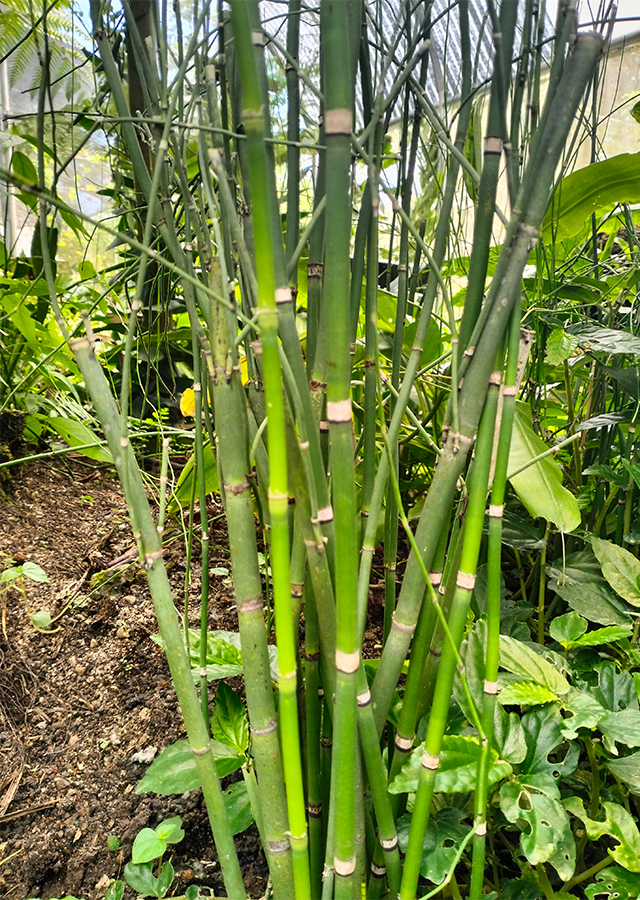
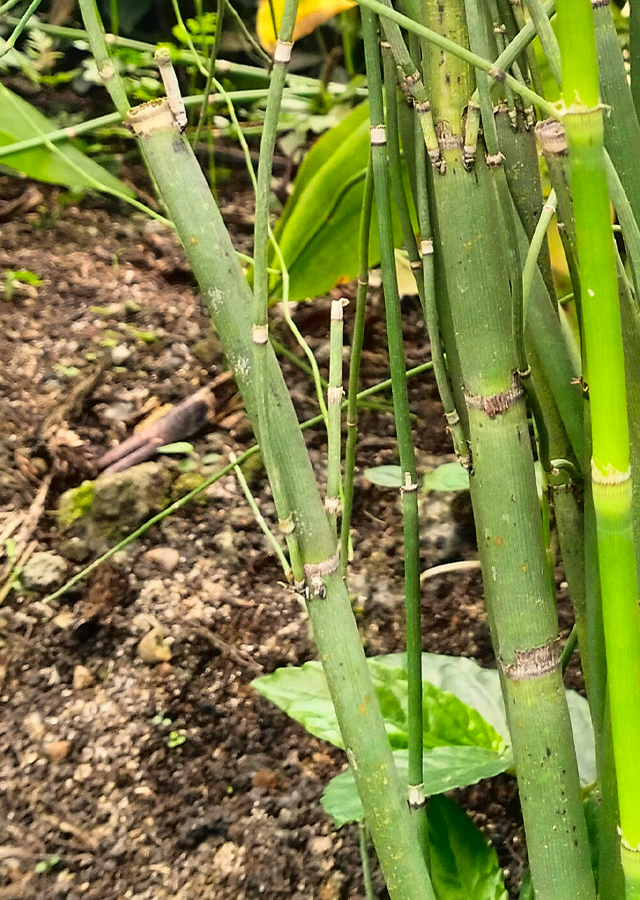
- Leaves small, grayish (with tooth-like margins) completely surrounding and clasping the stem at the nodes, forming a sheath-like structure. A thin black band appears just above and below the leaves.
- Stem round, the thin stem has a grooved surface, hollow circumpolar sphenopsid tissue occupying at least two-thirds of its diameter. The stem is above the water surface, monomorphic, green, with a height of more than 1 m. Stem diameter between 0.5-1 cm, the base of the stem unbranched but with lateral branches with an internode length of 5-8 cm. The stem generally has ridges numbering 16-22 depending on stem diameter. Stem color green with two black bands at the joints.
- Spore-bearing cone nipple-like shaped. Equisetum spores can germinate quickly under conditions with high humidity.
Cultivation
- Propagation can be done with spores and rhizome division.
- Spores are best collected as soon as ripe and immediately sown on the surface over sterile compost. Keep the soil condition moist and transplant into pots as soon as the plant is large enough. Propagation with spores has a high level of difficulty.
- Rhizome division: the plant usually spreads very freely when well sited, making it easy to propagate by separating it from the parent.
Chemical Content
Flavonoids, polyphenols, alkaloids, silica, ethyl palmitate, kaempferol, glycosides, and other phenolic compositions.
Benefits
Treats edema, kidney and bladder problems, stops wound bleeding and promotes healing, fights various infectious diseases or inflammations such as rheumatoid arthritis, conjunctivitis, pyelonephritis, treats tuberculosis, jaundice, prostatitis, hypertension. This plant is anticancer, anti-inflammatory, antispasmodic, diaphoretic, diuretic, expectorant, antipyretic, hemostatic, hypotensive, and styptic.
Simplisia
- Prepare an adequate amount of rumput bolong stem, wash clean with running water.
- Cut into pieces to make it easier to dry.
- Dry under the sun or with an oven at 40°C until the moisture content reaches 10%.
- Store in a clean, airtight container.
Local Names
Bambu air, Paku ekor kuda kaku.
Traditional Recipes
The following recipes reflect traditional knowledge passed down through generations, not a substitute for professional medical diagnosis or advice. Consult a healthcare provider before use.
1. Stops bleeding from wounds
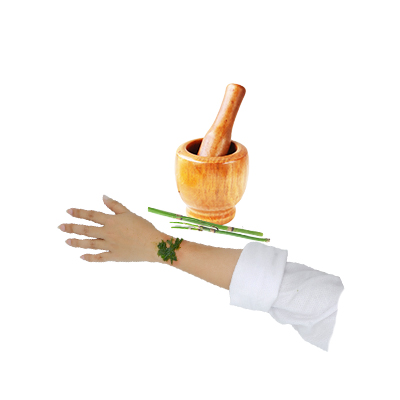
- Take an adequate amount of rumput bolong stem and wash until clean.
- Grind until it becomes a paste.
- Apply the paste to the wound.
Reference Sources
- Royal Botanic Gardens. Plants of the World Online: Equisetum hyemale L.. https://powo.science.kew.org/taxon/urn:lsid:ipni.org:names:92939-2#descriptions. 26-07-2022.
- Useful Tempetare Plants. 2022. Equisetum hyemale. https://temperate.theferns.info/plant/Equisetum+hyemale. 26-07-2022.
- Flora Fauna Web. 2021. Equisetum hyemale.https://www.nparks.gov.sg/florafaunaweb/flora/1/5/1550. 26-07-2022.
- BALITHI. 2019. KEGUNAAN, KARAKTERISTIK LAIN SERTA POTENSI EKONOMI EQUISETUM HYEMALE L. http://balithi.litbang.pertanian.go.id/berita-646-kegunaan-karakteristik-lain-serta-potensi-ekonomi-equisetum-hyemale-l.html#:~:text=E.%20hyemale%20merupakan%20spesies%20kosmopolitan,%2C%20pielonefritis%20. 26-07-2022.
- BALITHI. 2019. KLASIFIKASI DAN DESKRIPSI BOTANI EQUISETUM HYEMALE L. hhttp://balithi.litbang.pertanian.go.id/berita-627-klasifikasi-dan-deskripsi-botani-equisetum-hyemale-l.html. 26-07-2022.