Erigeron sumatrensis Retz.
Summary
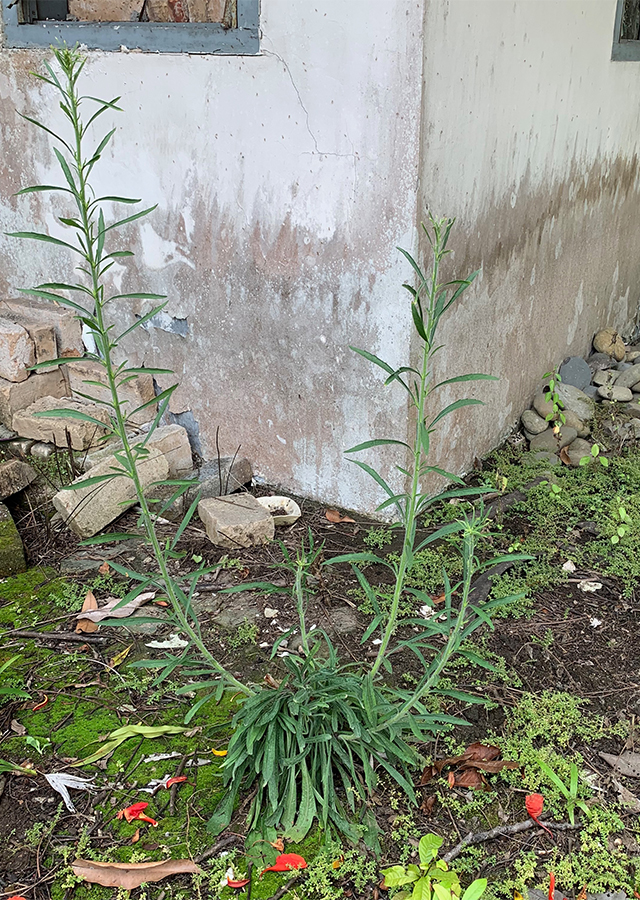
Jelantir (Erigeron sumatrensis) is an erect annual herb 1-3 meters tall of the Asteraceae family, native to tropical America, first found on Java before spreading throughout Indonesia. Its leaf juice has been used by communities for centuries and is now also used in cosmetic products due to its antibacterial content. Traditionally, jelantir is believed to relieve headaches, body aches, and skin conditions such as acne.
Agroecology
Grows well in regions at elevations between 5-3,000 m above sea level. Favors conditions with either direct sunlight or shade. Commonly found in shrubland along coastlines, and on disturbed or neglected land.
Morphology
- Roots taproot, dirty white.
- Stem erect, woody, round, solid, hairy, and green.
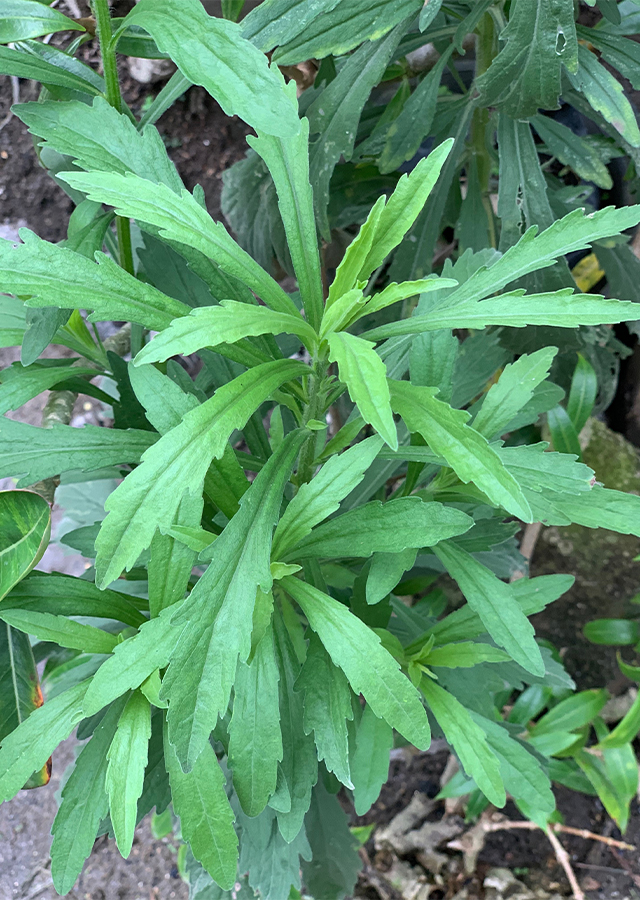
- Leaves simple, toothed, green, crosswise arranged, oblong. Blunt tip, pointed base, 4-7 cm long, 1-2 cm wide, pinnate venation.
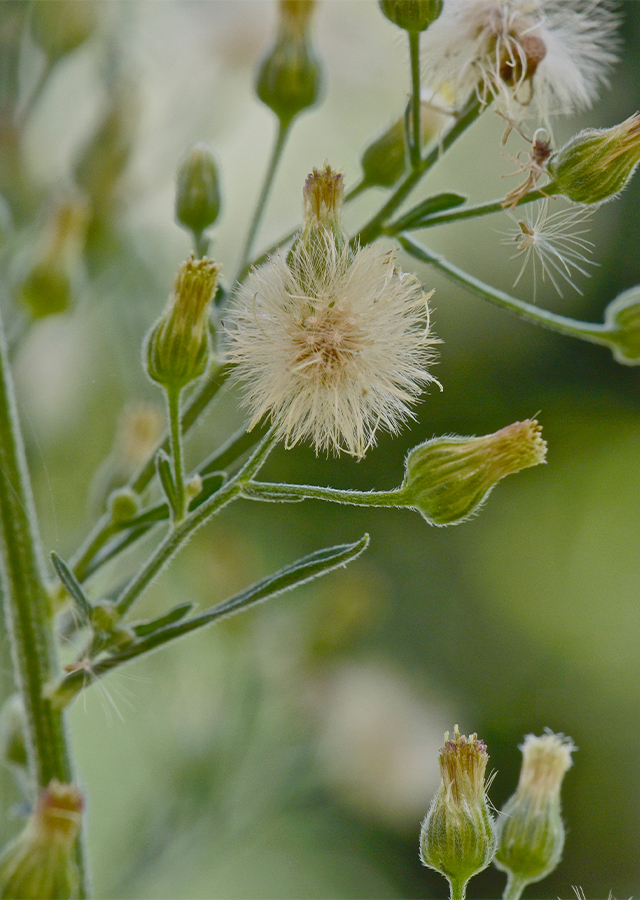
- Flowers heterogamous, compound, pale yellow, green calyx, and bowl-shaped. Flowers year-round, clusters located in the leaf axils.
- Seeds ovate, small, and white.
Cultivation
Propagated using seed.
Chemical Content
Saponins, glycosides, triterpenoids, flavonoids, lachnophyllum lactone, osthol.
Benefits
Treats headache (dizziness), body aches, sore throat, stomach disorders, smallpox, acne and other skin disorders; antimicrobial, antifungal; treats hypercholesterolemia (high cholesterol); antitumor, anticancer, antidiabetic.
Simplisia
Information not yet available.
Local Names
Monyenyen, Jenteng (Sunda), Jabung, Jabungan, Jentik manis, Sembung, Sembungan (Java).
Traditional Recipes
The following recipes reflect traditional knowledge passed down through generations, not a substitute for professional medical diagnosis or advice. Consult a healthcare provider before use.
1. Headache (Dizziness)
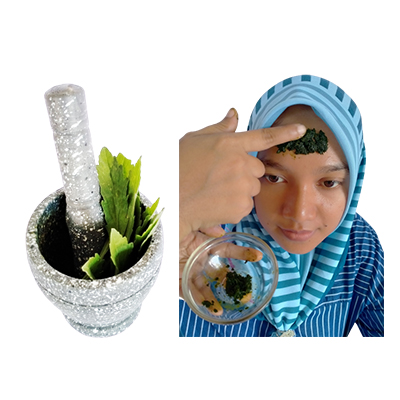
- Prepare 10 g of fresh jelantir leaves.
- Wash and pound the leaves until fine.
- Apply to the forehead as a poultice.
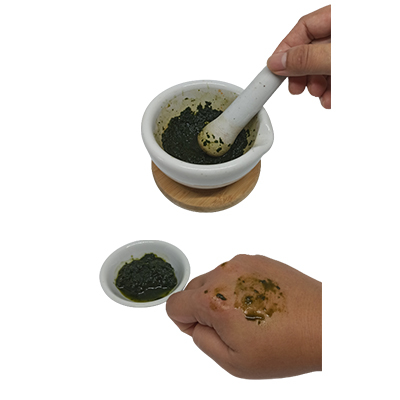
2. Skin Disorders (Wounds, Acne, Boils, Inflammation, Infection)
- Wash a sufficient amount of jelantir leaves thoroughly, then pound until fine and releasing liquid.
- Add a little clean water and apply to wounds, acne, boils, inflammation, or infection.
Reference Sources
- CABI. Invasive Species Compendium. Conyza sumatrensis. https://www.cabi.org/isc/datasheet/15252. 16-01-2021
- Tropical Plants Database, Ken Fern. tropical.theferns.info. Conyza canadensis (L.) Cronquist. http://tropical.theferns.info/viewtropical.php?id=Conyza+canadensis. 16-01-2021
- GBIF. Erigeron sumatrensis Retz. https://www.gbif.org/species/3146683. 16-01-2021
- The Jepson Herbarium. Erigeron sumatrensis. https://ucjeps.berkeley.edu/eflora. 16-01-2021.
- University of California (The Jepson Herbarium). (No date). Erigeron sumatrensis. https://ucjeps.berkeley.edu/eflora/eflora_display.php?tid=91898. 16.01.2021
- IdnMedis. Jelantir : Manfaat – Efek Samping dan Cara Penggunaan. https://idnmedis.com/jelantir 01-08-2020
- Widyaningrum Herlina. 2019. Kitab Tanaman Obat Nusantara. Media Pressindo, Jakarta.