Eruca vesicaria (L.) Cav.
Summary
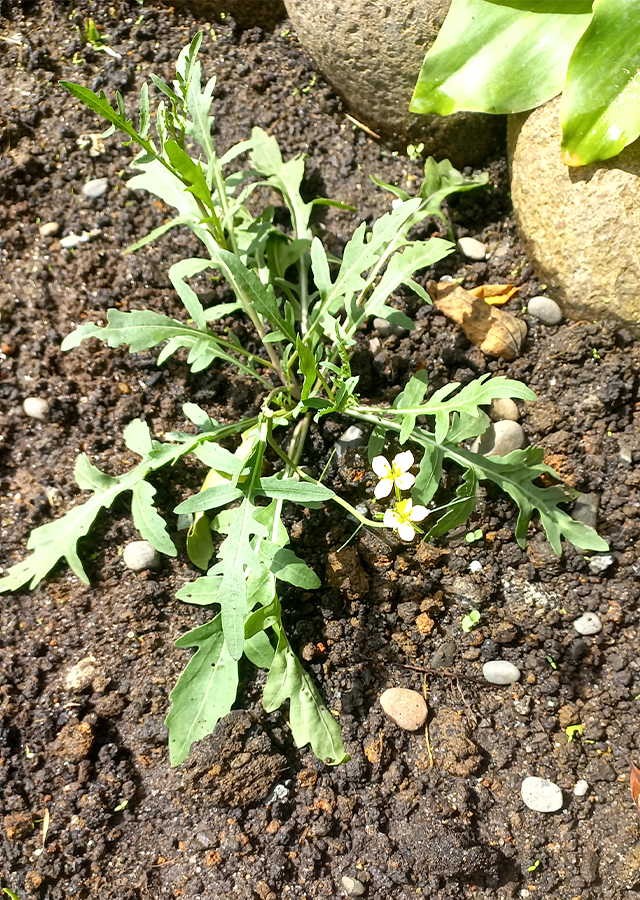
Rocket or arugula (Eruca vesicaria) is an erect annual herb up to 0.6 meters tall from the Brassicaceae family that originates from the Mediterranean. Its sharply flavored leaves are popular as a world-class salad ingredient, while its essential oil has various pharmacological activities including anticancer and hepatoprotective. Rocket is traditionally believed to have aphrodisiac properties and help address hair loss.
Agroecology
Rocket is cultivated from temperate to tropical regions. Grows best in areas where annual daytime temperatures are in the range of 15-25 °C, but can tolerate 8-29 °C. It is winter-hardy with temperatures dropping below freezing for a short time. It prefers an average annual rainfall in the range of 500-900 mm, but tolerates 300-1,100 mm. Succeeds in full sun, but prefers shade from the hottest sun. A very easy-to-grow and quick-maturing plant, succeeding in most soils and conditions, though preferring sandy and sandy loam soil. Prefers a pH in the range of 7-8, tolerating 6-8.5. Once established, the plant is fairly drought-resistant. The plant can be ready to harvest within 40 days after sowing seeds.
Morphology
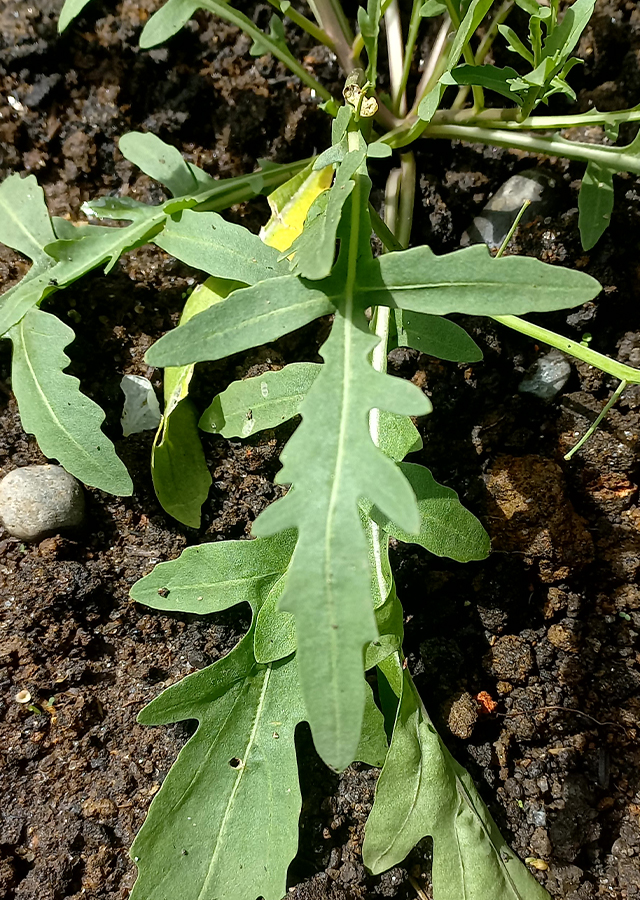
- Leaves hairless or sparsely hairy, pilose pinnatifid (four to ten small, deep, lateral lobes and a large terminal lobe), light green when young, pinnate.
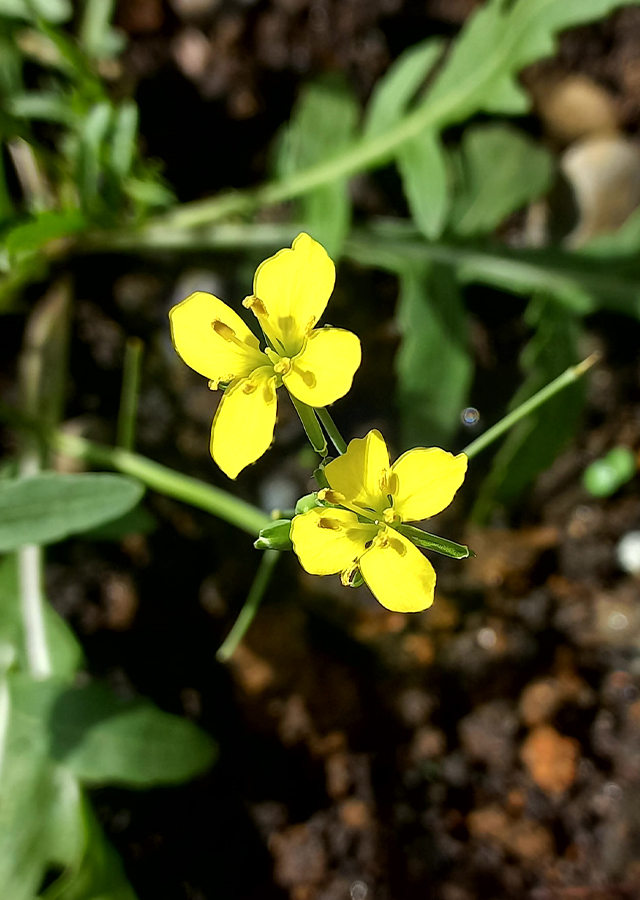
- Flowers 1.5 to 2.0 cm in diameter, cream-white clawed petals, with purple veins and yellow stamens.
- Fruit elongated siliques (2-carpel pods), splitting when dry, dividing to release approximately 20 seeds.
Cultivation
Propagation generatively through seeds. Germination is usually very quick, taking only 24 hours at a temperature of 25 °C.
Chemical Content
Alkaloids, flavonoids (kaempferol 3-O-(2″-O-malonyl-β-D-glucopyranoside)-4′-O-β-D-glucopyranoside, kaempferol 3,4′-O-diglucopyranoside, rhamnocitrin 3-O-(2″-O-methylmalonyl-β-D-glucopyranoside)-4′-O-β-D-glucopyranoside, 3-O-glucopyranoside, 4′-O-glucopyranoside, rhamnocitrin 3-O-glucopyranoside, 4′-O-glucopyranoside, kaempferol and rhamnocitrin), saponins, tannins, phenols, carbohydrates, steroids, and proteins, glucosinolate methylsulphinylbutyl isothiocyanate, fatty acids (palmitic acid, stearic acid, oleic acid, linoleic acid, linolenic acid, erucic acid).
Benefits
Treats eye diseases, salivation stimulation, improves vision, treats kidney disorders, skin disorders (including acne-prone skin), reproductive diseases, hemorrhoids, psychological problems, addresses hair loss. Has aphrodisiac, repellent, expectorant, deodorant, diuretic properties. Has rubefacient, anthelmintic, antiscorbutic, antibacterial, antioxidant, hepatoprotective, nephroprotective, anticancer, antiulcer, antithrombotic, antiplatelet activity.
Simplisia
- Prepare rocket seeds, wash clean with running water then drain.
- Dry under sunlight or with an oven at 40 °C until moisture content reaches 10%.
- Blend into powder and sieve with a 60-mesh sieve.
- Store in a clean, airtight container.
Local Names
Arugula.
Traditional Recipes
The following recipes reflect traditional knowledge passed down through generations, not a substitute for professional medical diagnosis or advice. Consult a healthcare provider before use.
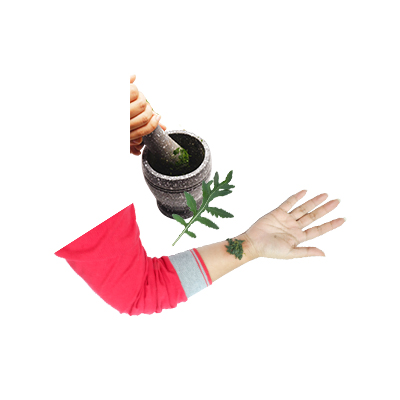
1. Skin disease
- Take fresh rocket leaves as needed and wash until clean.
- Mash into a paste.
- Apply to the affected skin area.
Reference Sources
- Royal Botanic Gardens. 2021. Plants of the World Online : Eruca vesicaria (L.) Cav. https://powo.science.kew.org/taxon/urn:lsid:ipni.org:names:1137625-2. 06-10-2021.
- Stuartxchange. 2020. Philipphine Medicinal Plants. Arugula. http://stuartxchange.org/Arugula. 06-10-2021.
- Useful Tropical Plants. 2021. Eruca vesicaria. hhttps://tropical.theferns.info/viewtropical.php?id=Eruca%20vesicaria. 06-10-2021.