Erythrina variegata L.
Summary
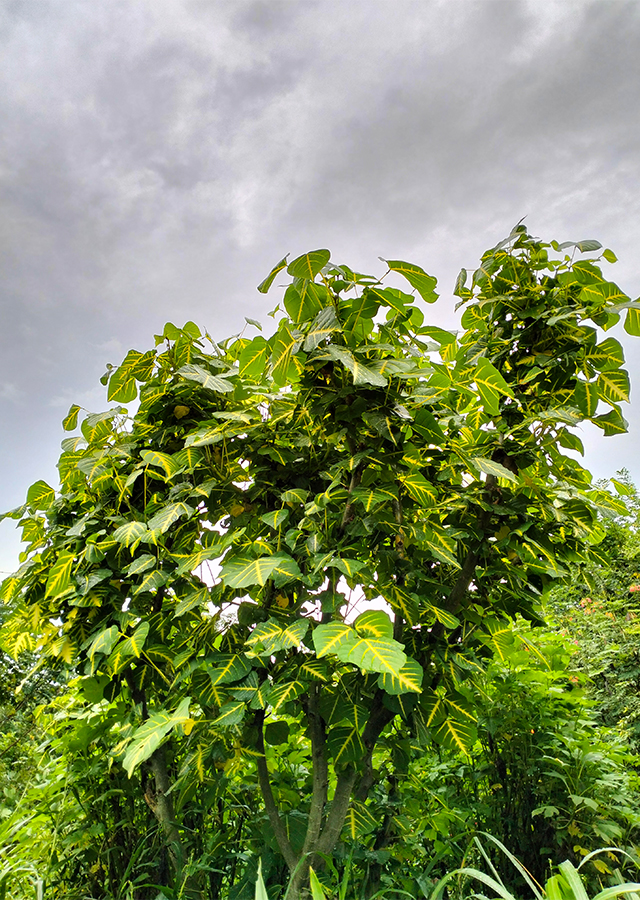
Erythrina variegata or dadap ayam is distributed from North Africa to Tanzania, the Indian Ocean Islands, India, China, to the Pacific region. This tree is commonly used as shade for coffee and cacao plantations, a support for pepper and betel plants, and a windbreak in Pacific regions, while its young leaves can be eaten as a raw side dish after boiling. Traditionally its astringent bark is used as an antipyretic and rheumatism remedy, and modern research has also revealed its potential in treating malaria and breast cancer.
Agroecology
Dadap ayam grows successfully in tropical, subtropical, and warm climate regions at elevations up to 1,200 m asl. The plant grows best in areas where annual rainfall ranges between 800-1,500 mm, average minimum temperature around 20°C and average maximum temperature 32°C. Succeeds in fairly fertile, well-drained soil. The plant is tolerant of salt-laden winds and moderate salt levels in the soil. Prefers a pH range of 5-7, tolerating 4.5-7.5.
Morphology
- Roots a taproot.
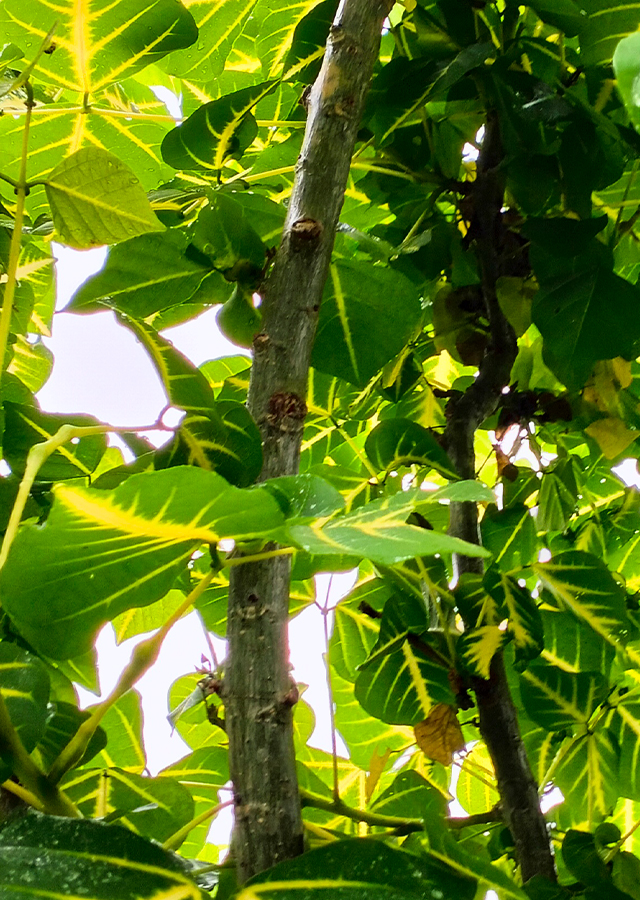
- Trunk woody, bark surface with vertical grooves, green, gray, light brown or whitish; trunk usually with small (1-2 mm) black attached spines.
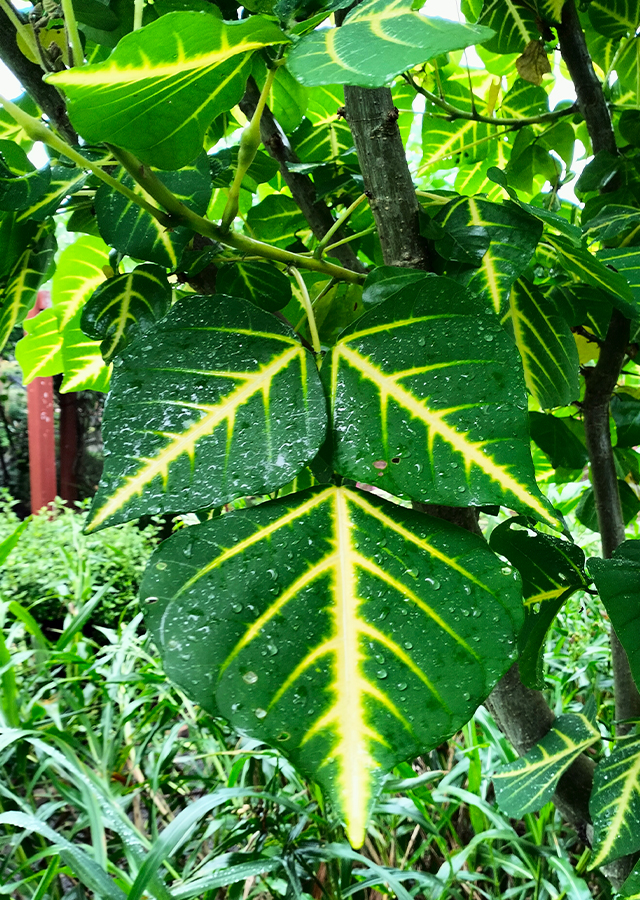
- Leaves compound with light green and yellow variegation, each leaf having 3 ovate leaflets about 4-25 cm long and 5-30 cm wide, the terminal leaflet being the largest.
- Flowers red, usually clustered in 3 on an axillary raceme flower stalk about 10-40 cm long.
- Fruit a cylindrical pod about 10-45 cm long, containing up to 13 seeds.
- Seeds egg-shaped, glossy brown, red, or purple.
Cultivation
Dadap ayam propagation is generative with seed and vegetative through stem cuttings. Fresh seed harvested within 3-6 months can be sown without special treatment. The germination rate is generally high and often 100%. Seed older than 6 months takes 12-18 months to germinate because the hard seed coat becomes harder with age. Soaking in hot water, or scarifying the seed coat, can significantly reduce this time. The seed will germinate within 8-10 days. Seedlings reach a transplantable height of 30-50 cm within 8-10 weeks. Large stem cuttings require a stem 2-3 m long and 5-8 cm in diameter. Branch cuttings with a terminal shoot are also sometimes used to obtain tall trees with straight trunks.
Chemical Content
Alkaloids, hypaphorine, erysodine, erysopine, erythrinine, saponin, hydrocyanic acid, free amino acid histidine.
Benefits
Its bark is astringent and anthelmintic. It is used as an antipyretic, treats liver problems and intermittent fever, rheumatism, and relieves asthma and cough, treats dysentery, is a good expectorant, is sedative, relieves insomnia and anxiety, a poultice for treating hemorrhoids and metroptosis, treats wounds and boils, treats mastitis, joint pain, cancer, malaria.
Local Names
Dadap blendung (Jawa Barat), Dede bineh, Thong baan.
Traditional Recipes
The following recipes reflect traditional knowledge passed down through generations, not a substitute for professional medical diagnosis or advice. Consult a healthcare provider before use.
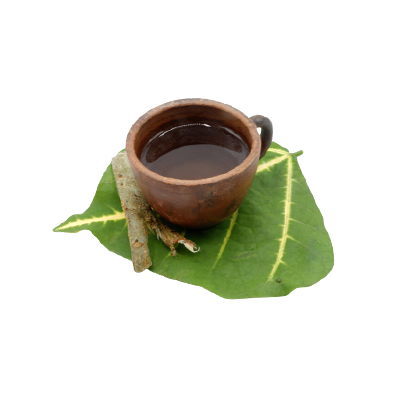
1. Fever
- Prepare dadap ayam bark and leaves and wash until clean.
- Boil until it boils.
- Let it cool to warm/cold.
- Strain then drink.
Reference Sources
- Royal Botanic Gardens. Plant of the World Online: Erythrina variegata L.. https://powo.science.kew.org/taxon/urn:lsid:ipni.org:names:494614-1#descriptions. 15-08-2022.
- Flora Fauna Web. 2019. Erythrina variegata L.. https://www.nparks.gov.sg/florafaunaweb/flora/5/6/5622.. 15-08-2022.
- Useful Tropical Plants. 2022. Erythrina variegata. http://tropical.theferns.info/viewtropical.php?id=Erythrina%20variegata. 15-08-2022.