Eucalyptus deglupta Blume
Summary
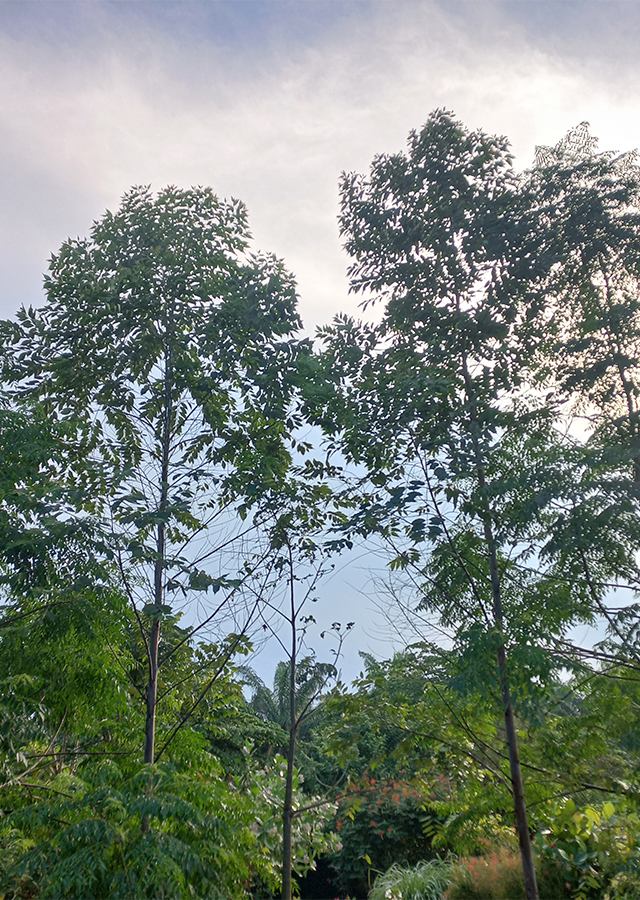
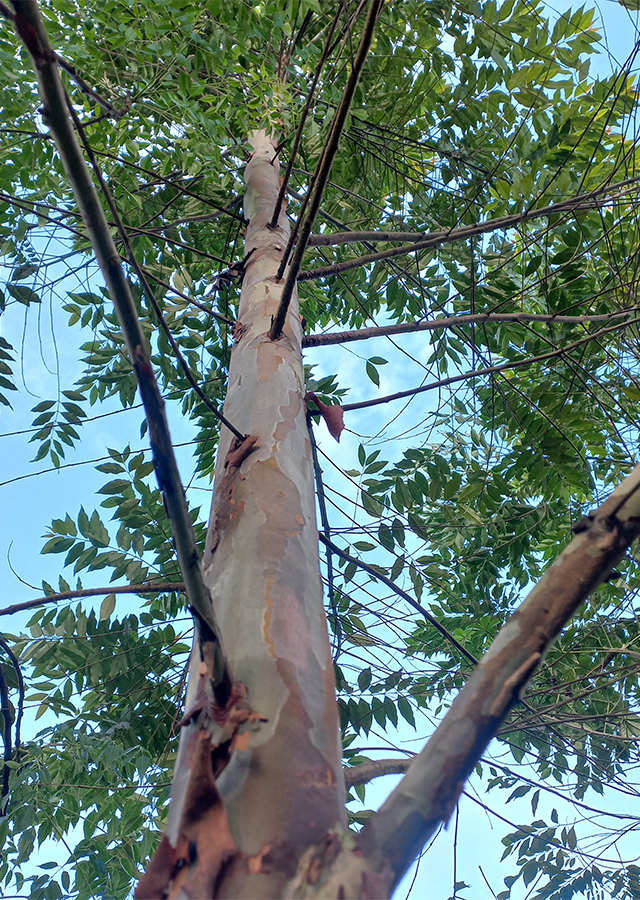
Rainbow eucalyptus (Eucalyptus deglupta) is a giant tree 25-60 meters tall from the Myrtaceae family, one of the few Eucalyptus species not native to Australia, distributed from Sulawesi to Papua New Guinea. Its multicolored bark makes it a striking ornamental tree, while its wood is highly valuable (trade name kamarere) for construction and veneer. Rainbow eucalyptus essential oil is believed to be antiseptic and antimalarial.
Agroecology
Rainbow eucalyptus is the only Eucalyptus species adapted to lowland and low montane rainforest habitats in humid tropical regions. It does not grow naturally in areas with a distinct dry season but occurs in areas where annual rainfall is very high and monthly rainfall usually exceeds 150 mm. It is found at elevations from sea level up to 1,800 m asl, in areas where the mean annual temperature is in the range of 23-31°C and mean annual rainfall is 2,500-5,000 mm. The plant is not frost-tolerant. Requires a sunny position with full light. Best growth occurs in deep, sandy alluvial loam soil, fairly fertile, well-drained, with adequate soil moisture. The plant can grow successfully in coarse-textured sand and loam soil, volcanic ash, and soil derived from limestone. Prefers a pH in the range of 6-7.5. The tree does not tolerate prolonged flooding. The tree is very sensitive to fire.
Morphology
- Stem woody, bark smooth, yellow, orange or brown, turning green after peeling. Twigs 4-sided, often with 4 elongated wings.
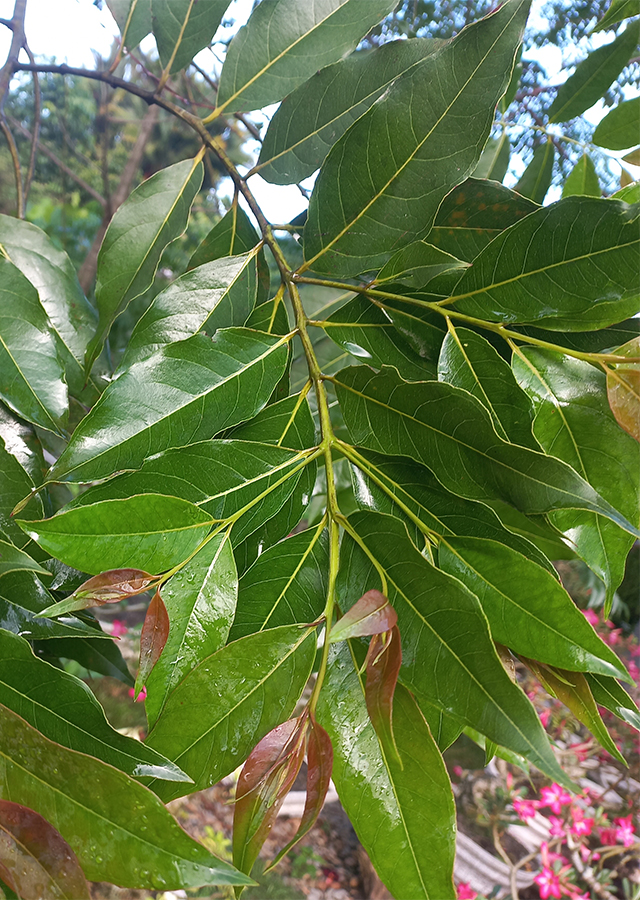
- Leaves young leaves opposite, ovate to lanceolate. Mature leaves opposite to subopposite, rarely alternate, short-petiolate, held nearly horizontal on the branch, ovate to ovate-lanceolate or tapering, thicker than juvenile leaves.
- Flowers inflorescence arranged in 3-7 umbels in terminal or axillary panicles. Pedicel terete or somewhat angular, about 5 mm long; young buds small, green with double opercula. Developing buds pale green or cream, round shaped. Operculum hemispherical, flower with numerous white to pale yellow stamens 0.2-1 cm long.
- Fruit a small, thin capsule with 3 or 4 valves protruding outward, making the capsule appear round and disc-shaped. Mature fruit hairy, brown to dark brown, containing 3-12 well-formed seeds per valve.
- Seeds small, brown, flat, with a small terminal wing.
Cultivation
- Eucalyptus deglupta is easily propagated from seed. The weight of 1000 seeds is 0.1-0.5 g. Seedlings are obtained by collecting fruit that has turned greenish brown and sun-drying it for 2-3 days. Seeds can be stored for 1-2 years under cool, dry, airtight conditions. The optimal temperature for germination is 32-35°C, and no pretreatment is needed. Seeds have a germination rate of 50-60%, and one gram of dry seed yields 1,000-2,000 seedlings. Germination takes 4-20 days, and nursery seedlings can be planted out at 3-4 months old and 25-30 cm tall. In Gabon, seedlings are planted at a spacing of 4 m × 3 m in clay soil, and 4 m × 4 m in sandy soil. In pulpwood plantations in the Congo, a spacing of 2.8 m × 2.8 m is used.
- Vegetative propagation by branch cuttings is easier compared to other Eucalyptus species, and even cuttings from old tree crowns can be used. Cuttings will root when their base is soaked in water alone. Plants 25-30 cm tall usually develop from cuttings within 6 weeks in a tropical environment.
- In-vitro propagation methods have also been developed.
Chemical Content
Essential oil (phellandrene, aldehydes and ketones, phenols, sesquiterpenoids, of which E-nerolidol is the main component), saponins, phenols, tannins, cardiac glycosides, terpenoids, quinones, anthocyanidins, polyphenols, and flavonoids.
Benefits
As an antiseptic and deodorant, treats cough and asthma, combats malaria, as an antiseptic mouthwash, lung infections and bronchitis, used for croup and spasmodic throat problems.
Simplisia
- Prepare rainbow eucalyptus leaves, wash clean with running water then drain.
- Dry under the sun or with an oven at 40°C until the moisture content reaches 10%.
- Grind using a blender until it becomes powder, then sift with a 60 mesh sieve.
- Store in a clean, airtight container.
Local Names
Leda, Galang, Aren.
Traditional Recipes
The following recipes reflect traditional knowledge passed down through generations, not a substitute for professional medical diagnosis or advice. Consult a healthcare provider before use.
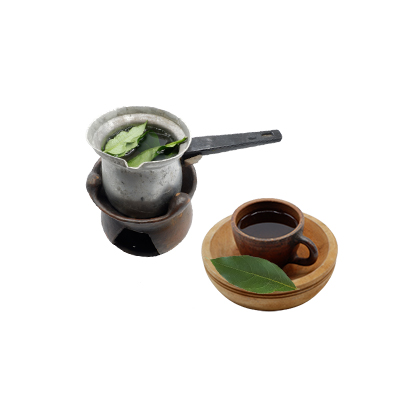
1. As an antiseptic mouthwash
- Prepare rainbow eucalyptus leaves and wash until clean with running water.
- Boil until it boils.
- Let it cool
- Strain then gargle.
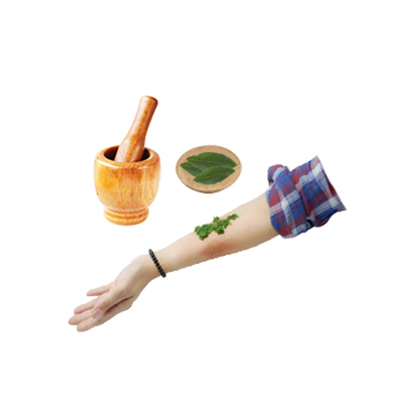
2. Antiseptic and deodorant
- Take rainbow eucalyptus leaves and wash until clean with running water.
- Grind until it becomes a paste.
- Apply the paste to the problem skin.
Reference Sources
- Royal Botanic Gardens. 2017. Plants of the World Online: Eucalyptus deglupta Blume. https://powo.science.kew.org/taxon/urn:lsid:ipni.org:names:592872-1. 6-12-2021.
- Useful Tropical Plants Database. 2021. Eucalyptus deglupta. http://tropical.theferns.info/viewtropical.php?id=Eucalyptus+deglupta. 6-12-2021.
- PROTA. 2015. Eucalyptus deglupta. https://uses.plantnet-project.org/en/Eucalyptus_deglupta_(PROTA). 6-12-2021.
- Stuartxchange. 2018. Philippine Medicinal Plants: Bagras. http://www.stuartxchange.org/EucalyptusDeglupta.html. 6-12-2021.
- Flora Fauna Web. 2019. Eucalyptus deglupta. https://www.nparks.gov.sg/FloraFaunaWeb/Flora/2/8/2886. 6-12-2021.