Eugenia uniflora L.
Summary
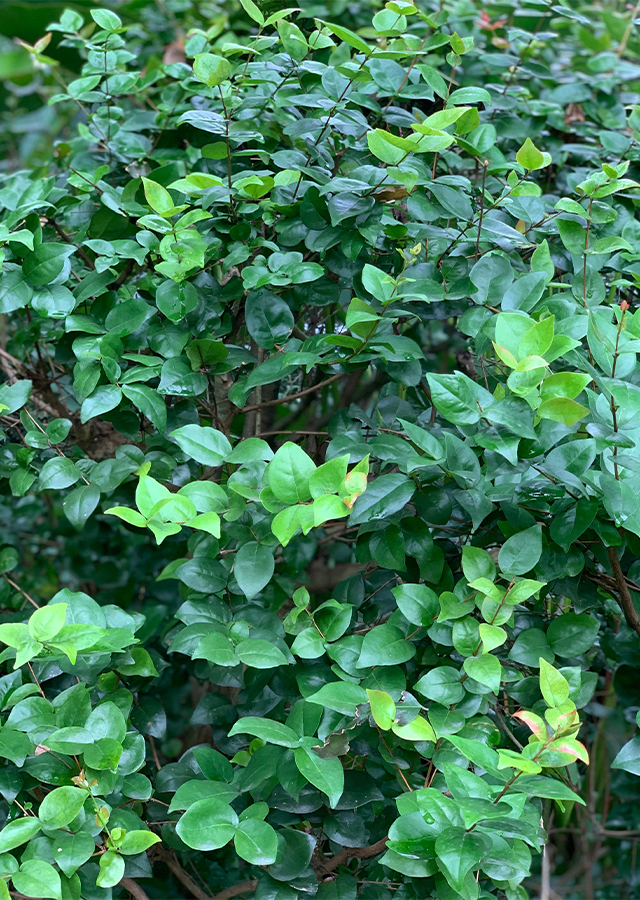
Dewandaru (Eugenia uniflora) is a shrub 5-8 meters tall of the Myrtaceae family, a close relative of the water apple, originating from the east coast of South America including Brazil, Suriname, and Guyana. Its distinctively ribbed fruit can be eaten fresh or processed, besides being grown as an ornamental plant in Java and Sumatra. Dewandaru is also believed to help lower cholesterol and blood pressure.
Agroecology
This tree can grow anywhere, including in house yards. Thrives in warm to tropical regions. Usually found at elevations up to 1,800 m above sea level, temperature 12-32 °C, with rainfall ranging 700-2,700 mm/year. Prefers moist soil with high organic matter.
Morphology
- Roots taproot, brown in color.
- Stem upright tree, woody, with brown bark.
- Leaves single, tapering base, smooth edges, pinnate venation, waxy layer, young leaves dark red in color.
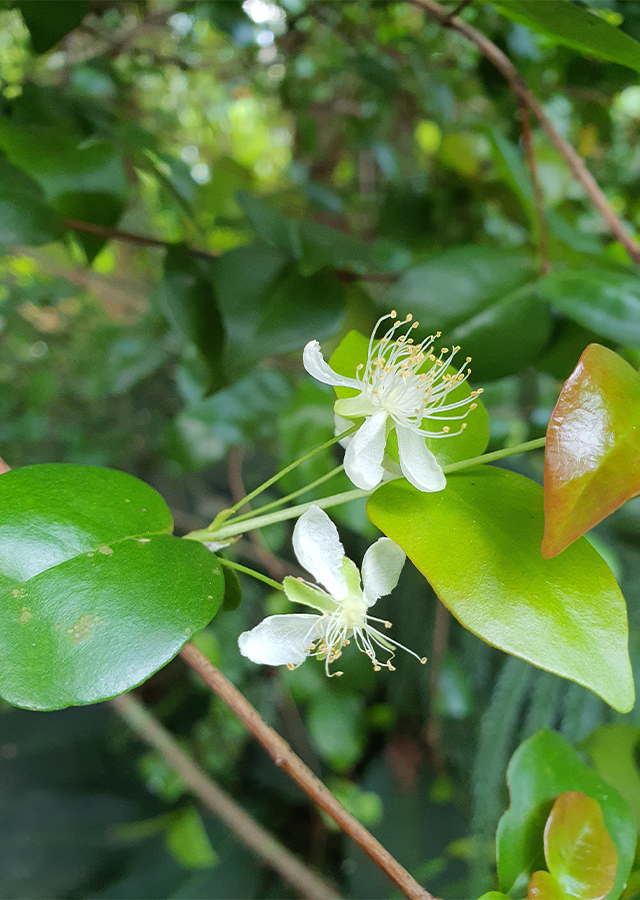
- Flowers milky yellow in color, small size.
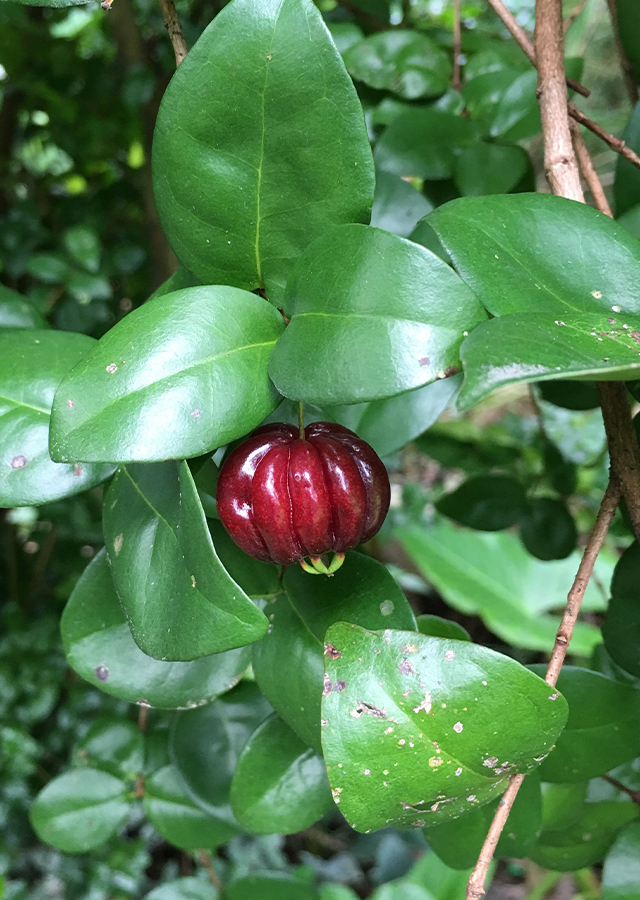
- Fruit green when young, turning red as it matures, sour taste, a round berry, dark reddish-black in color, ribbed surface.
- Seeds small, hard, and brown in color.
Cultivation
- Generative propagation from mature seeds.
- Vegetative propagation using tip cuttings, air-layering, budding, and layering.
Chemical Content
Carotenoids, flavonoids, phenolic compounds, tannins, citronellal, geranyl acetate, geranial, cineole, terpinene, sesquiterpenes, and polytenes.
Benefits
Helps maintain immunity, lowers cholesterol and blood pressure, addresses rheumatic pain, anticancer, antitumor, treats diarrhea.
Simplisia
- Collect dewandaru leaves then wet-sort to separate the leaves from dirt or other foreign material.
- Wash the leaves thoroughly under running water then drain.
- Dry by air-drying.
- Grind the dried leaves into powder. Store in a closed, airtight container.
Local Names
Cereme asam (Malay), Asem selong, Blimbing londo (Java).
Traditional Recipes
The following recipes reflect traditional knowledge passed down through generations, not a substitute for professional medical diagnosis or advice. Consult a healthcare provider before use.
1. Diarrhea
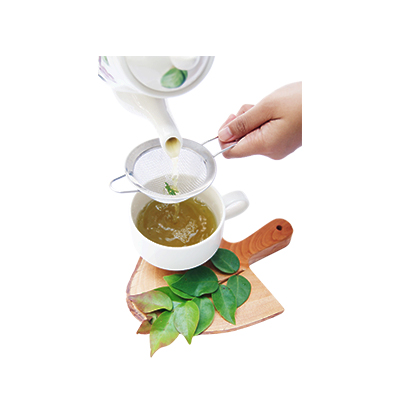
- Wash 15 g fresh dewandaru leaves then pound until fine. Steep with 1/2 glass of boiled water and strain.
- Drink the strained liquid twice a day, morning and evening, equal amounts.
Reference Sources
- Afifullah I. 2019. Si Mungil Penangkal Radikal Bebas, Ini Manfaat Buah Dewandaru. https://www.idntimes.com/health/fitness/iip-afifullah/5-manfaat-buah-dewandaru-exp-c1c2 27-08-2021
- Anindyajati S. 2019. Pohon Dewandaru, Erat dengan Mitos tapi Memiliki Banyak Manfaat. https://bobo.grid.id/read/081745523/pohon-dewandaru-erat-dengan-mitos-tapi-memiliki-banyak-manfaat?page=all 27-08-2021
- Tropical Plants Database, Ken Fern. tropical.theferns.info. Eugenia uniflora. http://tropical.theferns.info/viewtropical.php?id=Eugenia+uniflora 27-01-2021