Euphorbia hirta L.
Summary
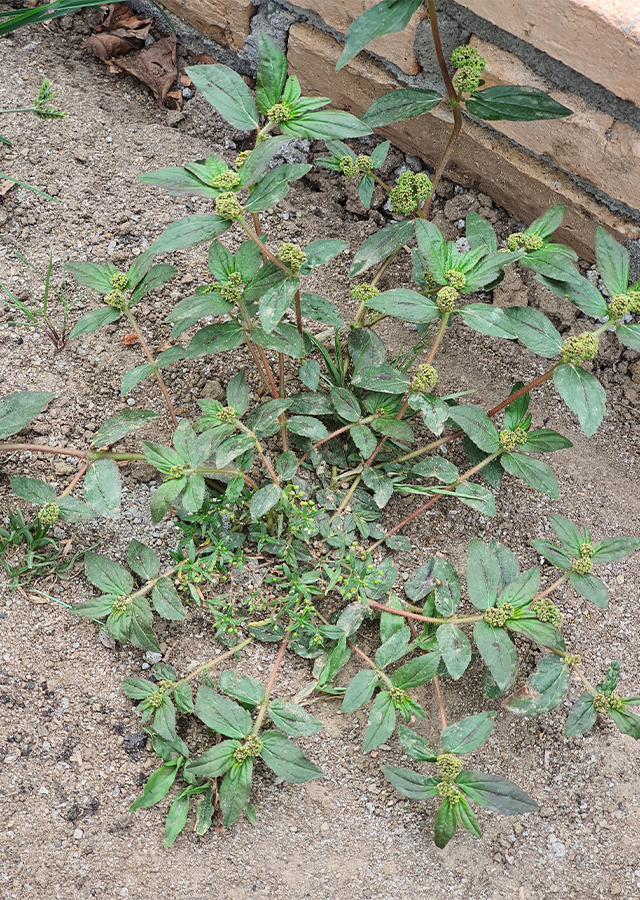
Patikan kebo (Euphorbia hirta) is an annual herb up to 50 cm tall of the Euphorbiaceae family, thought to originate from Central America and now distributed throughout the tropical world. Its milky white sap has traditionally been widely used to address respiratory disorders such as asthma and bronchitis. Patikan kebo is also believed to boost immunity and relieve dysentery.
Agroecology
Grows well at elevations up to 1,400 m above sea level. Commonly found along roadsides, riverbanks, grasslands, through to agricultural areas. Prefers light (sandy), medium (clay) soil, well-drained, not too moist, and full sunlight. Patikan kebo grows in tropical and subtropical regions.
Morphology
- Roots taproot, brownish in color, many branches and finely hairy.
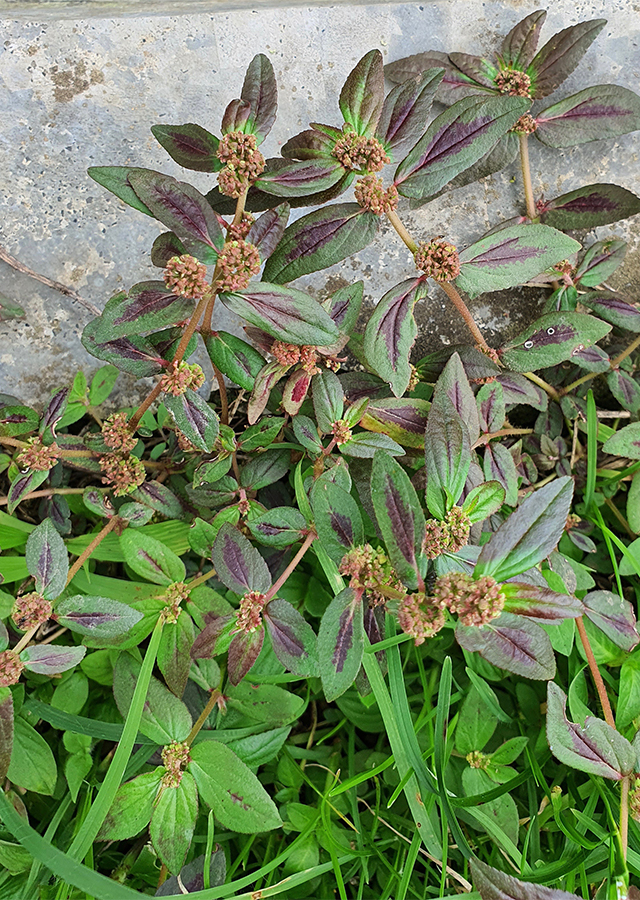
- Stem soft, round cylindrical shape, jointed, purplish-red in color and has fine yellowish hairs on its surface.
- Leaves green with a purple spot in the middle, arranged opposite. Lance-shaped, tapering leaf tip, rounded base, serrated edges. Leaf length ranges between 0.5-5 cm.
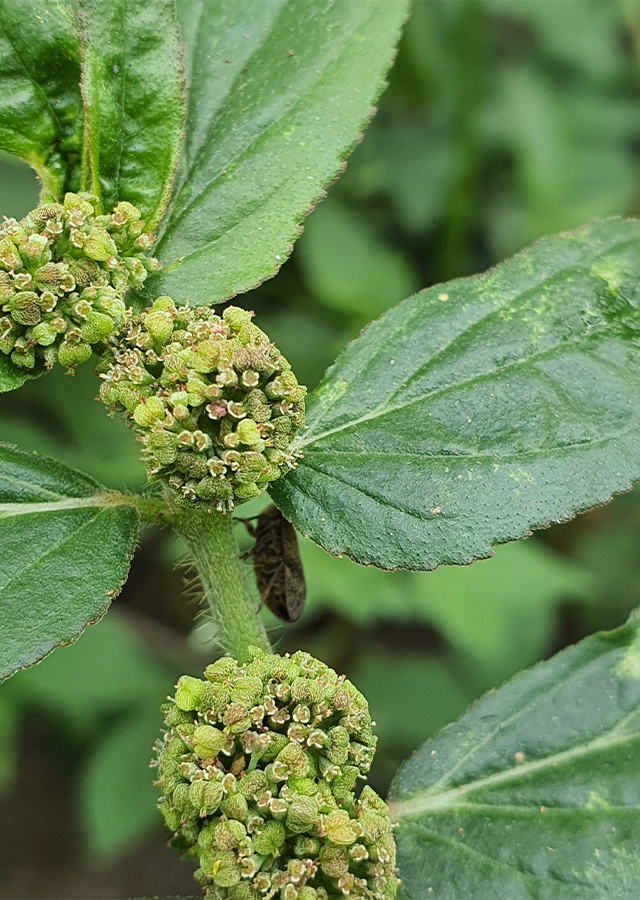
- Flowers small, numerous, compound, forming a ball, reddish-brown. Consisting of 4 male flowers and 1 female flower.
- Fruit capsule-like, has three round bumps covered with fine hairs.
- Seeds round shaped, brownish in color without fine hairs.
Cultivation
Propagated through seeds that fall to the ground carried by wind or insects.
Chemical Content
Flavonoids, tannins, diterpenoids, triterpenoids, alkaloids, polyphenols, choline, shikimic acid, saponins, quercetin, anthraquinones.
Benefits
Boosts body immunity, treats fever, dysentery, diarrhea, sore throat, eczema, herpes, allergies, itching, breast abscess, and asthma.
Simplisia
- Select fresh leaves then wash thoroughly and drain.
- Arrange the leaves on a tray, cover with a dark colored cloth. Dry in direct sunlight for ± 7 days.
- Pack the dried material in plastic then vacuum-seal and store at room temperature.
Local Names
Gelang susu, Gendong anak (Jakarta), Kukon-kukon, Patikan, Patikan jawa (Java), Kaksekakan (Madura), Sosononga (Halmahera).
Traditional Recipes
The following recipes reflect traditional knowledge passed down through generations, not a substitute for professional medical diagnosis or advice. Consult a healthcare provider before use.
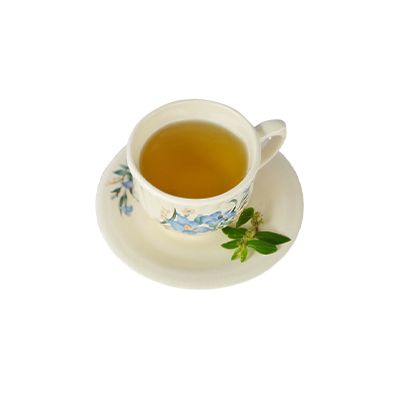
1. Breast Inflammation/Swelling
- Prepare 1 handful of patikan kebo leaves and 2 tbsp soybeans.
- Boil both ingredients with 3–5 glasses of water until it boils. Cool and strain.
- Drink twice a day, 1 cup each time.
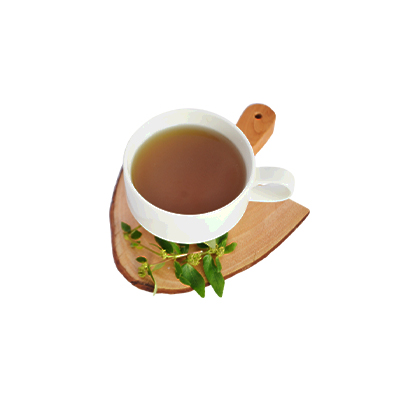
2. Dysentery, Stomach Inflammation, Diarrhea and Bloody Urination
- Prepare 1 handful of patikan kebo leaves and 1 piece of rock sugar.
- Boil all ingredients with 3 glasses of water until it boils, strain.
- Drink twice a day, morning and evening.
Reference Sources
- Tropical Plants Database, Ken Fern. tropical.theferns.info. Euphorbia hirta. http://tropical.theferns.info/viewtropical.php?id=Euphorbia+hirta 27-01-2021
- Repository.umy. Patikan Kebo (Euphorbia hirta L.) http://repository.umy.ac.id/bitstream/handle/123456789/18146/Bab%20II.pdf?sequence=3&isAllowed=y 20-12-2020
- Badrunasar Anas, Santoso Harry Budi . 2017. Tumbuhan Liar Berkhasiat Obat: Radang pada Payudara/ Bengkak. Forda Press
- Sirait Midian dkk. 1985. Cara Pembuatan Simplisia. Departemen Kesehatan Republik Indonesia. Jakarta 60.