Euphorbia pulcherrima Willd. ex Klotzsch
Summary
Poinsettia (Euphorbia pulcherrima) is a shrub 2-4 meters tall from the Euphorbiaceae family first cultivated by the Aztecs of Mexico as a symbol of purity, introduced to the United States in 1825 by ambassador Joel Roberts Poinsett. Its bright red bracts make it an iconic Christmas decoration worldwide. Mexicans traditionally use poinsettia as a skin remedy and an antidote to venomous animal bites.
Agroecology
The optimal air temperature ranges between 16-27°C. Temperatures <16°C are very slow, while temperatures of 27°C can disrupt optimal vegetative growth of the plant. Elevation, it can grow in lowlands as well as highlands. Light intensity, the area must be open and exposed to direct sunlight.
Morphology
- Stem upright, sparsely branched, exuding sap.
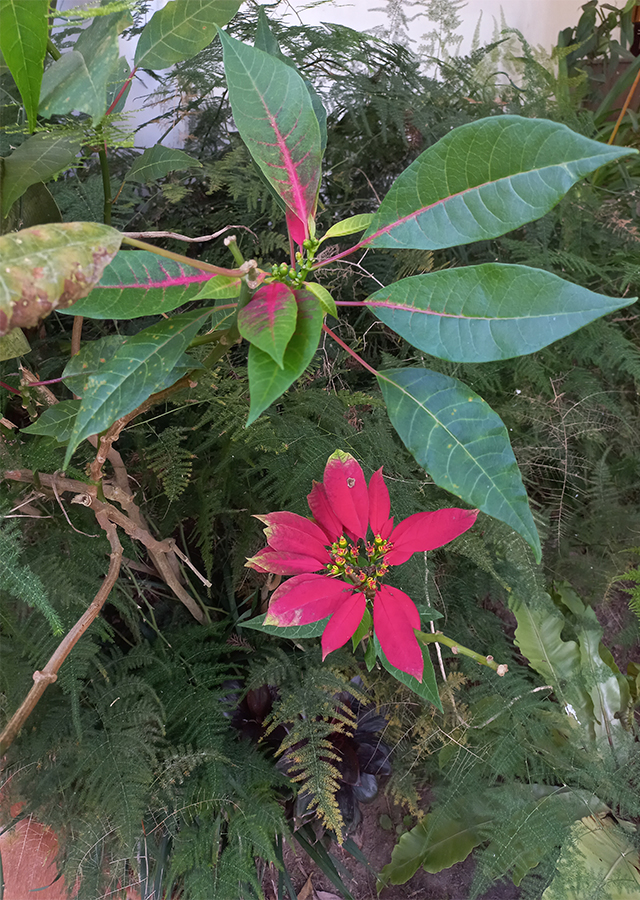
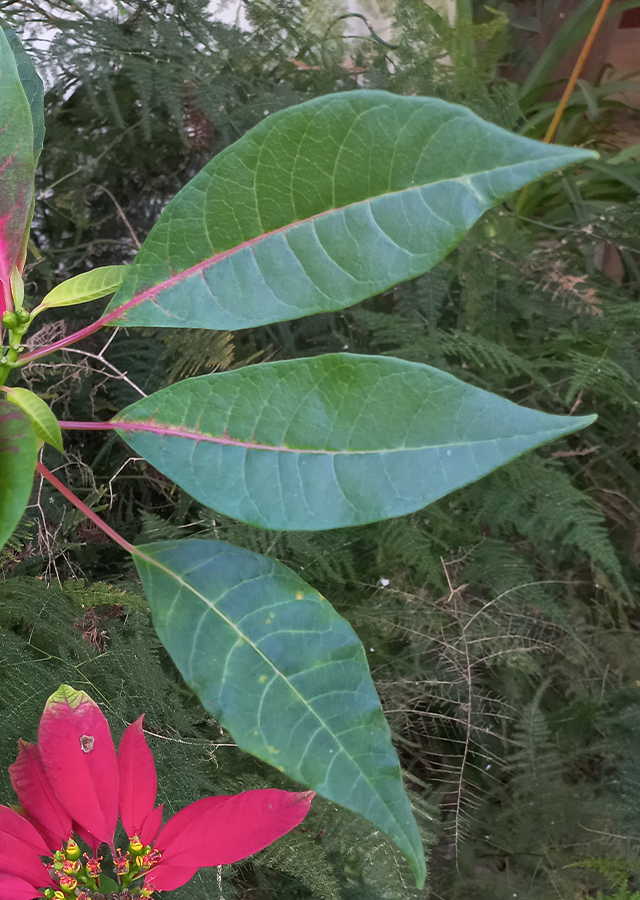
- Leaves simple, elliptic to ovate shaped with a petiole that often has 2-4 indentations. The tip of the poinsettia leaf is pointed and has a pinnate vein arrangement.
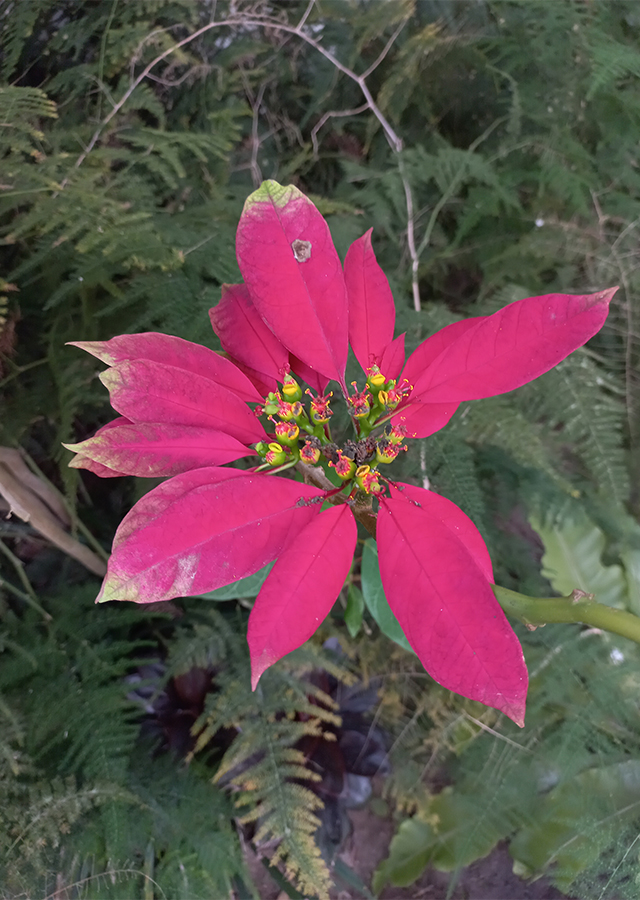
- Flowers compound, forming a cup with a special arrangement called a cyathium; each cyathium has a bract shaped like a true leaf, red, white, yellow, or other colors depending on the variety.
Cultivation
- Propagation of the poinsettia plant can be done using seed (generative) or stem cuttings (vegetative).
- To get the best new plants, cut new healthy stems from a strong plant. Take cuttings three to six inches (7.5 cm to 15 cm) from the parent plant.
Chemical Content
Phenolics, quinones, benzene, and tannins, triterpenes, resins, yellow and red dye substances, essential oil, tartaric acid, gallic acid, alkaloids, saponins, amylodextrin, and formic acid, steroids, terpenoids, glycosides, reducing sugars, amino acids, flavonoids, eight compounds identified as 5,7-dimethoxycoumarin; β-sitosterol; 1,2-benzenedicarboxylic acid bis(2-ethylhexyl) ester; octadecylic acid; syringic acid; ferulic acid; daucosterol; and rutin.
Benefits
A poultice for erysipelas and various skin problems, used as a galactagogue, an emetic and cathartic remedy, to increase breast milk flow, a fever remedy source, emmenagogue, to treat tuberculosis, skin infections, and broken bones.
Local Names
Kastuba.
Traditional Recipes
The following recipes reflect traditional knowledge passed down through generations, not a substitute for professional medical diagnosis or advice. Consult a healthcare provider before use.
1. Skin infection
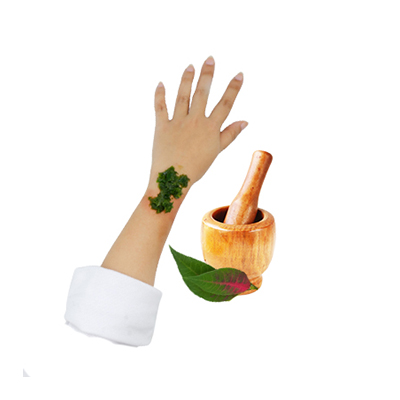
- Prepare fresh poinsettia leaves and wash until clean.
- Grind until it becomes a paste.
- Apply the leaf paste to the infected skin.
Reference Sources
- Royal Botanic Gardens. Plants of the World Online: Euphorbia pulcherrima Willd. ex Klotzsch https://powo.science.kew.org/taxon/urn:lsid:ipni.org:names:30176564-2 . 03-03-2022.
- Stuartxchange. 2021. Philippine Medicinal Plants: Poinsettia. http://www.stuartxchange.org/Poinsettia.html . 03-03-2022.
- Teo Sprengler. 2020. Propagating Poinsettias: Learn About Poinsettia Plant Propagation. https://www.gardeningknowhow.com/ornamental/flowers/poinsettia/poinsettia-plant-propagation.htm . 03-03-2022.