Euphorbia trigona Mill.
Summary
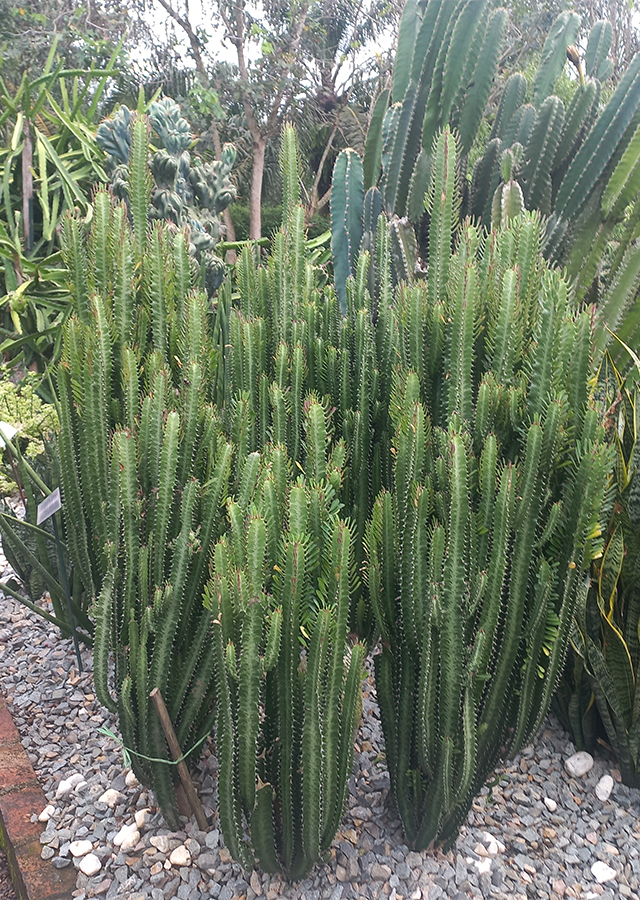
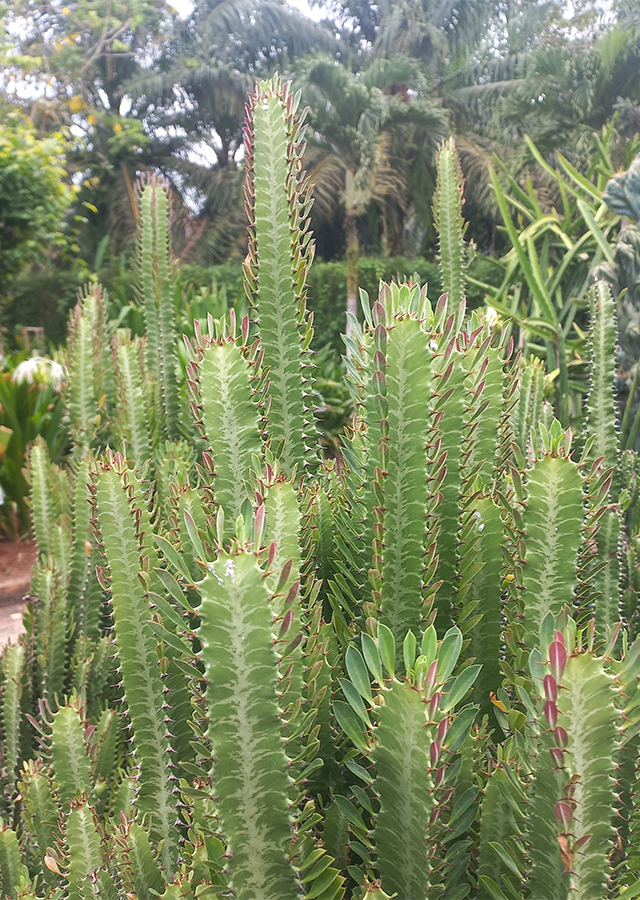
Pohon susu afrika (Euphorbia trigona) is a succulent shrub or tree up to 1.8 meters tall from the Euphorbiaceae family that originates from Gabon and Angola. Its unique shape makes it a popular ornamental, hedge, and potted plant in tropical regions. Pohon susu afrika is sometimes taken from the wild for local medicine, believed to help address severe constipation and urinary tract infections.
Agroecology
Euphorbia trigona prefers to grow in full sun conditions, but can tolerate moderate shade. This species appears to grow in almost any soil with pH ranging from 6.1-7.8. Average annual temperature 10-30 °C.
Morphology
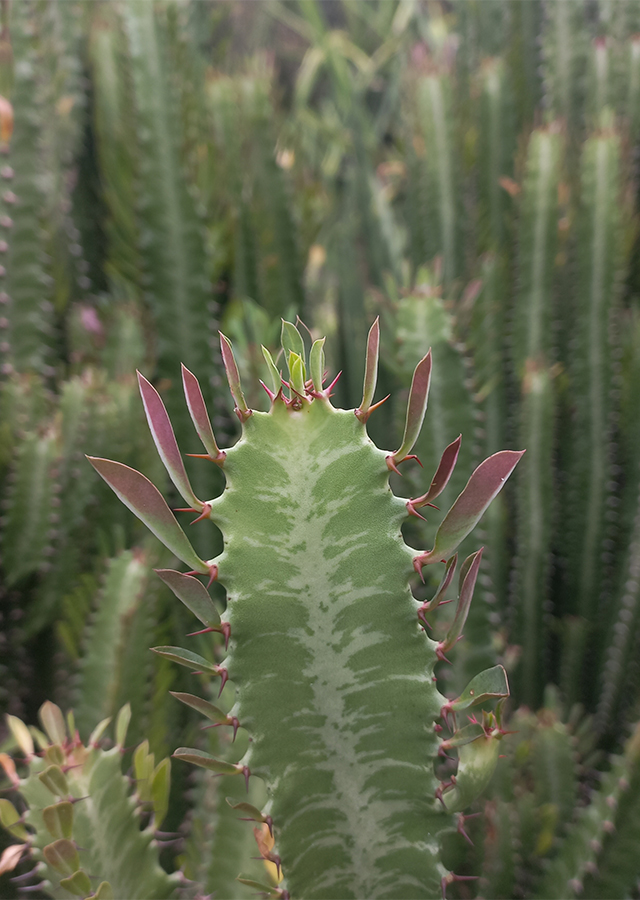
- Stem has milky latex, triangular shape (has 3 angles), thorns 3 mm, divergent, rough.
- Leaves up to 2.5 mm, ovate, rough.
- Flowers cyathia solitary or in clusters, bracts about 3.5 x 4 mm, ovate, blunt, toothed, glands 5 up to 2.2 mm, flower stalk about 2.5 mm, ovate, appearing at the tip of the plant, numerous stamens, filaments jointed, 2.6 mm; female flowers upright, ovary about 3.7 mm, 3-celled, 3 styles, 1 ovule.
- Fruit a capsule up to 7 mm, 3-lobed, 3.5 mm, obovate.
Cultivation
Propagation is done vegetatively with stem cuttings and fragments.
Chemical Content
Alkaloid, flavonoid, saponin, tannin, 8-methoxyingol ester, lectin, ingol-type diterpenoid.
Benefits
Addresses cases of severe constipation, epileptic seizures, urinary tract infections, relieves symptoms of inflammation, has strong erythrocyte agglutination capability. Has antimicrobial and immunostimulant activity.
Local Names
Susuru.
Traditional Recipes
The following recipes reflect traditional knowledge passed down through generations, not a substitute for professional medical diagnosis or advice. Consult a healthcare provider before use.
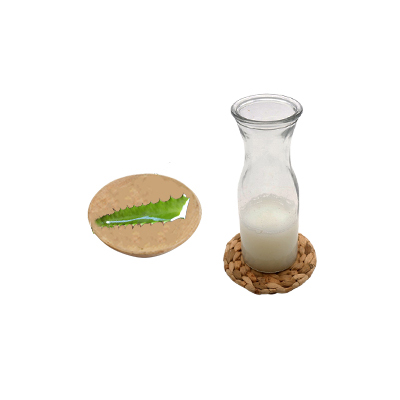
1. Constipation
- Take pohon susu afrika sap.
- Drip the sap into palm wine.
- Drink to relieve severe cases of constipation.
Reference Sources
- Royal Botanic Gardens. 2017. Plants of the World Online : Euphorbia trigona Mill. http://www.plantsoftheworldonline.org/taxon/urn:lsid:ipni.org:names:348565-1. 30-10-2021.
- Useful Tropical Plants. 2021. Euphorbia trigona. http://tropical.theferns.info/viewtropical.php?id=Euphorbia+trigona. 30-10-2021.
- CAB International. 2021. Euphorbia trigona (African milk weed). https://www.cabi.org/isc/datasheet/21380. 30-10-2021.
- Gapuz. Marie Cris D, Ronnie L. Besagas. 2018. Phytochemical profiles and antioxidant activities of leaf extracts of euphorbia species. Journal of Biodiversity and Environmental Sciences (JBES). ISSN: 2220-6663 (Print) 2222-3045 (Online). Vol. 12, No. 4, p. 59-65, 2018. https://www.researchgate.net/publication/325110516_Phytochemical_profiles_and_antioxidant_activities_of_leaf_extracts_of_euphorbia_species.
- Hamadi Reham dkk. 2021. Ingol and Ingenol-Type Diterpenes from Euphorbia trigona Miller with Keratinocyte Inhibitory Activity. MDPI. https://www.mdpi.com/2223-7747/10/6/1206/htm.