Ficus lyrata Warb.
Summary
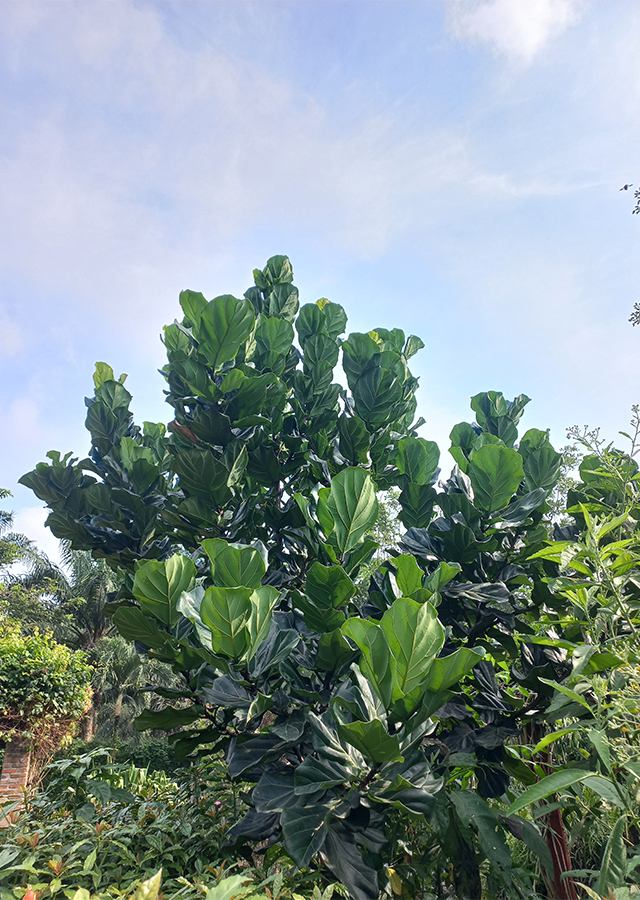
Ficus lyrata or fiddle-leaf fig is native to tropical West and Central Africa, and is now widely cultivated worldwide as an ornamental, both indoors and outdoors. Besides functioning as a shade tree and a source of natural purplish-red dye, in a number of cultures this tree also has social significance as part of rituals, while traditionally it is used to address respiratory, digestive, and fungal infection issues.
Agroecology
Fiddle-leaf fig grows in lowland to mid-elevation and in premontane moist rainforest. In Colombia, this species is reported to grow at elevations of 1,000-1,500 m asl. In Indonesia, this species grows in almost all parts of the region, usually growing wild on beaches or roadsides. Fiddle-leaf fig has high drought tolerance and can grow in full sun, partial sun, or partial shade. This species also has moderate tolerance to salt aerosol and can grow in various soil types including sand, clay, loam, alkaline, and acidic as long as the soil has good drainage. Fiddle-leaf fig dislikes excessive watering. Too much or too little water and insufficient light will result in the death of the lower old leaves.
Morphology
- Roots a taproot and fibrous roots.
- Trunk solitary, woody, with shallowly cracked grayish bark.
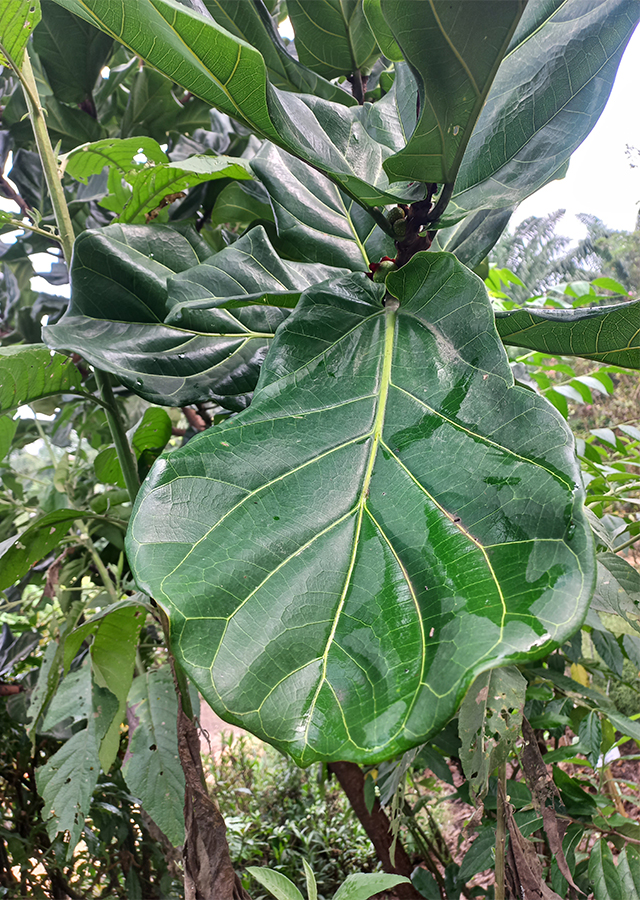
- Leaves simple or unifoliate, alternate arrangement, green, glossy, hairless, coarse, large. Blade thick, ovate to lyrate (fiddle-shaped) or panduriform (violin-shaped), about 15-30 cm long, margin entire-wavy, base cordate, nearly truncate and very shortly tapering at the tip, hairless, veins pinnate, lateral nerves 4-5 pairs, yellowish veins prominent on the upper and lower surfaces. Stipules narrowly triangular-lanceolate, pointed, hairless, persistent. Petiole sturdy, hairless, grooved.
- Flowers numerous, cream-colored, hidden on the inner wall of the syconium receptacle. Monoecious, with male/gall (sterile) and female flowers found in separate syconia on the same tree. Male flowers: sepals 2-3, ovate-lanceolate, stamen solitary with an ovate anther. Female flowers: sepals 3, ovate and blunt, style short with a papillate stigma.
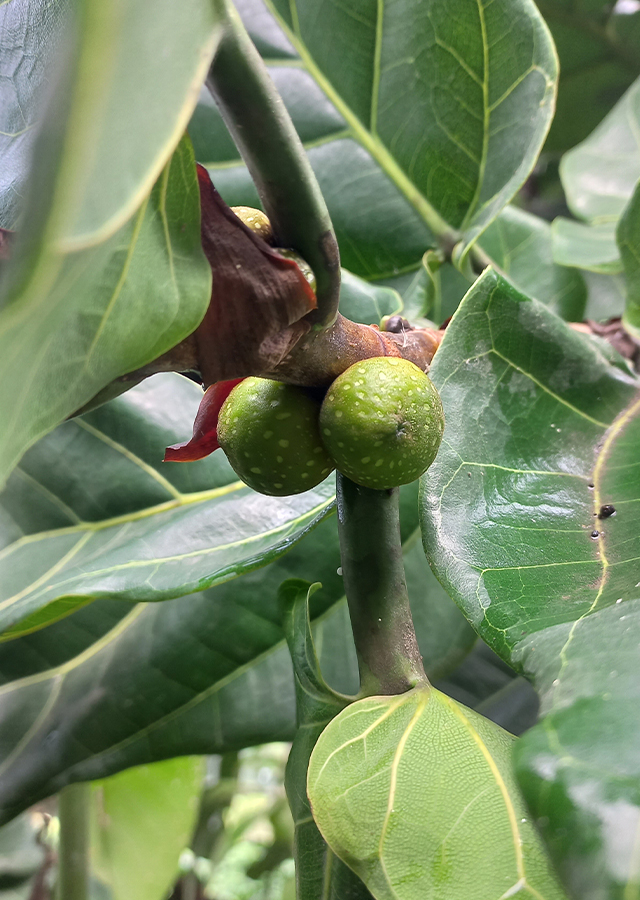
- Fruit round, a fleshy hollow syconium, green with depressed yellow spots, very dense and hard, stalkless, paired in the leaf axils at the branch tips.
Cultivation
Plant propagation with seed, stem cuttings (using rooting hormone), and layering (using branches 1-2 years old).
Chemical Content
Alkaloids, phenolic compounds, tannins, terpenoids, orientin, benzoic acid, caffeoylquinic acid, fatty acids and sphingolipids, flavonoids (including catechins/procyanidins, O- and C-linked flavonoid glycosides), arabinose, β-amyrin, β-carotene, β-sitosterol, xanthotoxol. The main procyanidins are dimers and trimers consisting of (epi)catechin and (epi)afzelechin units, while the dominant flavones are C-glycosides of luteolin and apigenin.
Benefits
Treats respiratory disorders (asthma, cough, sore throat), gastrointestinal disorders (colic, indigestion, loss of appetite, and diarrhea), inflammatory and cardiovascular disorders, controls diabetes, treats conditions such as fungal infections, treats anxiety. Has antimicrobial, antibacterial, and antioxidant activity.
Local Names
Ketapang brazil, Kimunding, Arabiola, Biola cantik.
Traditional Recipes
The following recipes reflect traditional knowledge passed down through generations, not a substitute for professional medical diagnosis or advice. Consult a healthcare provider before use.
1. Treats anxiety
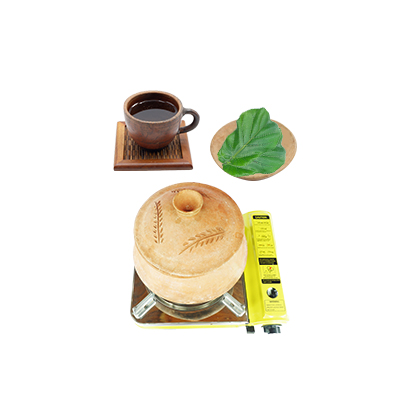
- Prepare an adequate amount of fiddle-leaf fig leaves and wash until clean.
- Boil until it boils.
- Let it cool to warm/cold.
- Strain then drink to treat anxiety.
Reference Sources
- Royal Botanic Gardens, Kew. Plants of the World Online: Ficus lyrata Warb.. https://powo.science.kew.org/taxon/urn:lsid:ipni.org:names:853158-1. 22-07-2022.
- CAB International. 2014. Invasive Species Compendium: Ficus lyrata (fiddle-leaf fig). https://www.cabi.org/isc/datasheet/24125#touses. 22-07-2022.
- Flora Fauna Web. 2022. Ficus lyrata Warb.. https://www.nparks.gov.sg/florafaunaweb/flora/2/9/2911. 22-07-2022.
- Stuartxchange. 2021. Philippine Medicinal Plants: Fiddle leaf fig. http://www.stuartxchange.org/FiddleLeaf. 22-07-2022.
- Alamgeer et al. 2018. Traditional medicinal plants used for respiratory disorders in Pakistan: a review of the ethno-medicinal and pharmacological evidence. Chinese Medicine, 13: 48. doi: 10.1186/s13020-018-0204-y.
- Lostinplantopia. 2018. Ficus lyrata. https://lostinplantopia.com/2018/11/30/011-ficus-lyrata/. 22-07-2022.
- Khan A. S. 2017. Medicinally Important Trees. Springer International Publishing AG.