Ficus religiosa L.
Summary
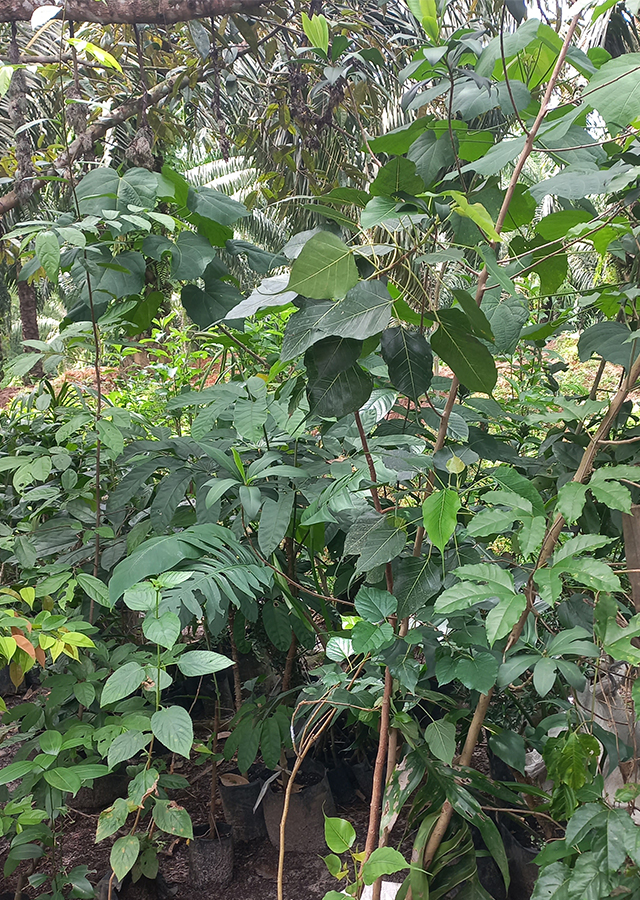
Pohon bodhi (Ficus religiosa) is one of the oldest trees, 15-30 meters tall, from the Moraceae family that originates from the foothills of the Himalayas to Southern China. Considered sacred by Hindus and Buddhists because it is believed to be where Buddha attained enlightenment, this tree also produces latex for varnish and tannin for leather tanning. In Ayurveda, pohon bodhi is traditionally used to treat peptic ulcers.
Agroecology
The bodhi tree can be found growing in tropical and subtropical regions at elevations up to 1,520 m asl. This plant is tolerant of various climate zones and soil types, reportedly able to live for more than 3,000 years. In Paraguay, this species lives in lower elevation forests and in China this species is reported to grow at elevations of 400-700 m asl. In India, it grows both wild and cultivated up to 1,500 m asl. Grows best in areas where average annual temperature is in the range of 16-35 °C, and average annual rainfall is in the range of 500-5,000 mm. This species prefers a position in full sun but also succeeds in partial shade, with moist soil conditions. Able to grow in various soil types but prefers deep alluvial sandy loam soil with good drainage. This plant is also found in shallow soil including rock crevices.
Morphology
- Stem has a cracked, gray bark surface.
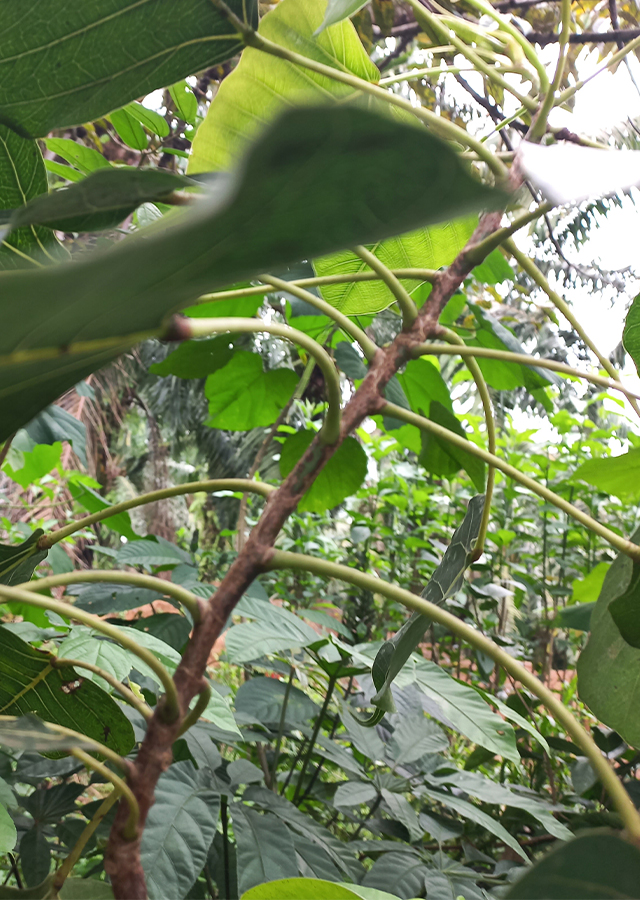
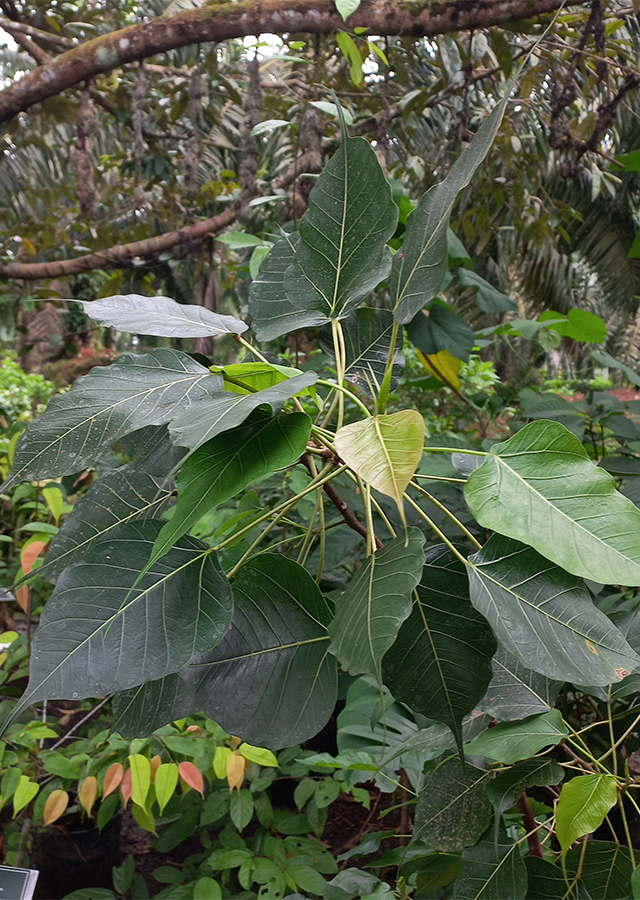
- Leaves alternate, long-stalked, ovate or heart-shaped, the tip tapering to a tail-like point. Blade dark glossy green above, pale green below, with a somewhat wavy margin, has 6-9 pairs of lateral veins, hairless (glabrous).
- Flowers has male, female and gall flowers on the same plant. Male flowers few, calyx has 2-3 lobes, stamens 1, filament short. Gall flowers (enlarged sterile flowers) have a calyx 3-4 lobed, ovary round and smooth, stigma enlarged and 2-lobed. Female flowers have a calyx 4-lobed and lanceolate, ovary round and smooth, stigma narrow.
- Fruit subglobose flattened, paired, located in the leaf axil, 1.5 cm in diameter, hairless (glabrous). Fruit turns red or purple when ripe.
- Seeds small and brown.
Cultivation
- Propagation can be done generatively (seeds) and vegetatively (cuttings).
- Seeds can germinate well at a temperature of about 20 °C.
- Cutting material is taken 4-12 cm long, taken from lateral branches.
Chemical Content
β-sitosteryl, n-octacosanol, methyl oleanolate, lanosterol, stigmasterol, lupeol, phytosterol, amino acids, furanocoumarin, phenolic components, volatile compounds and secondary metabolites, n-hexadecanoic acid, 9,12-octadecadienoic acid, 9,12,15-octadecatrienoic acid, butyl 9,12,15-octadecatrienoate, alkaloid, saponin, steroid, tannin, triterpene, flavonoid, and cardiac glycosides.
Benefits
Prevents gum disease, relieves toothache pain, treats constipation, mumps, boils, gout, fever, wounds, dysentery, peptic ulcers, bruises, gonorrhea, cancer, heart disease and asthma, back pain, skin diseases (ringworm, athlete's foot, scabies, and other fungal infections), stomatitis, diuresis, increases fertility in women, addresses bleeding disorders, relieves inflammation, ear drops. Has properties as an antidote for venomous animal bites, laxative, aphrodisiac, antibacterial, antiprotozoal, antiviral, antidiarrheal, antidiabetic, and diuretic.
Simplisia
- Take fresh bodhi tree leaves and wash until clean.
- Dry the leaves under direct sunlight or using an oven.
- Once the leaves are completely dry, blend finely and sieve to obtain a powder.
- Store in a well-closed container protected from light to maintain the quality of the preparation.
Local Names
No information found. Further research needed.
Traditional Recipes
The following recipes reflect traditional knowledge passed down through generations, not a substitute for professional medical diagnosis or advice. Consult a healthcare provider before use.

1. Preventing gum disease
- Wash bodhi tree root until clean.
- Chew the root to prevent gum disease.
2. Bruises
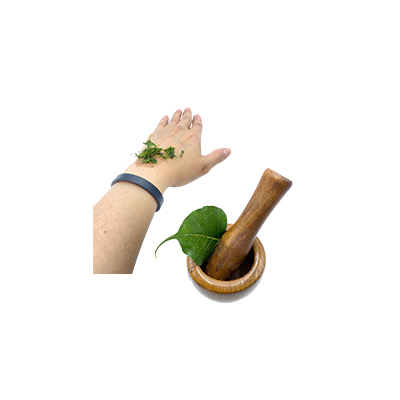
- Prepare bodhi tree leaves as needed and wash with running water until clean.
- Mash the leaves into a paste.
- Apply the leaf paste to the bruised skin.
Reference Sources
- Royal Botanic Gardens. 2021. Plants of the World Online: Ficus religiosa L. http://www.plantsoftheworldonline.org/taxon/urn:lsid:ipni.org:names:853563-1. 29-10-2021.
- Flora Fauna Web. 2021. Ficus religiosa L. https://www.nparks.gov.sg/florafaunaweb/flora/2/9/2915. 29-10-2021.
- PROSEA. 2016. Ficus religiosa (PROSEA). https://uses.plantnet-project.org/en/Ficus_religiosa_(PROSEA). 29-10-2021.
- Stuartxchange. 2019. Philippine Medicinal Plants: Bo tree. http://www.stuartxchange.org/BoTree. 29-10-2021.
- CAB International. 2021. Invasive Species Compendium: Ficus religiosa (sacred fig tree). https://www.cabi.org/isc/datasheet/24168#toPictures. 29-10-2021.
- Useful Tropical Plants Database. 2021. Ficus religiosa. http://tropical.theferns.info/viewtropical.php?id=Ficus+religiosa. 26-10-2021.