Flacourtia jangomas (Lour.) Raeusch.
Summary
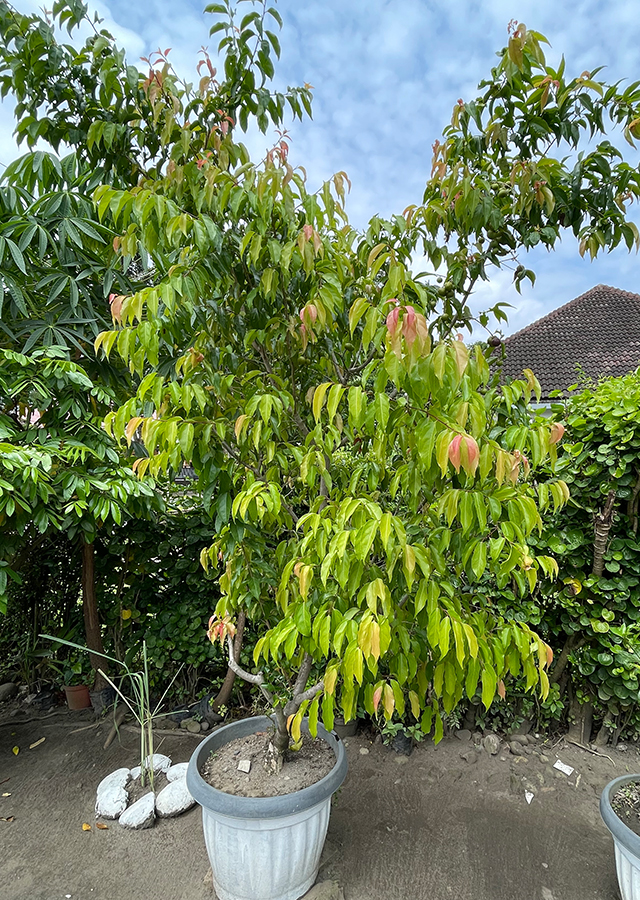
Flacourtia jangomas or rukam manis is native to Assam, Bangladesh, China, through to the Eastern Himalaya and Myanmar, later introduced to various regions including Kalimantan, Java, and Fiji. Its ripe dark red or purple fruit can be eaten directly or processed into jam, juice, and preserves, though its use among communities remains suboptimal compared to its economic value. As traditional medicine, rukam manis has been used for centuries to address toothache, diabetes, cough, and various digestive disorders thanks to its therapeutically valuable phytochemical content.
Agroecology
Is a hot, moist tropical lowland plant. Prefers a full sun position in fertile, well-drained soil.
Morphology
- Trunk and branches of younger trees generally have thorns that gradually disappear as the tree ages. Bark light brown to copper red or pink. Young branches speckled white due to numerous circular lenticels.
- Leaves arranged alternately, petiolate, deciduous. Leaf blade elliptic, ovate or lanceolate shaped, base rounded, tip pointed, margin toothed. Upper leaf surface glossy dark green, lower surface glossy light green. Young leaves pink. Leaves 7.0-11.0 cm long and 3.5-4.0 cm wide.
- Inflorescence appears in the leaf axils, raceme-shaped, hairless. Male and female flowers on separate trees. Male flowers solitary or clustered, filament-shaped and hairless; while female flowers solitary. Sepals numbering 4 or 5, ovate-triangular shaped, carrying a honey scent. Flowers white to greenish.
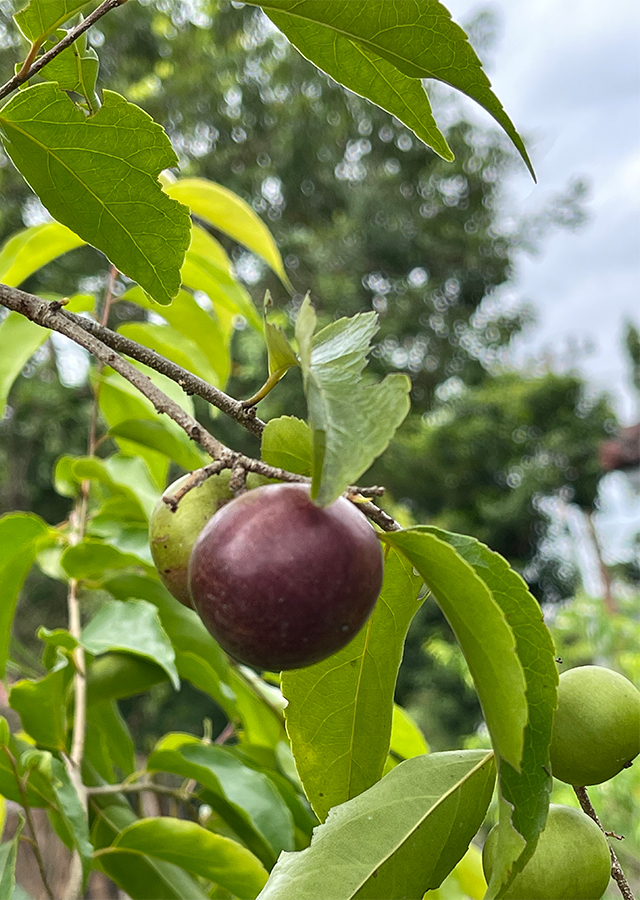
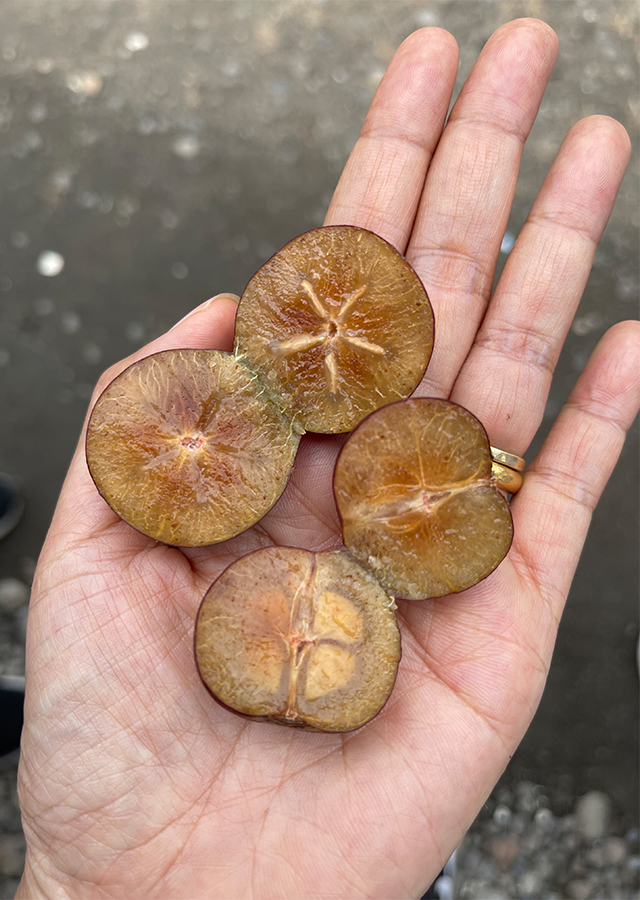
- Fruit a berry, elliptic to somewhat round shaped, 1.5-2.5 cm in diameter. Fruit green, then turning reddish brown or dark purple, subsequently becoming blackish when ripe. Fruit flesh yellowish green, sweet with a slightly tart taste.
- Seeds flattened, numbering 4-5, sometimes up to 10 seeds.
Cultivation
Generally propagated using seed. However, without pre-sowing treatment, seed germinates somewhat slowly due to the hard seed coat. Soaking seed in room-temperature cold water for 24-48 hours can also increase germination rate, germinating within 25-29 days after sowing. Seed soaking can also be done in hot water (60-70°C) for 5 minutes, followed by soaking in room-temperature water for 5 minutes, which can produce a higher germination rate compared to using room-temperature cold water.
Chemical Content
Alkaloids, glycosides, steroids, flavonoids, essential amino acids, phenols, tannins, terpenoids, saponins, coumarins (ostruthin), and isocoumarins.
Benefits
Treats toothache, bleeding gums, diabetes, soothes an inflamed throat, addresses cough, fever, stomachache, digestive disorders, diarrhea, dysentery, hemorrhoids, asthma, bronchitis, anemia, liver-related disorders, jaundice, wounds, boils, herpes infections, relieves hoarseness, relieves thirst and nausea. Has antibacterial, antifungal, diuretic, astringent, analgesic, antioxidant, anti-inflammatory properties.
Local Names
Kerekup, Kerukup, Kerkut.
Traditional Recipes
The following recipes reflect traditional knowledge passed down through generations, not a substitute for professional medical diagnosis or advice. Consult a healthcare provider before use.
1. Treats toothache
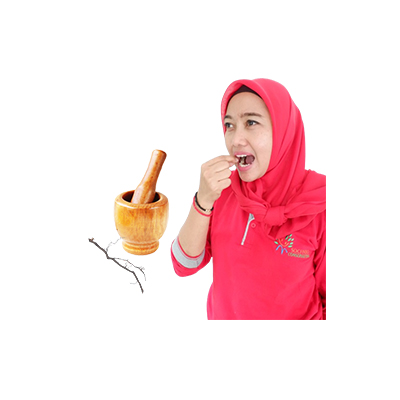
- Take an adequate amount of rukam manis root and wash until clean.
- Pound until fine.
- Apply to the cavity or aching tooth.
Reference Sources
- Royal Botanic Garden, Kew. Plants of the World Online. Flacourtia jangomas (Lour.) Raeusch.. Flacourtia jangomas (Lour.) Raeusch. | Plants of the World Online | Kew Science. 09-10-2023.
- Handayani, T. 2021. POTENSI DAN NUTRISI RUKAM MANIS (Flacourtia jangomas (Lour.) Raeush). Warta Kebun Raya 19 (2), November 2021.
- Rai, A., Mishra T. 2020. ETHNOMEDICINALAND THERAPEUTIC VALUES OF FLACOURTIA JANGOMAS. The Journal of Indian Botanical Society, Vol. 100 (3&4) 2020:42-52. DOI: 10.5958/2455-7218.2020.00037.6.
- Tropical Plants Database, Ken Fern. 2022. Flacourtia jangomas. Flacourtia jangomas - Useful Tropical Plants (theferns.info). 09-10-2023.