Foeniculum vulgare Mill.
Summary
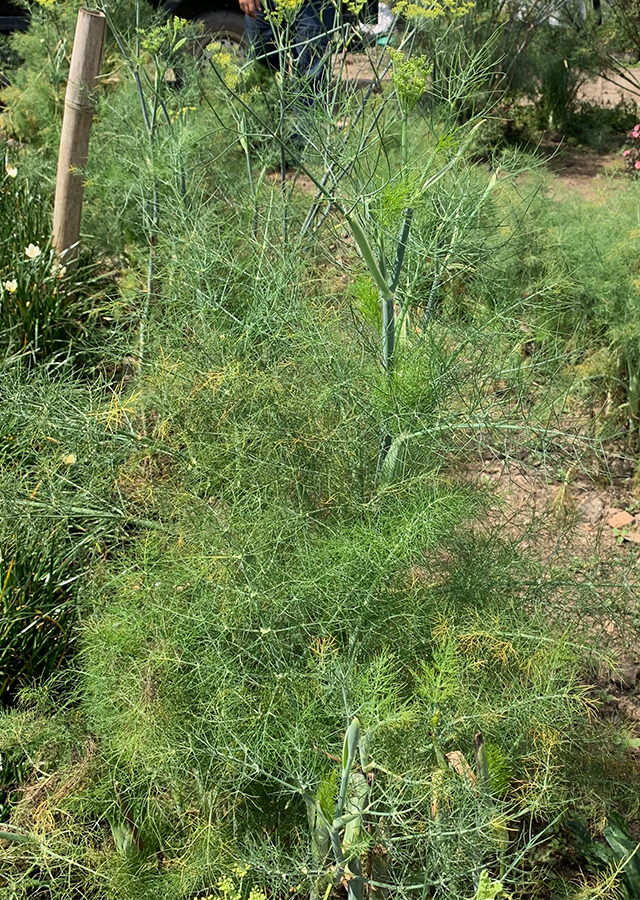
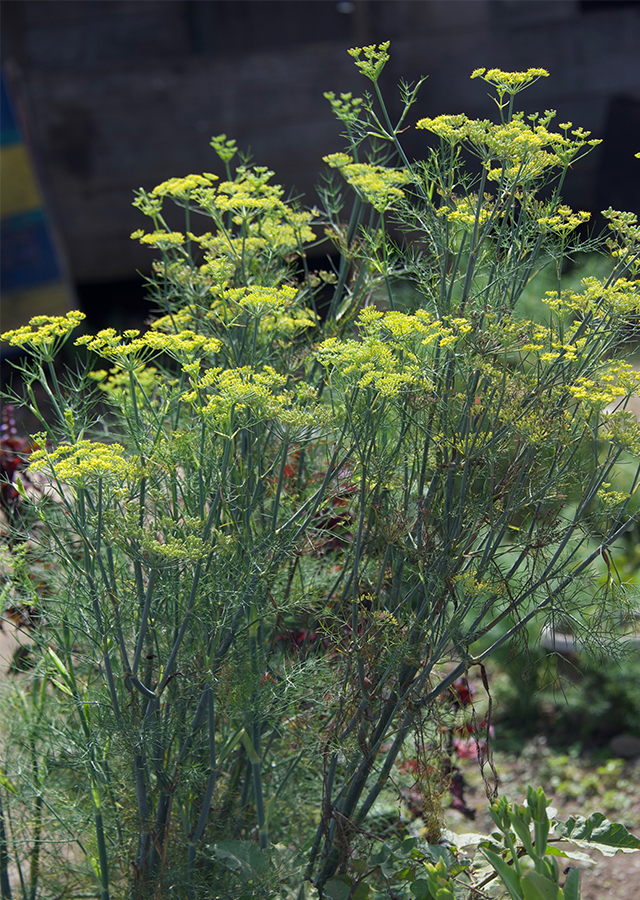
Fennel (Foeniculum vulgare) is a clump-forming herb of the Apiaceae family that grows 50-200 cm tall, originally native to the Mediterranean region and Southern Europe before being widely cultivated across the world. Its seeds are commonly used as a distinctively aromatic cooking spice and as an ingredient in traditional herbal remedies, while its essential oil is processed into soap, lotion, and perfume. Traditionally, fennel is believed to help relieve coughs, digestive complaints, and promote urination.
Agroecology
Grows from lowlands up to an elevation of 1,800 m above sea level in a cool climate, and is highly sensitive to salt. It favors moist clay soil with a soil pH of 6.3-8.3, average rainfall of 500-2,000 mm/year, and an annual temperature of 12-24 °C; it also grows well in sandy soil.
Morphology
- Stem pole-like with parallel grooves, heavily branched.
- Leaves open cylindrical in shape, 2-15 cm long.
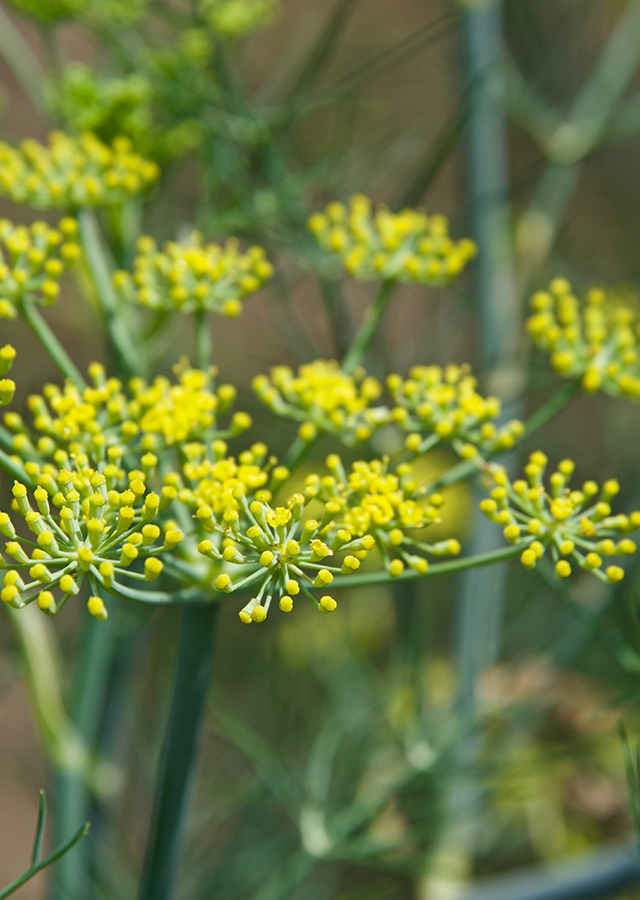
- Flowers compound with 6-40 flower stalks, yellow petals, emerging from the tip of the stem.
- Fruit oblong, ribbed, 6-10 mm long, 3-4 mm wide, green when young, turning greenish-brown or yellow to fully brown when mature.
Cultivation
- Propagated by seed or offshoots.
- Seeds can be planted directly or sown in a nursery first. Field spacing is 50 cm.
Chemical Content
Leaves: quercetin-3-glucuronide, limonene, kaempferol-3-glucuronide, phellandrene, nelumboside, pinene, funicularin. Seeds: flavonoids, terpenoids, alkaloids, phenols, sterols, estragole, gallic acid, L-limonene.
Benefits
Treats coughs, stomach ache, canker sores, insomnia, irregular menstruation; acts as a diuretic and laxative; treats albuminuria (elevated albumin protein levels in urine), stimulates appetite, and treats fungal infections.
Simplisia
- Take mature fennel seeds, wash thoroughly, and drain.
- Sun-dry the seeds for several days until completely dry, indicated by a moisture content of around 10%.
- Once dry, store the seeds in a sealed, airtight container.
Local Names
Adas pedas (Aceh), Hades (Sunda), Adas landa, Adas landi, Adas welanda (Java), Adhas (Madura), Papang, Pampas (Manado), Papas (Alfuru), Wala wunga (Sumba), Adasa rempasu (Makassar), Denggu-denggu (Gorontalo).
Traditional Recipes
The following recipes reflect traditional knowledge passed down through generations, not a substitute for professional medical diagnosis or advice. Consult a healthcare provider before use.
1. Phlegmy Cough
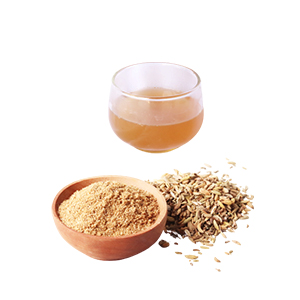
- Prepare 3-7 g fennel fruit. Wash thoroughly and drain. Grind the fennel into a powder.
- Steep in 1 cup of boiling water, let stand, then strain.
- Drink while still warm. Drink twice a day.
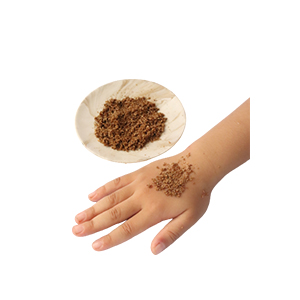
2. Treating Fungal Infections
- Select 10 g of dried fennel.
- Grind into a fine powder.
- Apply to the affected area of the skin.
Reference Sources
- Tropical Plants Database, Ken Fern. tropical.theferns.info. Foeniculum vulgare Mill. http://www.theplantlist.org/tpl1.1/record/kew-2813604 21-01-2021
- Keputusan Menteri Kesehatan Nomor HK.01.07/MENKES/187/2017. 2017. Formularium Ramuan Obat Tradisional Indonesia: Batuk Berdahak
- Utami P, P Desty E. 2013. The Miracle of Herbs: Mengobati Infeksi Jamur. AgroMedia Pusaka, Jakarta. https://books.google.co.id/books?id=7T1XAQAAQBAJ&printsec=frontcover&hl=id#v=onepage&q&f=false 28-05-2020
- Sirait Midian dkk. 1985. Cara Pembuatan Simplisia. Departemen Kesehatan Republik Indonesia. Jakarta 27.