Furcraea foetida (L.) Haw.
Summary
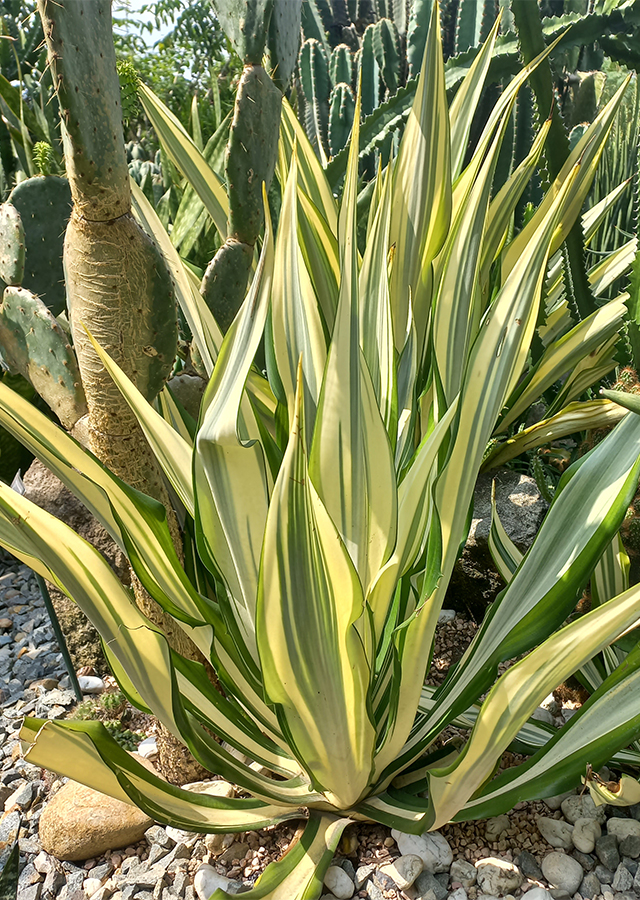
Wide-leaf agave (Furcraea foetida) is a succulent 1.5-2 meters tall from the Asparagaceae family native to tropical America, brought to Mauritius around 1790 to start a fiber industry in 1875. Its leaf fiber is processed into thread, rope, and sacks, while the plant is also used as a fish poison and natural fertilizer. Wide-leaf agave is traditionally used as a blood-purifying tonic and to treat rheumatism.
Agroecology
In Cape Verde, F. foetida grows in areas ranging from sea level to an elevation of 1,400 m asl, while in Malawi optimal growth occurs at elevations up to 900 m asl. F. foetida grows best in well-drained, medium to light soil, but can tolerate a wide variety of soil textures, including heavy clay, and can also grow on rocks, cliffs, and sometimes among trees. F. foetida grows in full sun as well as partial shade. This species is tolerant of drought and salt spray, and can withstand temperatures down to -4°C or even -7°C. Soil pH preference ranges from pH 5.5 to pH 8. It prefers a mean annual daytime temperature between 23°C-30°C. High temperatures and a semi-humid environment are needed for optimal growth. This species also prefers areas with mean annual rainfall in the range of 1,000-2,100 mm, but tolerates 700-2,500 mm.
Morphology
- Roots lateral roots, and many fine roots.
- Stem short and thick, producing a leaf rosette.
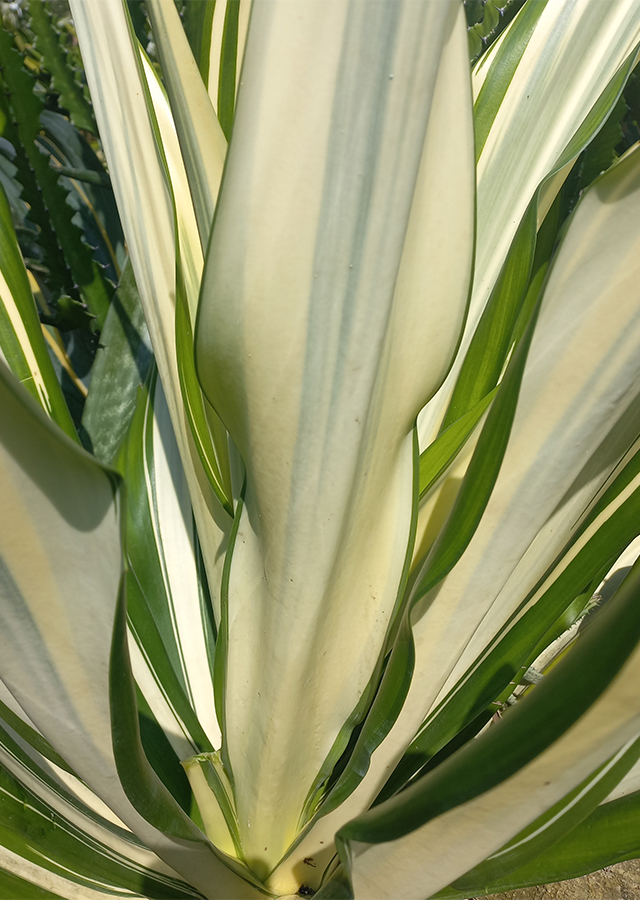
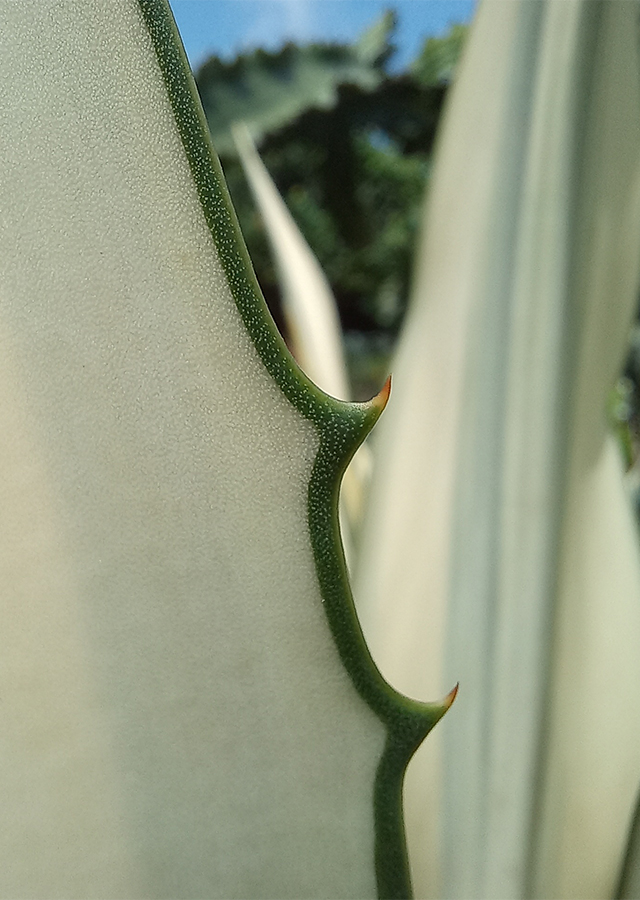
- Leaves bright green, stiff, wide, straight or curved like a sword, fleshy with parallel thread-like fibers, oblong to lanceolate, reaching 2-2.5 m long, 14-20 cm wide, with a few widely spaced marginal spines, especially toward the base, leaf tip ending in a reddish, flexible spine, veins parallel. The leaves contain an irritant substance in their sap.
- Flowers very fragrant, bisexual, pendulous, sepals white to greenish white or pale yellowish green, 6 perianth lobes. Stamens 6, filaments about 1 cm long, thickened at the base, anthers 4-5 mm long, ovary inferior, 3-locular. Contains bracteoles in the axils that produce bulbils after the flower falls. Inflorescence a terminal panicle 6-13 m long (including the flower stalk).
- Fruit an ellipsoid-trigonous capsule, with many seeds but rarely produced.
- Seeds flat, black.
Cultivation
Plant propagation through bulbils.
Chemical Content
Tannins, phenolic compounds, saponins (furcreastatin, hecogenin), flavonoids, and phytosterols.
Benefits
Treats rheumatism and paralysis, festering wounds, syphilis, back pain, adds shine to hair and prevents hair loss, addresses swelling and speeds wound healing, boils, addresses fever, a blood-purifying tonic, treats edema, colds in children. Has anti-inflammatory activity.
Simplisia
- Prepare an adequate amount of fresh wide-leaf agave leaves, wash clean with running water.
- Cut the leaves into pieces to make them easier to dry.
- Dry under the sun or with an oven at 40°C until the moisture content reaches 10%.
- Grind using a blender until it becomes powder.
- Store in a clean, airtight container.
Local Names
Nanas hias.
Traditional Recipes
The following recipes reflect traditional knowledge passed down through generations, not a substitute for professional medical diagnosis or advice. Consult a healthcare provider before use.
1. Boils
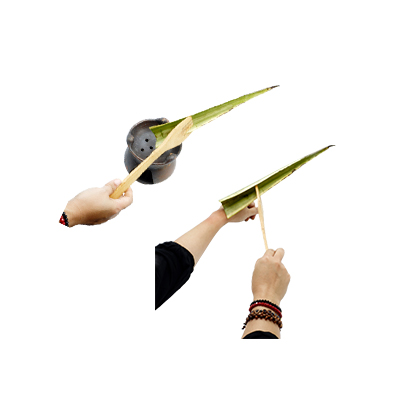
- Take an adequate amount of sap from wide-leaf agave leaves.
- Warm it by roasting.
- Apply the sap to the boil.
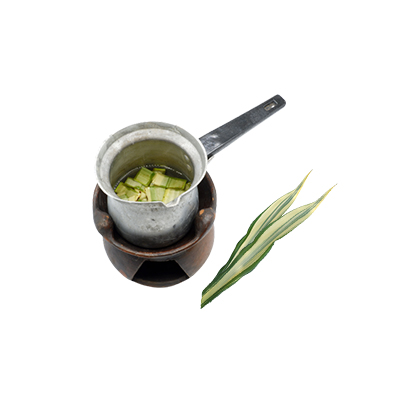
2. Rheumatism
- Take an adequate amount of fresh wide-leaf agave leaves and wash until clean.
- Boil the leaves until it boils.
- Let it cool to warm then wash the affected area with the boiled water.
Reference Sources
- CAB International. 2022. Invasive Species Compendium: Furcraea foetida (Mauritius hemp). https://www.cabi.org/isc/datasheet/114444#toPictures. 18-03-2022.
- Royal Botanic Gardens. Plants of thr World Online: Furcraea foetida (L.) Haw. https://powo.science.kew.org/taxon/urn:lsid:ipni.org:names:64429-1. 18-03-2022.
- Plant Resources of Tropical Africa. 2015. Furcraea foetida (PROTA). https://uses.plantnet-project.org/en/Furcraea_foetida_(PROTA). 18-03-2022.
- Tropical Plants Database, Ken Fern. 2021. Furcraea foetida. https://tropical.theferns.info/viewtropical.php?id=Furcraea+foetida. 18-03-2022.