Galphimia glauca Cav.
Summary
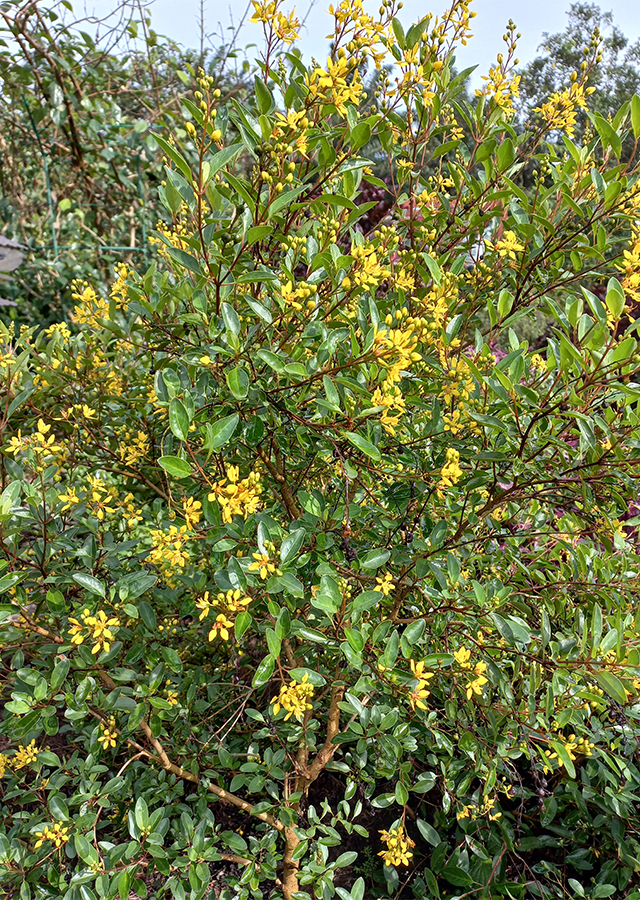
Hujan emas (Galphimia glauca) is a shrub 2-3 meters tall of the Malpighiaceae family, native to Mexico and Central America, now naturalized in Florida, Cuba, and Peru. Its clustered bright yellow flowers make it a popular tropical ornamental. In Latin American traditional medicine, hujan emas is used to address asthma and allergies, while in Mexico it is used as a sedative.
Agroecology
Hujan emas grows in dry and moist habitats, requiring full sunlight, at elevations from 700-2,300 m above sea level. This plant prefers well-drained soil with a pH of 5.6 to 7.5, namely dry sandy soil. Average annual temperature 17-28ºC, average annual rainfall 700-2,500 mm/year.
Morphology
- Stem round-shaped, upright, blackish-brown in color, with sympodial branching. Young stems usually reddish in color.
- Leaves single, opposite, 2-5.6 cm long, 1.3-3.5 cm wide, elliptical to lance-shaped or ovate shape, apiculate tip (lemon-like), tapering base, smooth flat edges, petiole 0.4-1.5 cm long, rarely hairy, light green in color.
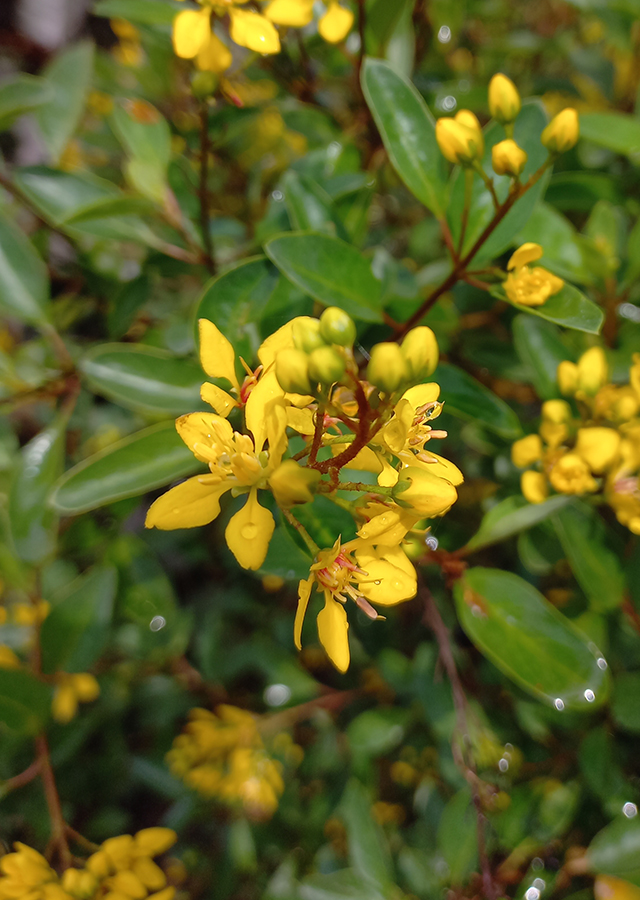
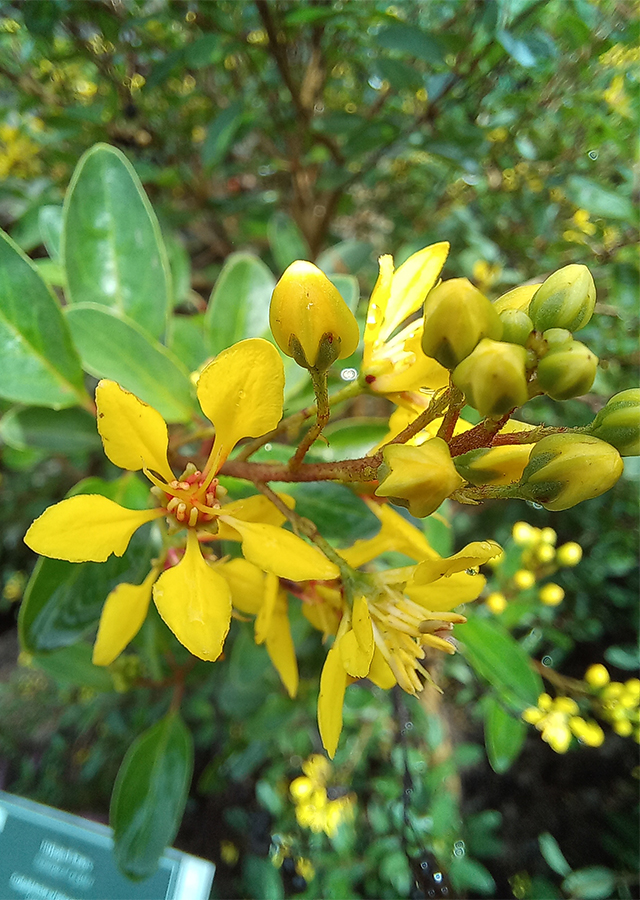
- Flowers in a raceme emerging at the stem tip, small at 1.5 cm, in a raceme there are 4-6 flowers, yellow in color, fragrant aroma.
- Fruit inconspicuous oblong green, about 1-1.5 cm in size.
Cultivation
The hujan emas plant reproduces generatively using seed and vegetatively with stem cuttings.
Chemical Content
Phenolic, flavonoid, galphimine B, triterpenoid.
Benefits
Treats asthma and allergies, sedative for mental disorders and anxiety.
Local Names
No information found. Further research needed.
Traditional Recipes
The following recipes reflect traditional knowledge passed down through generations, not a substitute for professional medical diagnosis or advice. Consult a healthcare provider before use.
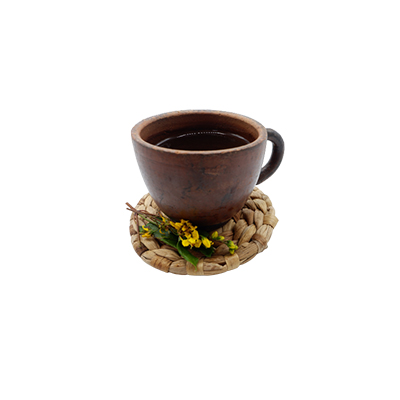
1. Sedative
- Take hujan emas plant leaves and stems as needed.
- Wash the material with running water until clean.
- Boil until boiling.
- Strain the decoction.
- Drink while warm.
Reference Sources
- Stuartxchange. 2015. Philippine Medicinal Plants: Kuisia. http://www.stuartxchange.org/Kuisia.html. 08-09-2021.
- CAB International. 2017. Galphimia glauca (goldshower). https://www.cabi.org/isc/datasheet/119814. 08-09-2021.
- Flora Fauna Web. 2021. Galphimia glauca. https://www.nparks.gov.sg/florafaunaweb/flora/2/0/2024. 08-09-2021.
- Royal Botanic Gardens. 2017. Plants of the World Online: Galphimia glauca Cav. http://www.plantsoftheworldonline.org/taxon/urn:lsid:ipni.org:names:556347-1. 08-09-2021.