Ganoderma lucidum (Curtis) P.Karst.
Summary
Lingzhi mushroom (Ganoderma lucidum) is a saprophytic fungus with a cap width of 5-35 cm of the Ganodermataceae family, first discovered by Chinese farmer Shen Nong, once consumed only by nobility and kings of the Han Dynasty. In Indonesia, this prized medicinal mushroom is found in Sumatra, Java, and Bali. Lingzhi is traditionally believed to boost immunity and lower cholesterol and blood fat levels.
Agroecology
Lingzhi mushroom grows wild in forests on trunks or hard wood (dead or living), which can develop well from lowlands (200 m above sea level) to highlands (700 m above sea level), with an optimal point of 400-600 m above sea level. Prefers environmental conditions with average rainfall of 2,000-2,500 mm/year, light intensity of 5-7 hours/day, daily temperature of 25-30°C, and air humidity of 80-95%.
Morphology
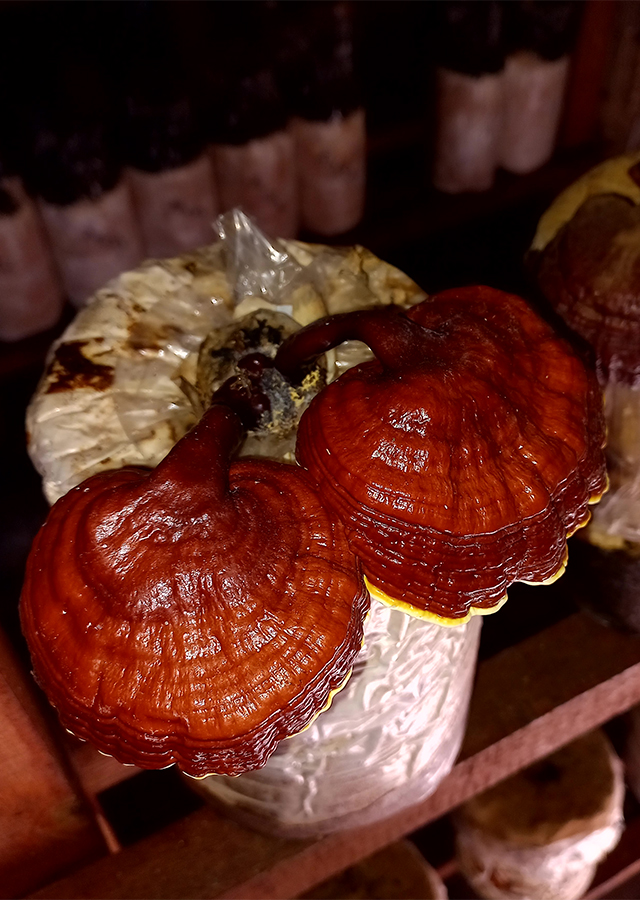
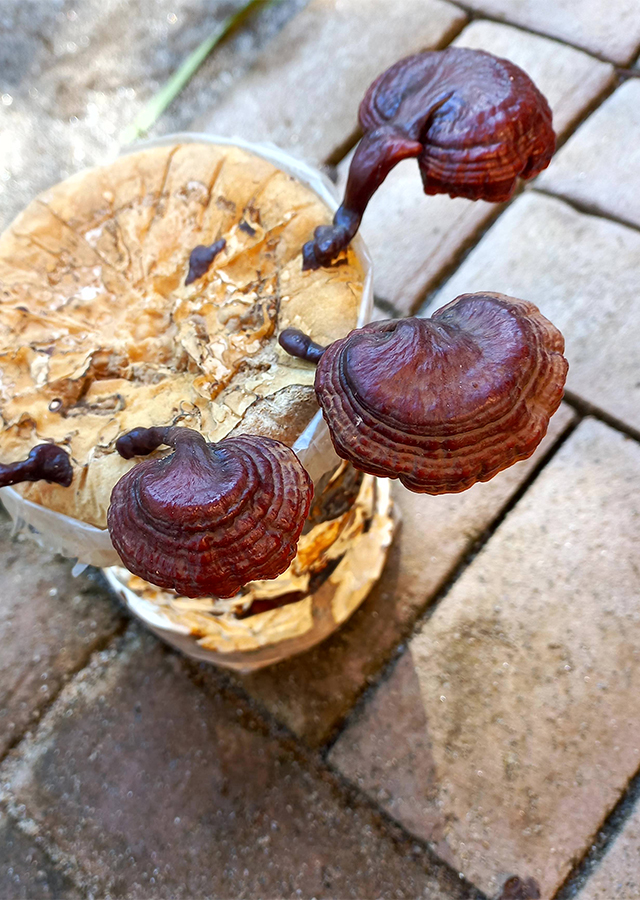
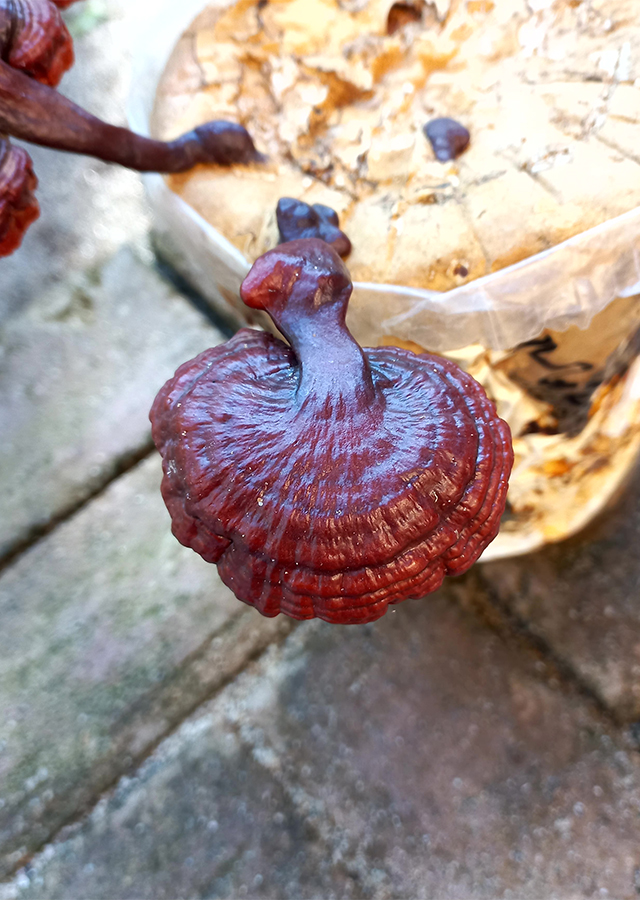
- Cap semicircular fan-shaped or kidney-shaped, lacquer-coated, glossy, thick, hard, wavy or lobed edges, dark red to reddish-brown or reddish-black color and the underside white or brownish-cream, has pores. There are circular lines that mark the boundary of growth periods.
- Stalk long, dark brown, hard.
- Basidiospore elliptical, truncate, long and thick.
Cultivation
- Propagated using spores (located on the underside of the cap). Spore collection comes from mature mushrooms.
- Propagated using fruiting body tissue namely by isolating fruiting body parts into agar media.
- Harvest is done once the entire cap surface has turned completely red.
Chemical Content
Polysaccharide (polysaccharide peptide), adenosine, triterpene, phenol, amino acids, steroid, nucleotide, ergosterol, coumarin, ganodespurine alkaloid, ganoderiol A, ganoderiol B, ganosporelactone A, ganosporelactone B, ganodermatriol, ganolactone, ganoderic acid.
Benefits
Treats insomnia, hypertension (high blood pressure), stomach (gastritis), boosts appetite, lowers cholesterol and blood fat levels, stabilizes red blood cell membranes, hepatitis, cough, asthma, bronchitis, joint rheumatism (rheumatic arthritis), prevents tumors, boosts immunity, has aphrodisiac and anti-inflammatory properties.
Local Names
Supa sinduk (Sunda).
Traditional Recipes
The following recipes reflect traditional knowledge passed down through generations, not a substitute for professional medical diagnosis or advice. Consult a healthcare provider before use.
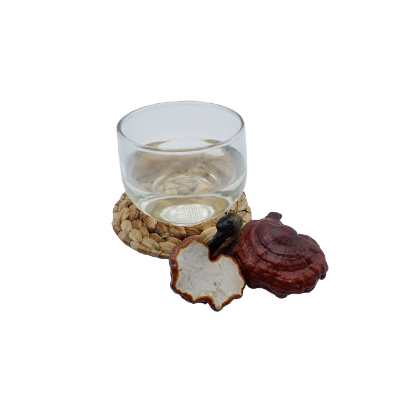
1. Insomnia
- Wash 3-10 g lingzhi mushroom thoroughly with running water.
- Boil the mushroom until boiling.
- Strain the decoction.
- Drink.
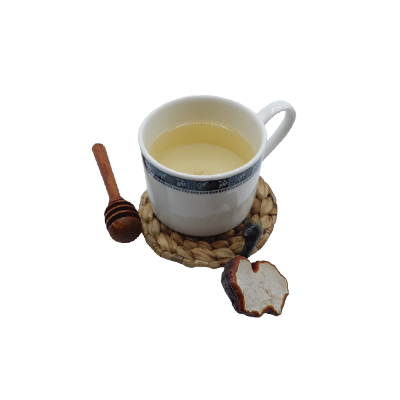
2. Boosting immunity
- Prepare 15 g lingzhi mushroom, wash thoroughly.
- Boil with 4 glasses of water until reduced to 2 glasses.
- Strain the decoction.
- Add 1 tbsp honey.
- Drink twice a day, 1 glass each time.
Reference Sources
- Risna R.A. 2004. Lingzhi (Ganoderma lucidum): Primadona Jamur Kayu Berkhasiat Obat. Warta Kebun Raya.
- Surahmaida, Sudarwati TPL. 2018. Potensi dan Senyawa Aktif Ganoderma lucidum Sebagai Biopestisida Nabati. GRANITI.
- Rasjidi I, Susanto C. 2015. Ganoderma lucidum Polysaccharide Peptide (GLPP) for the Cancer Treatment. Indonesian Journal of Clinical Pharmacy 4(2):120-128.
- Rudra S et al. 2020. Evaluation of Various Solvent Extracts of Tetrastigma leucostaphylum (Dennst.) Alston Leaves, a Bangladeshi Traditional Medicine Used for the Treatment of Diarrhea. Molecules.
- CAB International. 2021. Ganoderma lucidum. https://www.cabi.org/isc/datasheet/24926. 03-09-2021.