Garcinia mangostana L.
Summary
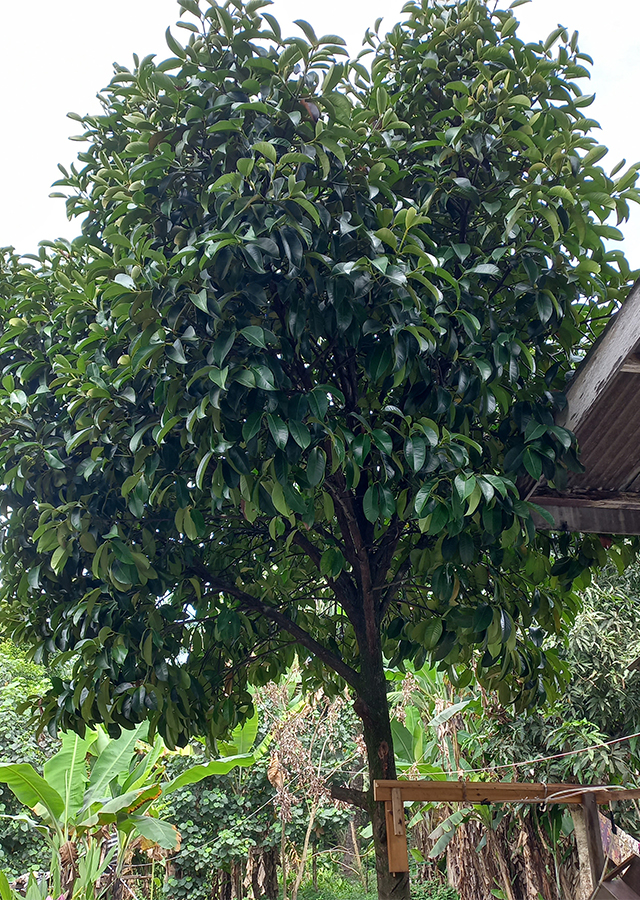
Manggis (Garcinia mangostana) is a tree up to 25 meters tall from the Clusiaceae family, a plant characteristic of Southeast Asia spread from Southern Thailand to the Philippines, nicknamed the 'Queen of the Fruit'. Its fruit peel is rich in xanthone compounds proven antibacterial, anti-inflammatory, and antifungal, now widely produced as instant powder. Manggis is traditionally used to treat diarrhea, dysentery, and reduce fever in various Asian countries.
Agroecology
Mangosteen is usually found growing in evergreen forests at elevations up to 1,500 m asl. Its growth requires a position in full sun and shade. Shade is needed in the early growth phase (young plants) with fertile, well-drained soil conditions, soil acidity (pH) in the range of 5-6, but tolerating pH 4.3-7.5 and not tolerant of drought. Grows best in areas where annual daytime temperatures are in the range of 20-30 °C, growth will slow at temperatures below 20 °C and the upper limit is 38-40 °C, average annual rainfall in the range of 1,600-2,000 mm, but tolerating 1,100-2,800 mm, with high humidity, a short dry season to stimulate flowering and an uninterrupted water supply.
Morphology
- Roots a taproot, branching that penetrates the soil, brown, and dull white.
- Stem upright, straight, bark brown, with yellow sap.
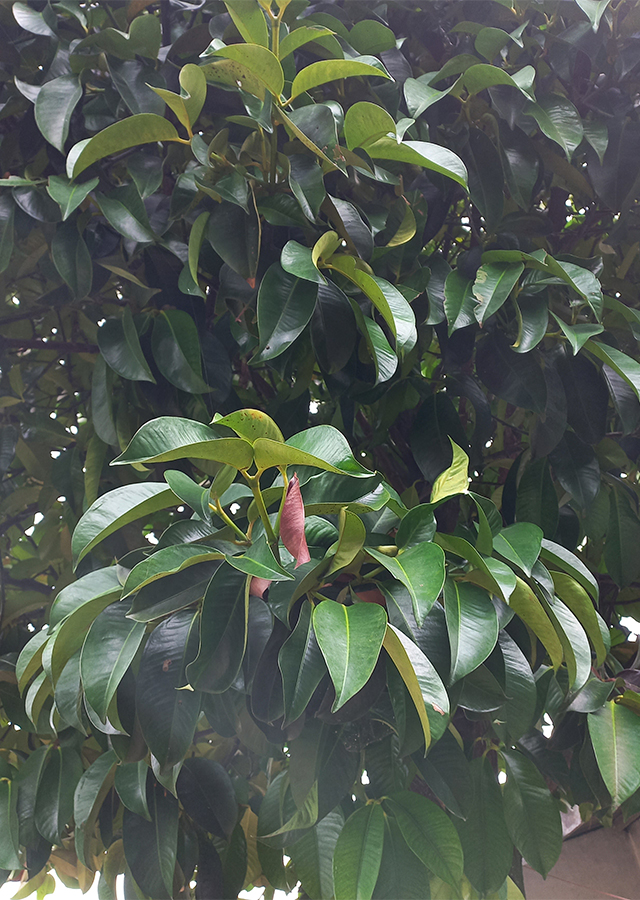
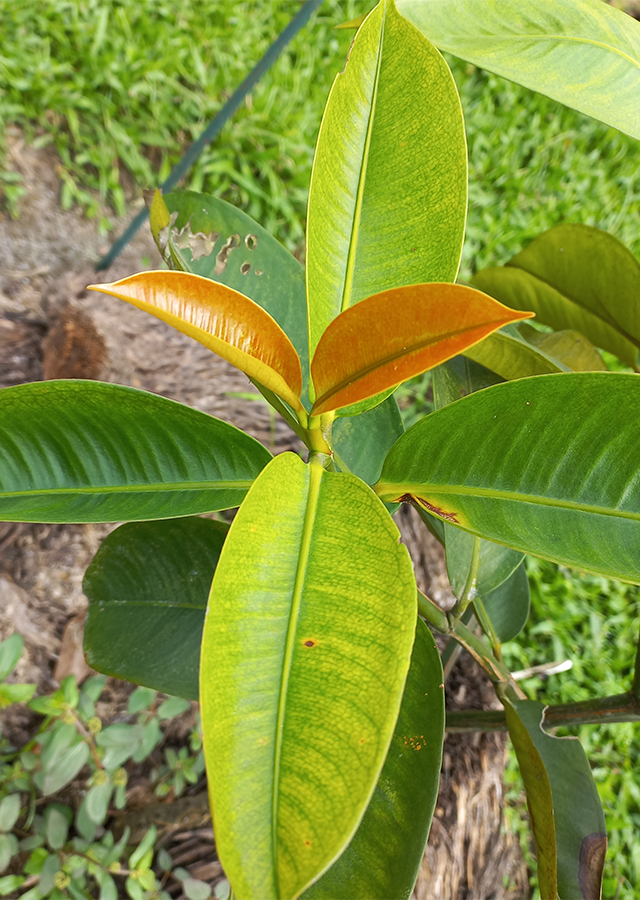
- Leaves single, opposite or decussate arrangement, tapering leaf base, smooth margin, thick, upper surface dark green, glossy while the lower surface is bright green, young leaves reddish, elongated elliptical shape, branch veins pinnate and nearly parallel.
- Flowers female numbering 1-3 at the stem tip, forked arrangement, diameter 5-6 cm. Calyx segments numbering 4, arranged in 2 pairs, namely two outermost sepals yellowish-green, 2 innermost ones smaller. Petals numbering 4, thick, and fleshy with reddish margins, strongly curved, blunt. Inflorescence white to reddish-white, growing singly or in pairs, male and female flowers produced on the same tree.
- Fruit round and smooth, reddish or purplish-red when ripe, crowned by a thick, persistent calyx. Fruit skin thick and fibrous, flesh juicy and sweet with a slightly sour taste, with 5-8 internal cavities, containing seeds wrapped in flesh, fruit flesh in segment or wedge shape.
- Seeds found in the fruit cavity, round and somewhat flattened, and are dicotyledonous seeds.
Cultivation
- Propagation is done generatively (seeds) or vegetatively (layering and grafting).
- After the plant is 2-3 years old, it can be planted in the field. The commonly used planting spacing is 6 x 6 m.
Chemical Content
Root contains saponins, triterpenoids, resin, mangostin, flavonoids, and polyphenols. Bark contains saponins, triterpenoids, resin, mangostin, flavonoids, and polyphenols. Leaves contain saponins, triterpenoids, resin, and mangostin. Fruit contains triterpenoids, mangostin, mangostin derivatives (mangostin-e, 6-di-O-glucoside), resin, xanthone, gartanin, 8-desoxygartanin, and normangostin. Fruit peel contains triterpenoids, saponins, tannins, resin, mangostin, thiamine, riboflavin, niacin, sap, tanning substances. Sap contains resin and mangostin.
Benefits
Treats diarrhea, dysentery, tonsillitis, vaginal discharge, hemorrhoids, ulcers, expectorant, toothache, canker sores, vein pain, constipation, stomach ache, eczema and other skin disorders, circumcision wounds, fever-reducing remedy, addresses irregular menstruation, urinary tract disorders, lowers cholesterol levels, inhibits cancer cell growth, controls blood sugar, strengthens immunity, astringent remedy, has antioxidant, anti-inflammatory, antibacterial, antifungal, and antiviral activity.
Simplisia
- Prepare mangosteen fruit peel, wash clean with running water.
- Cut into pieces to make drying easier.
- Dry under sunlight or with an oven at 40 °C until moisture content reaches around 10%.
- Blend into powder.
- Store in a clean, airtight place.
Local Names
Manggoita, Kusteu, Mangi, Manggi (Aceh), Manggisto, Manggus, Manggusta (Karo Batak), Magi (Nias), Lokopa, Malakopa (Mentawai), Manggista (West Sumatra), Manggih (Minangkabau), Manggus, Manggos (Lampung), Sungkup (Dayak), Manggos (Kubu), Manggu (Sunda), Mangghis (Madura), Manggista, Manggusta (Bali), Manggustang (Gamir), Manggustan, Bagustan, Manggastan (North Sulawesi), Kirasa, Mangisi, Mangkosota (Makassar), Manggisi (Bugis), Manis, Makis (Roti), Basitangi, Basitang, Bahutanga, Busutang (Halmahera), Magustang (Ternate, Tidore).
Traditional Recipes
The following recipes reflect traditional knowledge passed down through generations, not a substitute for professional medical diagnosis or advice. Consult a healthcare provider before use.
1. Fever
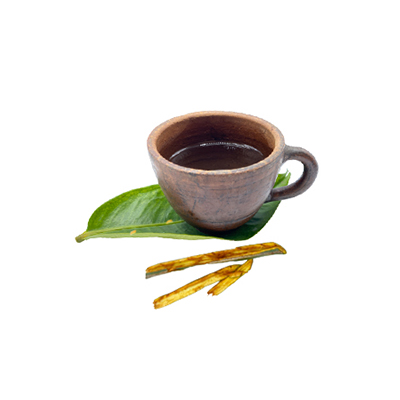
- Prepare mangosteen leaves and bark as needed and wash until clean.
- Boil until boiling.
- Strain the decoction.
- Drink while warm.
Reference Sources
- Royal Botanic Gardens. 2021. Plants of the World Online: Garcinia mangostana L. http://powo.science.kew.org/taxon/428073-1. 27-09-2021.
- IPBIOTICS. 2014. View TumbuhanObat #Garcinia mangostana L. http://ipbiotics.apps.cs.ipb.ac.id/index.php/tumbuhanObat/139. 27-09-2021.
- PROSEA. 2019. Garcinia mangostana (PROSEA). https://uses.plantnet-project.org/en/Garcinia_mangostana_(PROSEA). 27-09-2021.
- Flora Fauna Web. 2019. Garcinia mangostana. https://www.nparks.gov.sg/florafaunaweb/flora/2/9/2927. 27-09-2021.
- Useful Tropical Plants Database. 2021. Garcinia mangostana. http://tropical.theferns.info/viewtropical.php?id=Garcinia+mangostana. 27-09-2021.
- Badan Penelitian dan Pengembangan Pertanian. 2014. Beragam Manfaat Kesehatan dari Bubuk Kulit Manggis. https://www.litbang.pertanian.go.id/info-aktual/1795/. 27-09-2021.
- Alodokter. 2021. Inilah 5 Manfaat Kulit Manggis dan Cara Mengonsumsinya. https://www.alodokter.com/klaim-manfaat-kulit-manggis-dan-kebenarannya. 27-09-2021.