Gliricidia sepium (Jacq.) Kunth
Summary
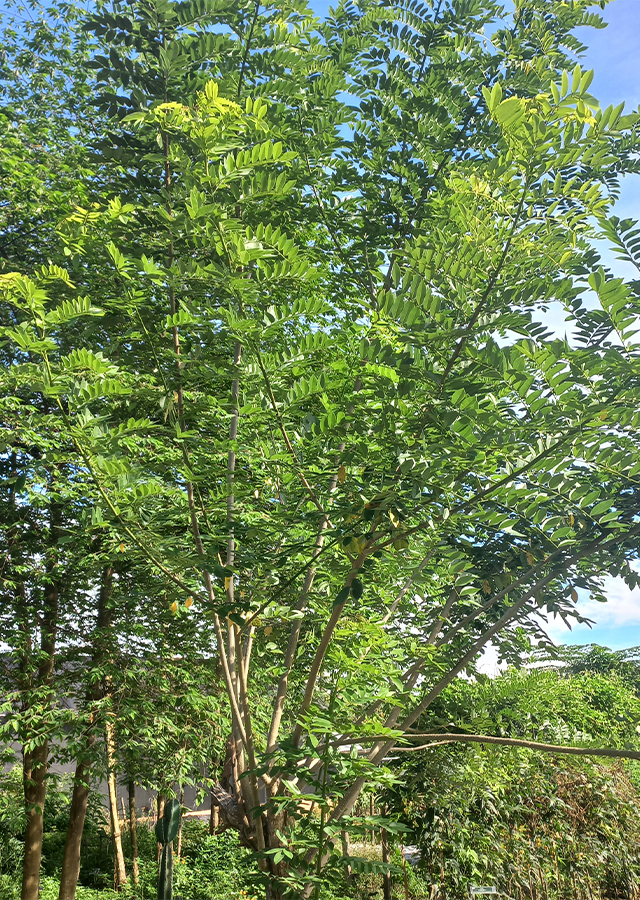
Gamal (Gliricidia sepium) is a shrub or small tree 2-15 meters tall of the Fabaceae family, native to Central America, now distributed across nearly the entire Indonesian archipelago. This multipurpose tree is used as plantation shade, green manure, livestock feed, and charcoal material, while its flowers can be eaten as a vegetable. The Guatemalan community traditionally uses gamal's bark and leaves to treat skin diseases.
Agroecology
This plant can grow well in humid to dry climate regions and is commonly found along roadsides, riverbanks, floodplains, fields, gardens, yards as a hedge plant and open places, at elevations of 1-2,000 m above sea level. This species can grow well in various soil types in areas with annual daytime temperatures in the range of 15-30°C, but can tolerate 12-44°C, average annual rainfall in the range of 1,200-2,300 mm, but tolerating 600-3,500 mm, soil acidity degree (pH) in the range of 5.5-6.2, but tolerant at 4.5-8.
Morphology
- Root a taproot, many fibrous roots, whitish-brown.
- Stem upright, round, crusty, woody, grayish-brown in color, easily cracked, somewhat rough surface, small cracks, sparse lenticels.
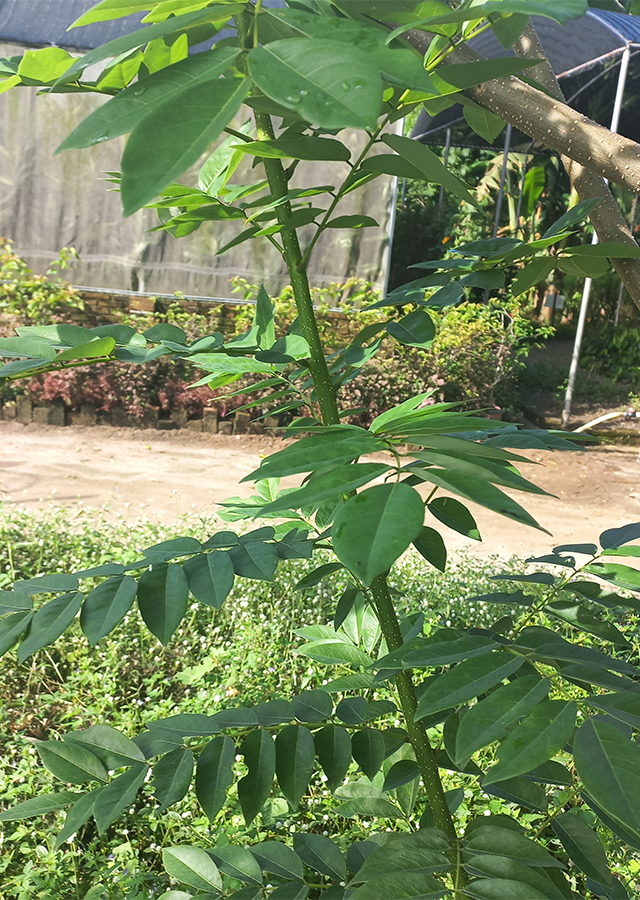
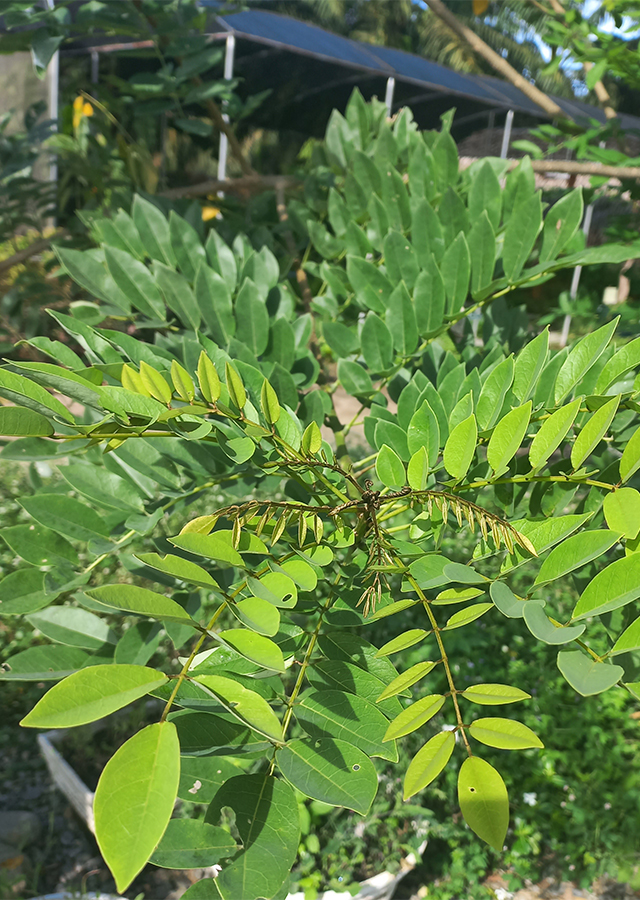
- Leaves compound, imparipinnate (odd-pinnate), alternate leaf position, consisting of about 13-21 leaflets, leaf blade elliptical to oblong shaped, base blunt to rounded, tip tapering, edges flat, dark green on the upper surface, and light green on the underside, hairless. Has a petiole 8-12 cm, cylindrical, hairless, thickened at the base, light green.
- Flowers pink in color and tend to fade to pale purple with age with pale yellow color in the center. Inflorescence compound, cluster-shaped, bisexual, emerging from leaf axils. Stamens yellow, pistil white.
- Fruit a pod type, flat, 10-11.5 cm long, containing 3-19 seeds, green in color.
- Seeds ellipsoid shaped, small, glossy, brown to black in color.
Cultivation
- Propagated vegetatively (stem/branch cuttings) as well as generatively (seed).
- Propagation using cuttings is done by choosing a stem or branch that is neither too old nor too young, from a parent tree not affected by disease, with a diameter of 1.5-2 cm, length 15-30 cm, then cut at an angle and immediately planted in planting media.
Chemical Content
Formosin, formononetin, gliricidin-6a-gliricidol-9a, medicarpin (pterocarpan), 7,4'-dihydroxy-3'-methoxyisoflavin, 2'O-methylsepiol, tannin, trihydroxyflavone, stigmastanol glucoside, 3'4-dihydroxy-trans-cinnamic acid octacosyl ester 2, methyl 3(E)-pentenyl ether, 3-methyl-2-butanol, 3-methoxy hexane, 1-(1-ethoxyethoxy)-2-hexene, 2-decanol, coumarin, hexadecanoic acid, essential oil (pentadecanal, (Z)-phytol, methyl linolenate, nonanal, myrtenol, nerolidol).
Benefits
Hair nourishing remedy, skin smoother, addresses eczema, scabies, itching, prickly heat, boils, treats wounds and burns, bruises, colds, cough, colds, fatigue, fever, sprains, broken bones, headache, rheumatism, skin tumors, urticaria (skin disease like hives), skin application to repel insects, fights bacterial and protozoal infections.
Local Names
Sliridia, Liriksidia, Sirida (Java), Cebreng (Sunda).
Traditional Recipes
The following recipes reflect traditional knowledge passed down through generations, not a substitute for professional medical diagnosis or advice. Consult a healthcare provider before use.
1. Rheumatism
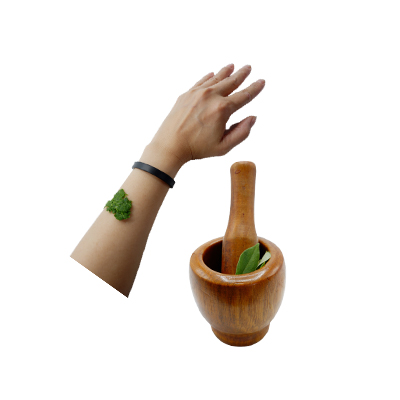
- Take leaves as needed then wash thoroughly.
- Grind the leaves into a paste.
- Apply as a poultice for rheumatic pain.
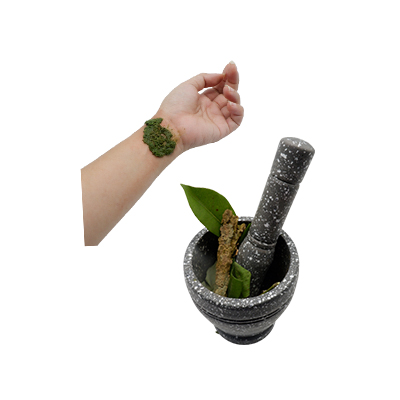
2. Itching and wounds
- Prepare gamal leaves, bark and root as needed.
- Wash all ingredients thoroughly.
- Grind all ingredients until fine.
- Apply to itchy and wounded skin.
Reference Sources
- CAB International. 2021. Invasive Species Compendium: Gliricidia sepium (gliricidia). https://www.cabi.org/isc/datasheet/25380#toPictures. 12-09-2021.
- Flora Fauna Web. 2019. Gliricidia sepium. https://www.nparks.gov.sg/FloraFaunaWeb/Flora/2/9/2935. 12-09-2021.
- Useful Tropical Plants Database. 2021. Gliricidia sepium. https://tropical.theferns.info/viewtropical.php?id=Gliricidia+sepium. 12-09-2021.
- Stuartxchange. 2018. Philippine Medicinal Plants: Kakawate. http://www.stuartxchange.org/Kakawati.html. 12-09-2021.
- Royal Botanical Garden. 2021. Plants of the World Online: Gliricidia sepium (Jacq.) Kunth. http://www.plantsoftheworldonline.org/taxon/urn:lsid:ipni.org:names:496639-1. 12-09-2021.