Globba campsophylla K.Schum.
Summary
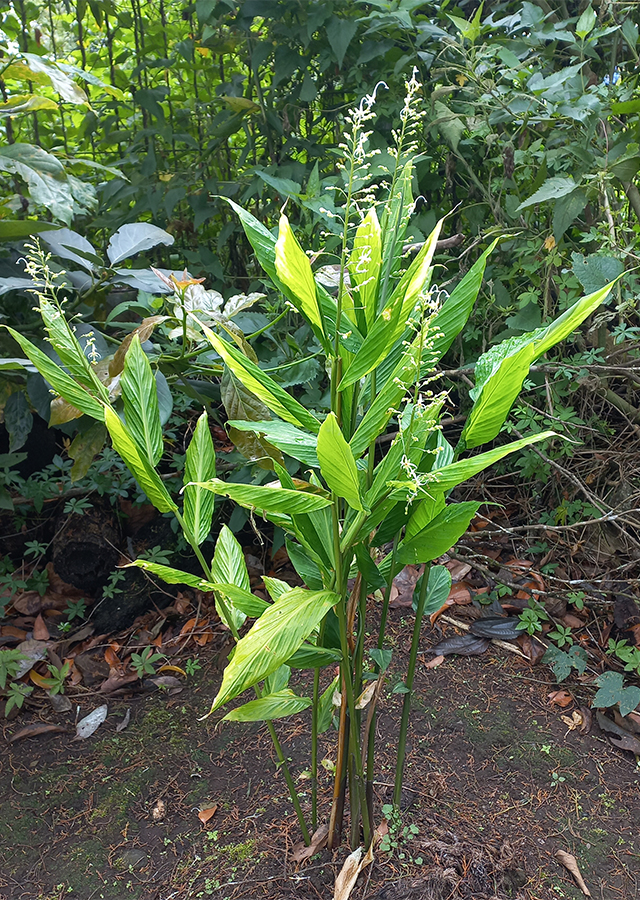
Globba campsophylla or luya-luyahan is a plant endemic to the Philippines from the Zingiberaceae family that grows in small clumps. Local communities traditionally use it to relieve fever, cough, and colds, while its unique flower shape also makes it favored as an ornamental.
Agroecology
The habitat of G. campsophylla is terrestrial in shaded dipterocarp forest areas with a moist environment. It is an understory plant along with grasses and Araceae species. This species is also mostly found growing near rivers at elevations between 1,300 to 1,400 m asl.
Morphology
- Rhizome short, creeping, fleshy and tufted with fleshy roots up to 1-2 cm in diameter.
- Stem with 3-4 leafy stems.
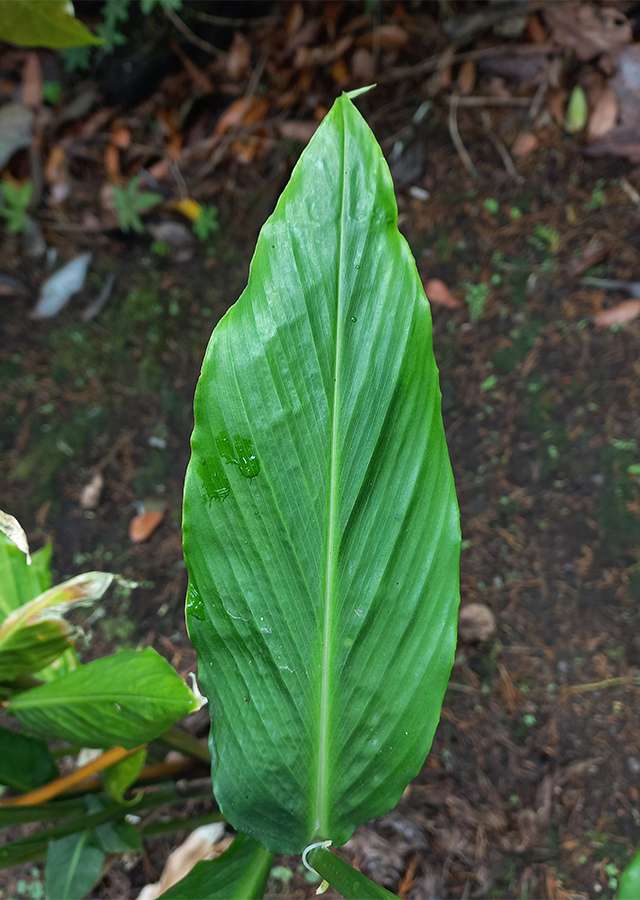
- Leaves lanceolate becoming elliptic to ovate, hairless, sessile, 23-30 cm long, 5-7 cm wide. Tip acuminate to cuspidate, base rounded, adaxial surface light green to dark green, abaxial surface whitish, margin entire. Leaf sheath green toward the tip and reddish to maroon toward the leaf base.
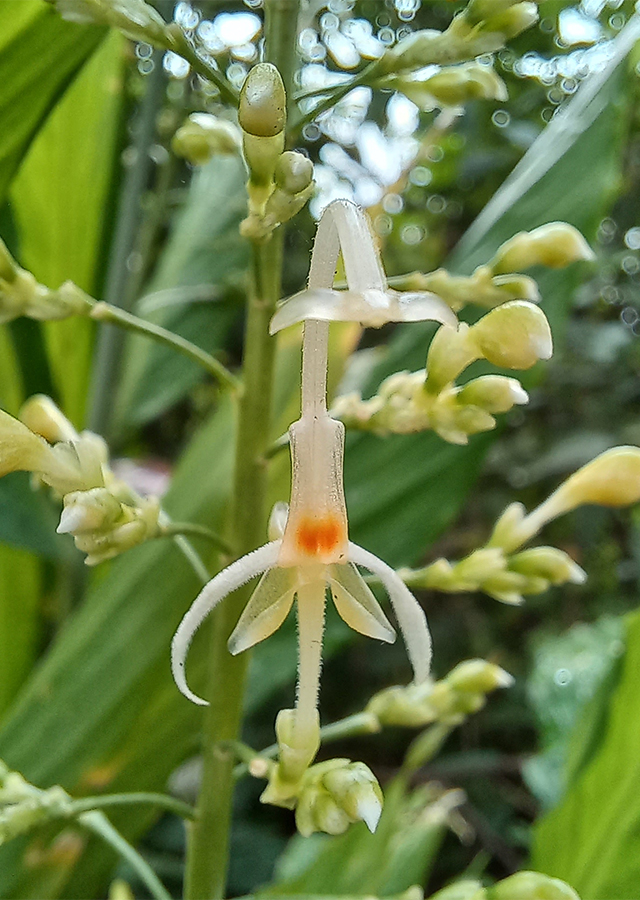
- Flowers have a triangular, 2-lobed labellum. Bracts and bracteoles white, caducous (falling off). Calyx white becoming bright green, tubular, 3-toothed at the tip. Filament long, curved, labellum white striped with yellow, partially fused with the tubular flower, with lateral staminodes attached below. Stamen slender with cream-yellow anthers and no spur. Ovary round, ovoid, smooth. Has a terminal inflorescence.
- Fruit a capsule, round to oblong shaped, grooved, greenish, surface smooth, about 1-1.3 cm long.
Cultivation
Propagation is vegetative through rhizome.
Chemical Content
Information not found. Further research is needed.
Benefits
Cures fever, cough, and colds.
Local Names
Informasi tidak ditemukan. Butuh penelusuran lebih lanjut.
Traditional Recipes
The following recipes reflect traditional knowledge passed down through generations, not a substitute for professional medical diagnosis or advice. Consult a healthcare provider before use.
1. Fever
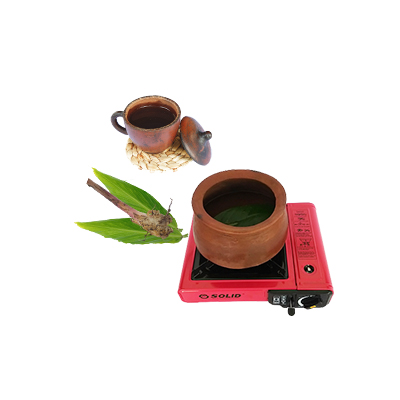
- Take an adequate amount of luya-luyahan rhizome and small leaves and wash until clean.
- Boil until it boils.
- Let it cool to warm/cold.
- Strain then drink.
Reference Sources
- Royal Botanic Gardens, Kew. Plants of the World Online: Globba campsophylla K.Schum. https://powo.science.kew.org/taxon/urn:lsid:ipni.org:names:796712-1. 19-07-2022.
- Acma F.M., Mendez N.P. 2018. Noteworthy records of Philippine endemic gingers (Zingiberaceae) in the buffer zone of Mt. Hamiguitan Range Wildlife Sanctuary, Davao Oriental, Philippines. Environmental and Experimental Biology, 16: 111–115. https://doi.org/10.22364/eeb.16.10.
- Naïve M.A.K. 2017. Zingiberaceae of Kalatungan Mountain Range, Bukidnon, Philippines. Bioscience Discovery, 8(3): 311-319.