Glycine max (L.) Merr.
Summary
Edamame (Glycine max) is an upright annual herb 30 to more than 50 cm tall from the Fabaceae family thought to originate from Japan, harvested while its pods are still young and green. In Indonesia, edamame has been developed since 1995 and began being marketed in supermarkets. Edamame is rich in protein and antioxidants, believed to help prevent diabetes and maintain heart health.
Agroecology
Edamame is more suited to growing in medium to high elevations. Grows best in areas where the mean annual daytime temperature is in the range of 20-32°C, but can tolerate 10-38°C, and mean annual rainfall in the range of 600-1,500 mm, but tolerates 450-1,800 mm. Its growth requires a sunny location, in fertile, well-drained soil with good irrigation and neutral soil acidity (pH in the range of 5.5-6.5, but can tolerate 4.3-8.4).
Morphology
- Roots a taproot, which branches to form secondary roots.
- Stem branched, brownish or grayish, puberulent.
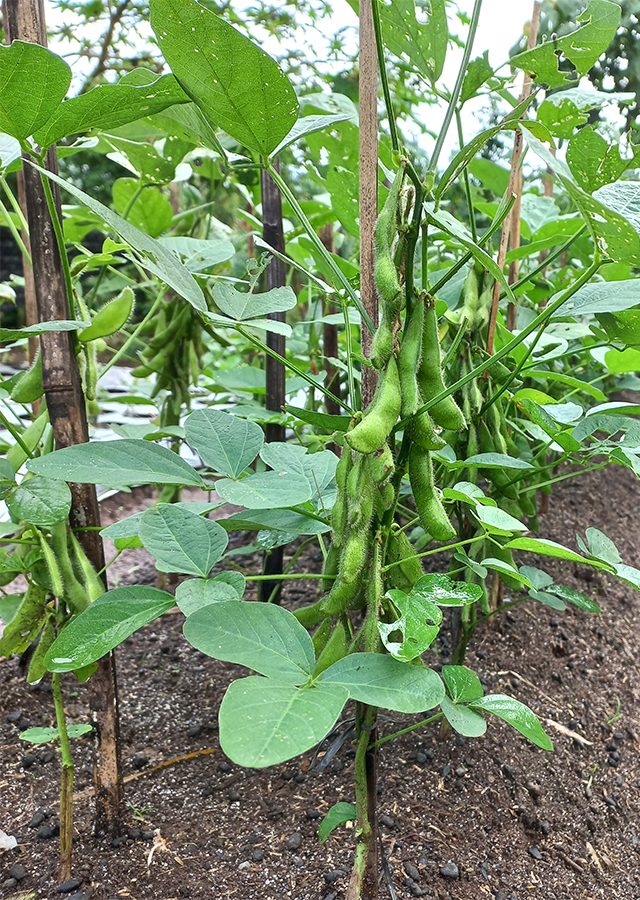
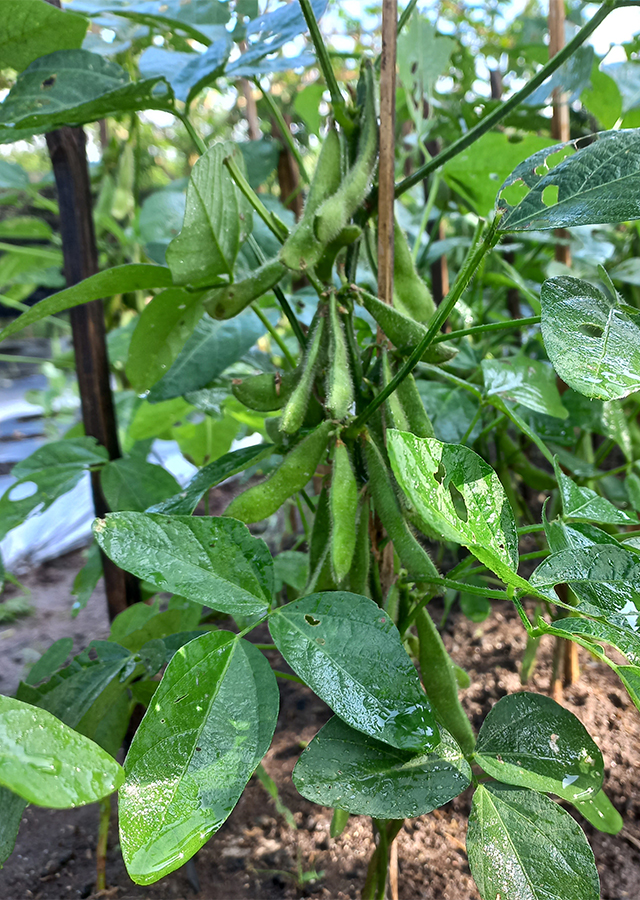
- Leaves compound, consisting of three leaflets (trifoliolate), where the first leaf emerging from the node above the cotyledon is a single leaf positioned oppositely, and the leaves formed afterward are trifoliolate leaves. Generally light green or yellowish green in color. Leaf shape ovate-deltoid.
- Flowers perfect, i.e. having stamens and pistils in one flower. Butterfly-like in shape, white or purple. The number of flowers per leaf axil varies between 2-25 flowers.
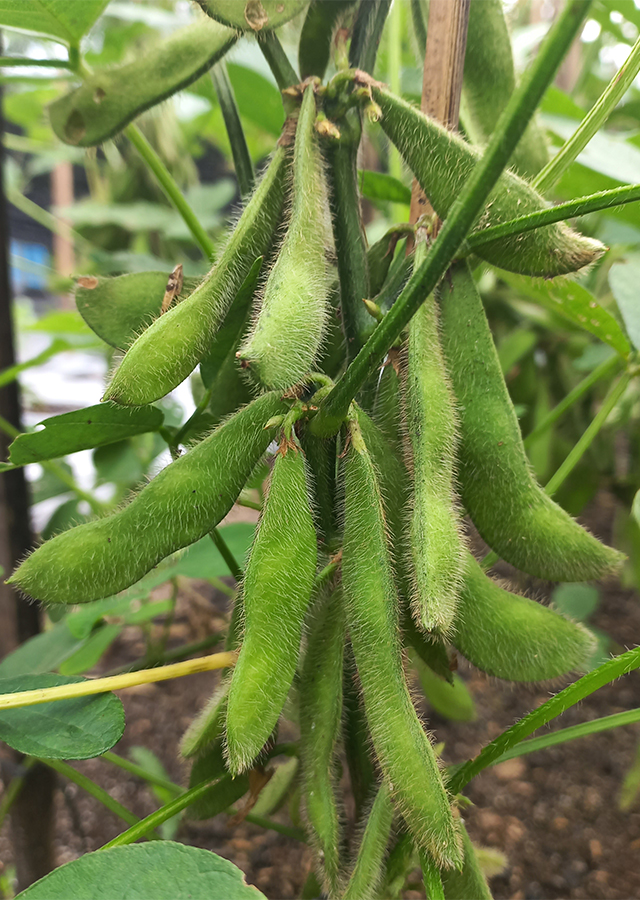
- Fruit a somewhat flattened pod, bright green to dark green, grayish hairy.
- Seeds larger than ordinary soybeans, with a sweeter taste, a stronger nutty aroma, a softer texture, 2-4 seeds per pod, seed shape round to ovate, green to yellow.
Cultivation
- Propagation is done generatively using seed.
- The planting spacing used is 20-40 cm or 30 x 20 cm, planted by dibbling with 2 seeds inserted per planting hole.
- Edamame can be harvested 28-30 days after first flowering, or 80 days after planting, while the pods are still green with a seed maturity level of 80-90%.
Chemical Content
Amino acids (glutamic acid, aspartic acid, arginine, isoleucine, phenylalanine), phytic acid, linolenic fatty acid, linoleic acid, phospholipids, lecithin, isoflavone compounds (genistin, daidzein, genistein, and daidzin).
Benefits
Addresses lactose intolerance, prevents arteriosclerosis to stroke, maintains heart health, prevents diabetes mellitus, lowers cholesterol, maintains blood pressure, prevents migraines, reduces menopause disorders, prevents anemia, prevents premature aging, lowers the risk of osteoporosis, improves lung function in patients with asthma, a healthy weight-loss snack and beverage for those with autism. Has antioxidant, anticancer, anti-inflammatory, and antitumor activity.
Local Names
Kedelai sayur, Kedelai edamame.
Traditional Recipes
The following recipes reflect traditional knowledge passed down through generations, not a substitute for professional medical diagnosis or advice. Consult a healthcare provider before use.
1. Maintains heart health
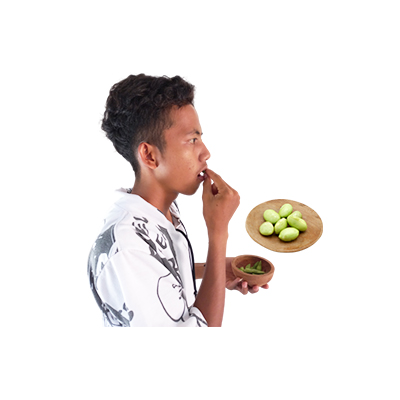
- Prepare fresh edamame beans and wash until clean.
- Boil the beans with their pods until tender.
- Let it cool to warm then eat the contents.
Reference Sources
- Royal Botanic Gardens. Plants of the World Online: Glycine max (L.) Merr. https://powo.science.kew.org/taxon/60450240-2. 05-03-2022.
- Tropical Plants Database, Ken Fern. 2021. Glycine max. http://tropical.theferns.info/viewtropical.php?id=Glycine%20max. 05-03-2022.
- Nur R., Lioe H. N., Palupi N. S., Nurtama B. 2018. Optimasi Formula Sari Edamame dengan Proses Pasteurisasi Berdasarkan Karakteristik Kimia dan Sensori. Jurnal Mutu Pangan Vol. 5(2): 88-99.
- Khalimi K., Mayadewi, N. A., Sutari N. W. S. 2015. Pemanfaatan Bakteri Penghasil Acetoin dan Urease sebagai Seed Coating Technology dalam upaya Peningkatan Kualitas dan Kuantitas Tanaman Kedelai Edamame. LAPORAN TAHUNAN HIBAH BERSAING, UNIVERSITAS UDAYANA.
- Widati F., Iteu M. Hidayat. 2012. Kedelai Sayur (Glycine max L. Merill) sebagai Tanaman Pekarangan. Iptek Holtikultura No. 8: 25-28.
- Healthbenefitstimes. 2021. Health benefits of Edamame. https://www.healthbenefitstimes.com/edamame/. 05-03-2022.
- Badan Penelitian dan Pengembangan Pertanian. 2019. Di Banjarbaru bisa Budidaya Edamame. https://www.litbang.pertanian.go.id/info-teknologi/3592/. 05-3-2022.
- Pambudi S., Flo. Budidaya & khasiat kedelai edamame : camilan sehat dan multi manfaat. Katalog Induk Perpustakaan Kemdikbudristek. http://katalog.kemdikbud.go.id/index.php?p=show_detail&id=436976. 05-03-2022.