Gmelina philippensis Cham.
Summary
Wareng bintang (Gmelina philippensis) is a climbing shrub 3-8 meters tall from the Lamiaceae family that originates from the Philippines, India, and Southeast Asia, popular as a bonsai plant. Its unique lantern-like fruit shape makes it a favorite ornamental. In the Malay Peninsula, wareng bintang is traditionally used to address coughs and repel leeches.
Agroecology
Wareng bintang grows in open habitats, gaps, edges, thickets, and secondary forests. Sometimes, it grows on swamp edges and joins with other shrub tree species. This plant prefers moist, fertile, well-drained soil, with soil acidity (pH) slightly acidic to neutral (6.1-7.3). In the wild it is often found on clay soil texture. Its growth succeeds in full sun or partial shade.
Morphology
- Roots taproot.
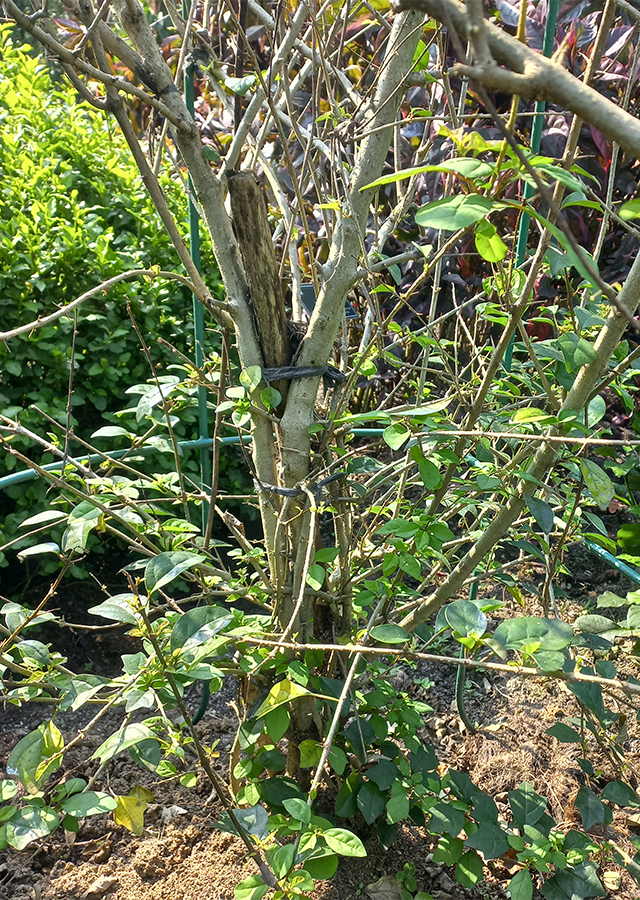
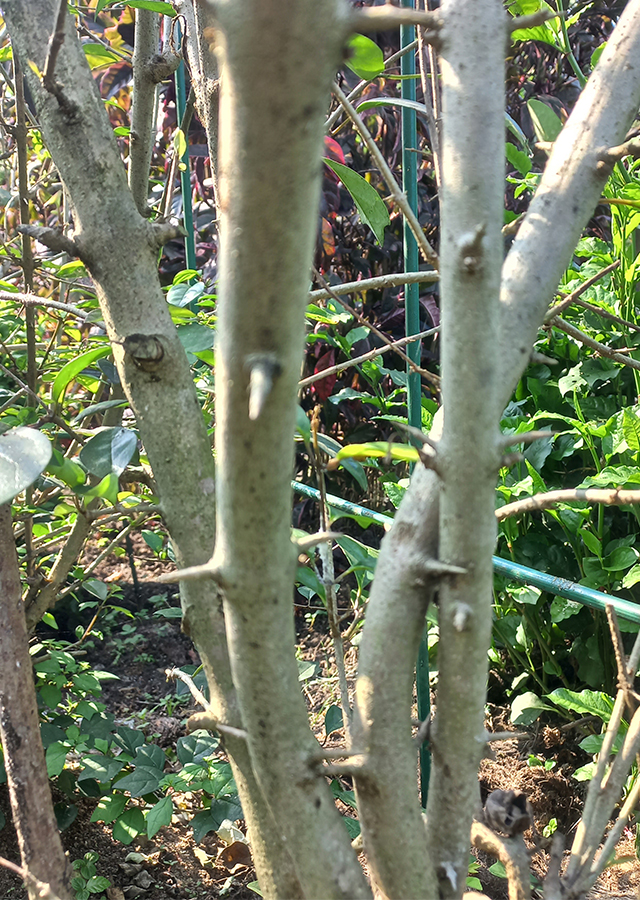
- Stem round, thorny, bark yellowish-brown, main branches branching.
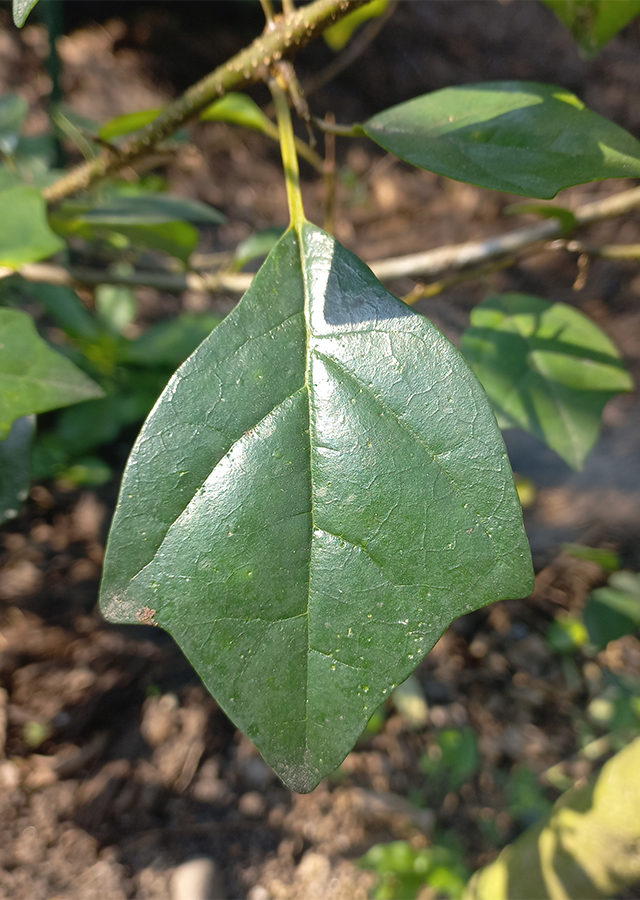
- Leaves have a thin, rough blade, leaf shape varying from ovate to elliptical or duck-foot-like, leaf margin smooth or deeply toothed to slightly lobed. Leaf base wedge-shaped (cuneate), leaf tip blunt (obtuse), subacute or wedge-shaped (cuneate). Upper surface green, hairless, and glossy while the lower surface is pale green, glaucous (waxy leaf).
- Flowers pendulous, 5-8 cm long, arranged in a pendant-like chain structure with pointed and overlapping red bracts. The flowers resemble a parrot's beak. Has a 4-lobed corolla, 1 lobe larger, pointed tip or beak-shaped from the other 3 lobes, yellow, narrowing tubular corolla. Stamens numbering 4, filaments filiform, anthers oblong.
- Fruit fleshy, smooth, yellow, drop-shaped or pear-like, and 3 cm long.
- Seeds numbering 1 in each fruit.
Cultivation
Propagation generatively using seeds.
Chemical Content
6 iridoids (6-O-α-L-(2″-O-, 3″-O-, 4″-O-tribenzoyl)rhamnopyranosylcatalpol, 6-O-α-L-(2″-O-, 3″-O-dibenzoyl, 4″-O-cis-p-coumaroyl)rhamnopyranosylcatalpol, 6-O-α-L-(2″-O-, 3″-O-dibenzoyl, 4″-O-trans-p-coumaroyl)rhamnopyranosylcatalpol, 6-O-α-L-(2″-O-benzoyl, 3″-O-trans-p-coumaroyl)rhamnopyranosylcatalpol, 6-O-α-L-(2″-O-, 3″-O-dibenzoyl)rhamnopyranosylcatalpol, gmephiloside), five monoacyl and diacyl rhamnopyranosylcatalpol derivatives.
Benefits
Treats coughs, foot eczema, laxative and fatigue remedy, an internal remedy as a stimulant, solvent, and used in treating joint and nerve diseases, has antioxidant activity.
Local Names
No information found. Further research needed.
Traditional Recipes
The following recipes reflect traditional knowledge passed down through generations, not a substitute for professional medical diagnosis or advice. Consult a healthcare provider before use.
1. Treating joint and nerve diseases
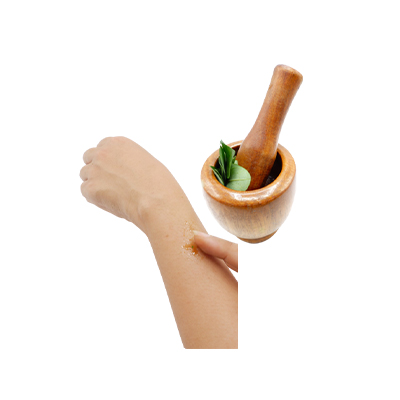
- Take fresh wareng bintang leaves as needed and wash until clean.
- Mash into a paste.
- Squeeze and take the liquid.
- Apply to painful joints and nerves.
- Leaf extract is used as a stimulant, solvent, and in treating joint and nerve diseases.
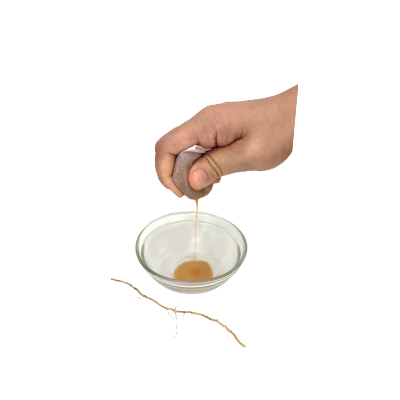
2. Laxative remedy
- Take fresh wareng bintang root and wash until clean.
- Blend and add a little water.
- Strain, then drink.
- Root juice is used as a laxative and in treating fatigue.
Reference Sources
- Helfrich E, Rimpler H. 2000. Iridoid glycosides from Gmelina philippensis. Phytochemistry 54(2): 191-199.
- Royal Botanic Gardens. 2021. Plants of the World Online: Gmelina philippensis Cham. http://powo.science.kew.org/taxon/urn:lsid:ipni.org:names:862965-1. 02-09-2021.
- Flora Fauna Web. 2020. Gmelina philippinensis Cham. https://www.nparks.gov.sg/florafaunaweb/flora/2/0/2036. 02-09-2021.
- PROSEA. 2020. Gmelina philippensis (PROSEA). https://uses.plantnet-project.org/en/Gmelina_philippensis_(PROSEA). 02-09-2021.
- Useful Tropical Plants Database. 2021. Gmelina philippensis. http://tropical.theferns.info/viewtropical.php?id=Gmelina%20philippensis. 02-09-2021.